
Vulcan Launch Pioneers ULA's Shift to US-Built Engines for Space Force Mission
 Aime Summary
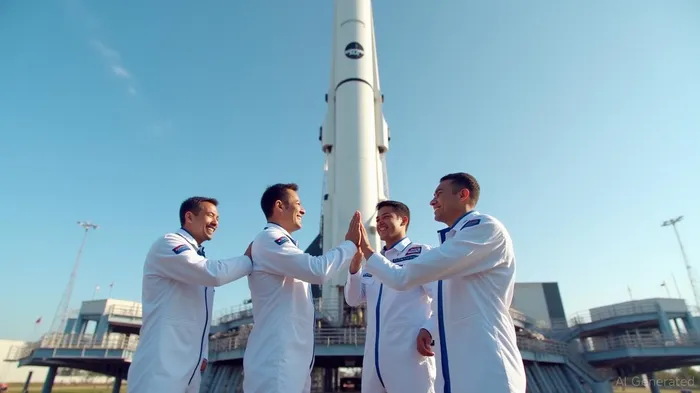
A United Launch Alliance VulcanVMC-- rocket is set to embark on a pivotal mission from Cape Canaveral Space Force Station, marking its entry into national security payload deliveries for the United States government. This comes after more than four months of certification for national security mission use. The mission, USSF-106, will see the launch of two satellites to support the United States Space Force from a 202-foot-tall rocket, which will take an easterly trajectory from Space Launch Complex 41.
Gary Wentz, ULA's vice president for Government and Commercial Programs, underscored the magnitude of the mission, highlighting its distinction as one of ULA's longest in its history. Unlike prior ULA missions, this one targets a direct flight to geosynchronous orbit, emphasizing the strategic purpose of the Vulcan rocket's design—to facilitate direct injections into geosynchronous orbit, crucial for the Space Force.
In preparation for the launch, the Vulcan rocket was transported from the Vertical Integration Facility to the launch pad, a journey meticulously managed to ensure readiness. The live coverage, focusing on this mission, initiated operations about 1.5 hours before the scheduled liftoff, set within a one-hour launch window.
The weather at Cape Canaveral was projected to be 80 percent favorable, courtesy of the 45th Weather Squadron, with cumulus clouds and solar activity being the primary considerations. This mission represents ULA's third launch in 2025, following two Atlas 5 launches supporting Amazon's Project Kuiper.
This advancement signals a return of ULA to the forefront of national security launches, with Vulcan marking a significant departure from the reliance on Russian-made engines. This pivot towards American-built hardware followed congressional directives aimed at reducing dependency on foreign technology. The path to certification, however, was not without its challenges—a nozzle anomaly on a solid rocket motor delayed the process before full approval was granted.
Colonel James Horne recognized the mission as a historic milestone, officially transitioning from Russian-engine reliance to utilizing ULA's independently developed systems. The complexity of obtaining certification was highlighted, involving extensive testing and analysis, particularly focusing on the rocket's new Blue Origin BE-4 engines.
The USSF-106 mission is anchored by two payloads, with the primary being the Air Force Research Laboratory's Navigation Technology Satellite-3 (NTS-3). This satellite, a significant $250 million project, marks the first experimental navigation satellite launch in nearly five decades. This launch aligns with ongoing efforts to maintain GPS as the global benchmark while introducing new capabilities, such as reprogrammable architecture enhancing signal resilience against spoofing.
L3Harris Technologies manufactured the satellite, building on Northrop Grumman’s satellite bus framework. Despite initial plans to launch in 2022, the timeline was adjusted to accommodate the Vulcan's certification schedule. The subsequent satellite operations will include numerous PNT experiments, refining time-keeping and signal power delivery to counteract interference.
As the Vulcan rocket stands ready at Cape Canaveral, ULA is poised to mark its debut on a national security mission, focused on establishing the Vulcan as a key player in the realm of heavy-lift military payload launches. The endeavor not only ensures assured access to space but also advances the resilience and robustness of military positioning systems crucial for national defense.

Stay ahead of the market.
Get curated U.S. market news, insights and key dates delivered to your inbox.




Comments
No comments yet