
VTI ETF: Why Diversification May Be Illusory Despite 3500 Stocks
 Aime Summary
The Vanguard Total Stock Market ETFVTI-- (VTI) holds over 3500 stocks but remains heavily influenced by large-cap tech names like NvidiaNVDA--, AppleAAPL--, and MicrosoftMSFT--.
VTIVTI-- is market-weighted, meaning large companies disproportionately dictate performance, potentially increasing risk and volatility.
While VTI provides broad U.S. market exposure, its structure may not deliver the diversification investors expect, particularly during market corrections.
Technology accounts for roughly 36% of the fund, .
Investors seeking more balanced exposure might consider alternatives like the Invesco S&P 500 Equal Weight ETF.
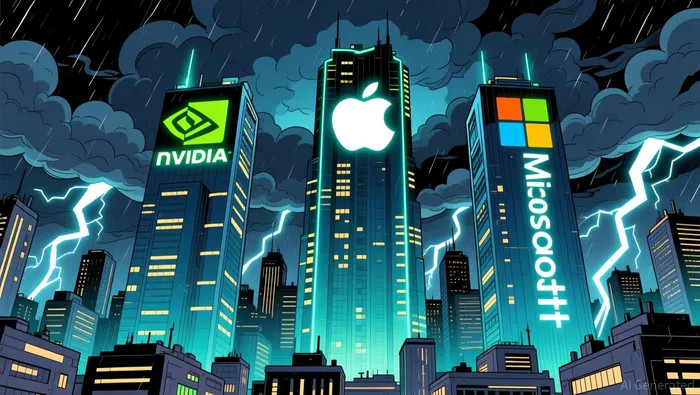
VTI is often hailed as a one-stop shop for broad U.S. equity exposure, but its performance is closely tied to the largest companies—especially in the tech sector. Despite holding over 3500 stocks, VTI's market-weighted approach means that just a handful of dominant stocks, including Nvidia, Apple, and Microsoft, account for a significant portion of the ETF. This structure, while efficient in tracking the broader market, may leave investors with an illusion of diversification, especially when volatility strikes or tech stocks falter.
Why Does VTI's Market-Weighted Exposure Matter for Investors?
VTI's market-weighted methodology means the largest companies have the greatest influence on the ETF's performance. This aligns with how the real-world stock market functions but can create unintended risks. For example, , while Apple and Microsoft add up to nearly 10% combined. This concentration means a downturn in these stocks can drag the entire ETF down, even if other holdings are performing well.
Such heavy reliance on a few dominant names is a double-edged sword. On one hand, it allows VTI to capitalize on the growth of large tech firms, which have driven much of the U.S. stock market's performance in recent years. On the other, it makes the ETF more sensitive to market corrections or sector-specific downturns. As one analyst noted, "This weighting can expose investors to volatility linked to the top-performing names in the portfolio." For long-term investors, this may be acceptable, but for those seeking true diversification, it could be a red flag.
What VTI Investors Should Know About Tech Stock Concentration
Technology is the largest sector in VTI, . While this reflects the sector's dominance in the broader U.S. market, it also means the ETF is particularly vulnerable to shifts in tech valuations or macroeconomic headwinds. , which is more than the combined weight of the entire financial or healthcare sectors.
This concentration is especially notable given the ongoing AI investment cycle and the valuation multiples attached to tech leaders. While these companies have historically delivered strong returns, their market dominance increases the risk of portfolio underperformance during downturns. For example, if investors rotate out of tech and into value or defensive sectors, VTI's returns could lag behind a more balanced fund. This is a key consideration for investors who prioritize steady, long-term growth over short-term tech-led surges.
Is VTI Still a Core Holding for Long-Term Growth?
Despite the concentration risks, VTI remains a popular core holding for many investors due to its broad exposure and low expense ratio. It provides access to a vast array of U.S. stocks, including small- and mid-cap companies, which can offer more balanced returns over time. However, the ETF's structure may not be ideal for investors seeking true diversification, particularly if their goal is to reduce reliance on large-cap tech stocks.
For long-term investors, the decision to hold VTI should be based on their risk tolerance and investment goals. If the objective is to capture broad market growth without picking individual stocks, VTI is a solid choice. But if diversification is a priority and investors want to avoid being overly influenced by just a few large tech companies, alternatives like the Invesco S&P 500 Equal Weight ETF may be more suitable. These alternatives spread exposure more evenly across the index, potentially reducing volatility without sacrificing market participation.
At the end of the day, VTI is a well-regarded ETF that has delivered strong performance over the long term. However, its market-weighted approach and heavy reliance on tech stocks mean that investors should not view it as a fully diversified solution. For those who want to build a more balanced portfolio, supplementing VTI with other ETFs or asset classes—such as bonds or international equities—could be a more effective strategy.

Stay ahead of the market.
Get curated U.S. market news, insights and key dates delivered to your inbox.


AInvest
PRO
AInvest
PRO



Comments
No comments yet