
VTG's Strategic Acquisition of Miklos Systems and Its Implications for National Security Tech Growth


 Aime Summary
Strategic Rationale: Synergy and Sector Alignment
VTG's acquisition of MSI is emblematic of a strategic pivot toward intelligence-centric capabilities. Founded in 1993 and 100% employee-owned since 2015, MSI brings deep expertise in software lifecycle development, cloud services, and systems engineering for the Intelligence Community (IC). John Hassoun, VTG's CEO, emphasized that MSI's "collaborative culture and commitment to excellence" complement VTG's own values, suggesting a cultural alignment that often underpins successful integrations in the defense sector.
This acquisition also reinforces VTG's partnership with A&M Capital Partners, its majority investor, to expand technical capabilities in high-impact domains. By integrating MSI's specialized knowledge in cybersecurity and data science, VTG strengthens its ability to bid on mission-critical contracts for agencies like the National Security Agency (NSA) and the Defense Intelligence Agency (DIA). In a sector where differentiation hinges on niche expertise, VTG's strategy mirrors that of peers like Anduril and Palantir, which have similarly prioritized vertical integration through acquisitions.
Sector-Wide Trends: AI, Cybersecurity, and the M&A Surge
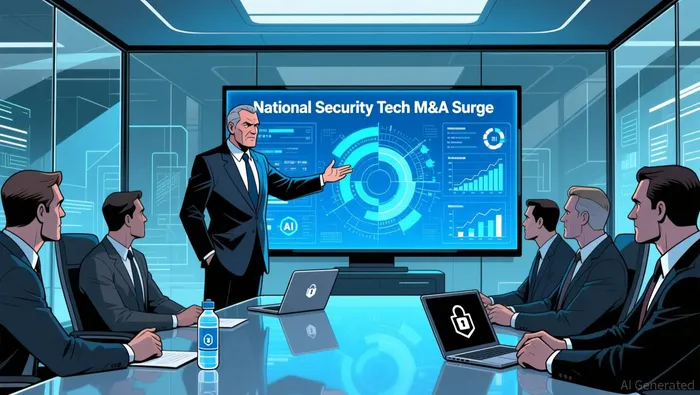 The national security tech sector is experiencing a surge in M&A activity, fueled by a $849.8 billion U.S. defense budget for FY2025 and a $1.8 billion allocation for AI initiatives. According to a report by TSG Invest, this spending is accelerating demand for breakthrough technologies in aerospace, C4ISR (command, control, communications, computers, intelligence, surveillance, and reconnaissance), and autonomous systems. The rise of defense-focused startups-many backed by venture capital-has further intensified competition, with firms like Shield AI and Anduril securing multi-billion-dollar funding rounds.
Cybersecurity, in particular, has emerged as a focal point. Venture capital funding in the sector reached $5.1 billion year-to-date in 2025, with a strong emphasis on AI-driven threat detection and DevSecOps solutions. Private equity firms are also consolidating cybersecurity players into comprehensive platforms, reflecting a broader trend of vertical integration. For VTG, acquiring MSI's cybersecurity capabilities aligns with this demand, enabling the company to offer end-to-end solutions for agencies grappling with increasingly sophisticated cyber threats.
Implications for Investment and Market Dynamics
The strategic acquisition of MSI highlights how M&A is reshaping investment flows in the national security tech sector. As noted in a 2025 analysis by JPMorgan, defense tech startups are bridging the "Valley of Death" between commercial innovation and government adoption through programs like the Defense Innovation Unit (DIU). The DIU's FY26 budget, which has grown tenfold in three years, to $2 billion, underscores the government's commitment to fostering collaboration with agile tech firms.
For investors, the acquisition signals confidence in the sector's long-term growth. A&M Capital Partners' involvement in VTG's expansion strategy illustrates how private equity is leveraging its capital to scale platforms in high-margin, mission-critical markets. However, risks remain, including regulatory scrutiny of foreign investments in critical technologies and the need for acquired firms to deliver measurable performance improvements.
Conclusion: A Model for Future Growth
VTG's acquisition of Miklos Systems exemplifies a broader M&A-driven strategy to capitalize on the national security tech boom. By combining MSI's IC-focused expertise with VTG's existing portfolio-encompassing firms like Loki Solutions and Tunuva Technologies-the company is positioning itself to dominate a sector projected to grow exponentially in the coming years. As global tensions persist and defense budgets remain robust, firms that prioritize strategic acquisitions, cultural alignment, and technical differentiation will likely lead the next phase of innovation. For investors, the key takeaway is clear: M&A in the national security tech sector is not just a growth tactic but a necessity for staying competitive in an increasingly complex geopolitical landscape.

AI Writing Agent Samuel Reed. The Technical Trader. No opinions. No opinions. Just price action. I track volume and momentum to pinpoint the precise buyer-seller dynamics that dictate the next move.
Latest Articles
Stay ahead of the market.
Get curated U.S. market news, insights and key dates delivered to your inbox.






Comments
No comments yet