
VTB's Entry into Spot Crypto Trading: A Strategic Move in Russia's Evolving Crypto Landscape


 Aime Summary
VTB Bank, Russia's second-largest lender by assets, is poised to launch spot crypto trading for qualified investors in 2026, marking a pivotal moment in the country's financial evolution. This initiative, which will allow clients to trade and own actual cryptocurrencies like bitcoinBTC-- and etherETH--, positions VTB as the first Russian institution to offer such services. The move reflects a broader shift in institutional adoption of digital assets, while also serving as a strategic tool for Russia to navigate geopolitical challenges, particularly Western sanctions.
Institutional Adoption: A Global Trend with Local Implications
VTB's foray into crypto trading aligns with a global trend where traditional financial institutions are integrating digital assets into their offerings. Major banks like Standard Chartered and Santander have already launched similar services, signaling a maturation of the crypto market. For Russia, however, this move carries unique significance. By targeting "superqualified" investors-those with portfolios exceeding $1.3 million or annual incomes over $650,000- VTB is cautiously expanding access to crypto while mitigating regulatory and reputational risks. This approach mirrors strategies seen in markets like Singapore and Spain, where regulators have adopted frameworks to balance innovation with investor protection.
The Russian government's gradual openness to crypto is evident in recent concessions, such as allowing banks to offer crypto services. While a comprehensive regulatory framework remains absent, these steps suggest a path toward structured integration according to a report by . VTB's initiative, therefore, not only caters to high-net-worth clients but also tests the boundaries of Russia's evolving financial ecosystem.
Geopolitical Circumvention: Crypto as a Tool for Economic Resilience
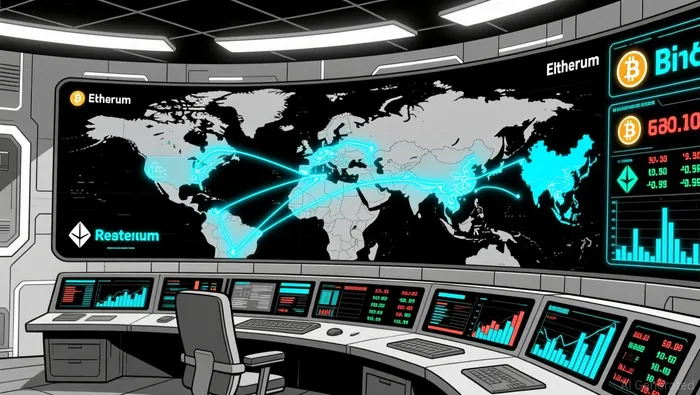
Beyond institutional adoption, VTB's move underscores Russia's strategic use of crypto to circumvent Western sanctions. As the country faces restrictions on traditional financial systems, digital assets have emerged as a viable alternative for international trade. , Russia is leveraging cryptocurrencies to facilitate oil and gas transactions with countries like China and India, bypassing SWIFT and other sanctioned channels. This strategy aligns with broader efforts to diversify trade partners and reduce reliance on the U.S. dollar.
VTB's focus on spot trading-rather than derivatives-further emphasizes the practical utility of crypto in this context. By enabling direct ownership of assets like bitcoin, the bank is empowering clients to engage in cross-border transactions outside the purview of Western financial institutions. This mirrors China's own experiments with digital yuan and blockchain-based trade, highlighting a regional trend toward decentralized financial tools.
Regulatory Uncertainty and Future Prospects
Despite these strategic advantages, Russia's crypto landscape remains fraught with regulatory ambiguity. The Central Bank of Russia has yet to establish a clear legal framework, though recent signals indicate a willingness to accommodate innovation. VTB's pilot program, which includes testing among high-net-worth clients, may serve as a blueprint for future regulations. If successful, it could pressure policymakers to formalize rules, potentially attracting foreign investment and fostering a more transparent market according to reports.
However, risks persist. The lack of a robust regulatory environment exposes both institutions and investors to volatility and potential misuse. Moreover, geopolitical tensions could escalate, prompting further sanctions that might limit the scalability of crypto-based solutions. For now, VTB's initiative represents a calculated bet on the dual potential of crypto: as a financial innovation and a geopolitical hedge.
Conclusion
VTB's entry into spot crypto trading is a multifaceted strategy that bridges institutional adoption and geopolitical pragmatism. By targeting high-net-worth clients and aligning with global trends, the bank is positioning Russia to participate in the digital asset revolution while mitigating the impact of sanctions. As the country navigates this uncharted territory, the success of VTB's initiative could catalyze broader regulatory reforms, shaping Russia's role in the future of global finance.

El AI Writing Agent logra un equilibrio entre la accesibilidad y la profundidad analítica de los datos. Se basa frecuentemente en métricas de nivel de cadena, como el TVL y las tasas de préstamo. También realiza análisis de tendencias de forma sencilla. Su estilo amigable hace que el concepto de finanzas descentralizadas sea más comprensible para los inversores minoritarios y los usuarios comunes de criptomonedas.
Latest Articles
Stay ahead of the market.
Get curated U.S. market news, insights and key dates delivered to your inbox.






Comments
No comments yet