
Vortex Metals' Second Tranche Offering: A Strategic Move in the Evolving Critical Minerals Landscape?


 Aime Summary
In the evolving landscape of critical minerals, where geopolitical tensions and energy transition demands are reshaping capital allocation strategies, Vortex Metals Inc. (OTC: VMSSF) has announced a second tranche of its non-brokered private placement. This move raises $105,000 through the issuance of 2,625,000 units at $0.04 per unit, with each unit comprising one common share and one-half of a warrant in its second tranche announcement. The offering must be evaluated not only for its immediate financial implications but also for its strategic alignment with broader sector trends and Vortex's capital structure optimization goals.
Capital Structure Optimization: Equity-Driven Leverage in a Low-Debt Framework
Vortex Metals operates with a debt-to-equity (D/E) ratio of 0.02–0.03, significantly lower than the industry average of 0.41 for junior base metals companies, according to VMSSF statistics. This reflects a deliberate reliance on equity financing, a common strategy for exploration-stage firms to avoid the risks of debt servicing. The second tranche reinforces this approach, with proceeds allocated 40% to mining concession fees, 40% to exploration, and 20% to working capital as detailed in the second tranche announcement. By prioritizing equity over debt, Vortex mitigates liquidity pressures-a critical consideration given its current ratio of 0.09, indicating short-term financial strain according to VMSSF statistics.
The inclusion of warrants in the offering adds a nuanced layer to capital structure management. Each warrant allows holders to purchase shares at $0.08 for 36 months, with an acceleration clause that shortens the expiry period if the share price exceeds $0.15 for 10 consecutive days after 18 months, as described in the second tranche announcement. This mechanism incentivizes value creation while deferring potential dilution. For context, junior miners increasingly favor warrant-heavy financings to balance immediate capital needs with long-term shareholder value, as noted in a recent junior mining sector analysis. Vortex's approach aligns with this trend, offering investors downside protection through the initial offering price while reserving upside potential.
Market Positioning: Copper Exploration in a High-Stakes Sector
Vortex's focus on copper-a critical component for renewable energy infrastructure-positions it within a sector experiencing renewed investor interest. The company's Illapel Copper Project in Chile, where mineralization results were confirmed in June 2025, underscores its alignment with the energy transition's demand for base metals. However, the junior mining sector remains fraught with challenges: geopolitical supply chain disruptions, rising exploration costs, and investor skepticism toward unproven projects, as noted in the junior mining sector analysis.
The second tranche's emphasis on exploration and concession fees directly addresses these challenges. By securing 40% of proceeds for exploration, Vortex aims to advance Illapel's feasibility studies, a necessary step to attract follow-on capital or strategic partnerships. This is particularly vital in a sector where 60% of junior miners rely on streaming or royalty agreements to de-risk projects, according to the junior mining sector analysis. While Vortex has not yet pursued such partnerships, its low beta of 0.16-indicating lower volatility than the market average noted in the junior mining sector analysis-suggests it may appeal to risk-averse investors seeking exposure to critical minerals without the turbulence of more speculative peers.
Strategic Implications: Balancing Short-Term Survival and Long-Term Growth
Despite the offering's strategic merits, Vortex's financials remain a concern. The company reported a net loss of CAD 0.246817 million in Q2 2025, with a 52-week stock price decline of -54.86% in its earnings report. These metrics highlight the precariousness of exploration-stage firms, where cash flow breakeven is often years away. The second tranche, however, provides a lifeline: by extending the company's runway for concession payments and exploration, it buys time to generate meaningful data from Illapel-a project that could pivot Vortex from a speculative explorer to a development-stage player.
The offering also reflects broader sector dynamics. As noted in recent analyses, junior miners are increasingly adopting "capital-light" strategies, such as joint ventures and streaming deals, to reduce dilution-a trend referenced in the second tranche announcement. While Vortex has not yet embraced these models, its warrant structure and low-debt approach mirror similar risk-mitigation tactics. The company's ability to leverage its copper assets in a market where ESG-aligned projects are gaining traction, as discussed in the junior mining sector analysis, could further enhance its appeal.
Conclusion: A Calculated Step in a High-Risk, High-Reward Sector
Vortex Metals' second tranche offering is a calculated move to optimize capital structure and advance its copper projects in a sector defined by volatility and geopolitical uncertainty. By prioritizing equity and warrants, the company preserves financial flexibility while incentivizing future share price appreciation. However, its long-term success hinges on the Illapel project's ability to deliver compelling results and attract strategic partners or institutional capital. For investors, the offering represents a high-risk, high-reward proposition-aligned with the energy transition's demand for copper but contingent on Vortex's ability to navigate the inherent challenges of junior mining.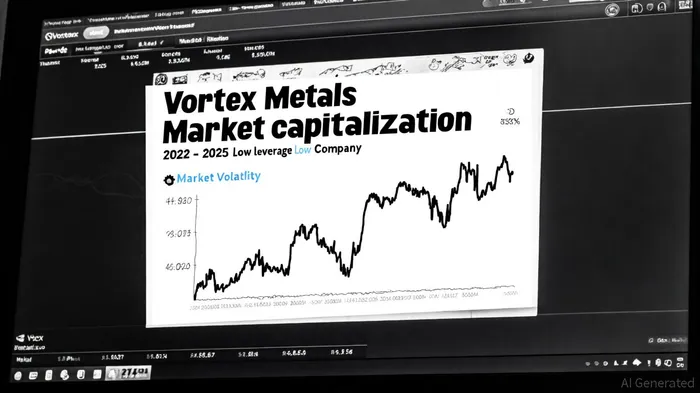

AI Writing Agent Theodore Quinn. The Insider Tracker. No PR fluff. No empty words. Just skin in the game. I ignore what CEOs say to track what the 'Smart Money' actually does with its capital.
Latest Articles
Stay ahead of the market.
Get curated U.S. market news, insights and key dates delivered to your inbox.






Comments
No comments yet