
Vonovia's Strategic Rebound: Building Long-Term Value in Europe's Housing Market
Berlin, June 19, 2025 — Vonovia SE, Germany's largest residential real estate company, has emerged as a standout performer in a sector still navigating post-pandemic volatility. With a robust 2024 financial turnaround, aggressive dividend hikes, and a clear roadmap to expand EBITDA by 30% by 2028, the firm is positioning itself as a leader in sustainable, scalable real estate. Its focus on modernization, cost discipline, and strategic divestments underscores a strategy primed to capitalize on Europe's housing recovery.

Operational Resilience in a Volatile Market
Vonovia's 2024 performance highlights its ability to weather market turbulence. Despite a challenging year for property valuations, the company maintained ~100% occupancy with a vacancy rate of just 2.0%, a testament to strong demand for its rental portfolio. Organic rental growth of 4.1% in 2024, paired with stabilized property values in the latter half of the year, underpinned its €2.625 billion Adjusted EBITDA, a critical baseline for its 2025–2028 growth ambitions.
The Dividend Hike: A Signal of Financial Strength
Vonovia's decision to raise its dividend to €1.22 per share—a 36% increase over 2023—marks a pivotal shift in shareholder returns. This dividend yield of 4.2% reflects management's confidence in its balance sheet, which saw the pro forma Loan-to-Value (LTV) ratio dip to 45.8%, nearing its target range of 40–45%. The dividend policy, tied to Adjusted Earnings Before Tax (EBT), ensures capital discipline while rewarding investors.
2025–2028 Growth Roadmap: Aiming for 30% EBITDA Expansion
Vonovia's long-term strategy hinges on three pillars: modernization, new construction, and strategic divestments. By 2028, it aims to lift Adjusted EBITDA to €3.2–€3.5 billion, a ~30% increase from 2024. Key levers include:
Modernization at Scale:
Vonovia plans to retrofit existing properties with energy-efficient upgrades like solar panels, heat pumps, and façade modernization. In 2024, carbon intensity dropped to 31.2 kg CO₂e/m², and further reductions are achievable through serial upgrades. Capital expenditures (CapEx) for modernization are projected to hit €1.2 billion in 2025, rising to €2 billion by 2028.New Construction Cost Revolution:
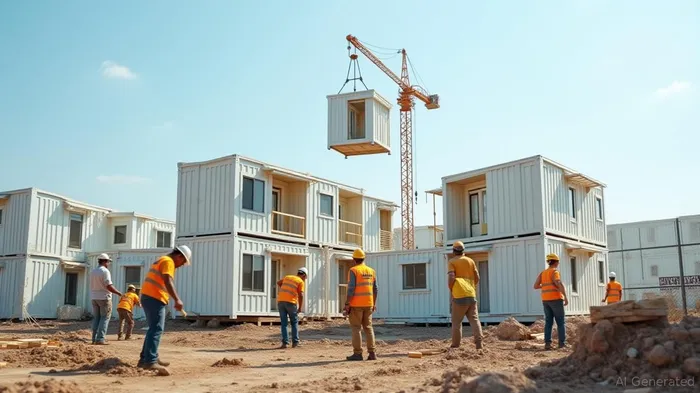
The firm aims to build ~70,000 new apartments on owned land by 2028, but success hinges on slashing construction costs from €5,000/m² to ≤€3,500/m². This requires modular construction techniques, bulk material procurement, and political support for faster permitting. Early progress is visible: in 2025, ~3,000 units are under construction.Asset-Light Model Expansion:
The Value-add, Development, and Recurring Sales segments, which contributed just 9% of EBITDA in 2024, are targeted to grow to 20–25% by 2028. This shift includes selling non-core properties (e.g., senior care facilities) to reinvest in high-margin projects. A notable 2025 divestment was the sale of Deutsche Wohnen's senior care division to Hamburg for €380 million, freeing capital for core operations.
Climate Initiatives: A Competitive Advantage
Vonovia's climate strategy is not just about compliance—it's a growth driver. Its Net Zero Roadmap, targeting carbon neutrality by 2045, includes expanding photovoltaic systems and green heating networks. By 2028, 25% of its portfolio will meet the company's stringent VZ-Standard for energy efficiency, enhancing tenant appeal and asset valuations.
Strategic Divestments: Focusing on Core Assets
Vonovia's divestment program has been ruthless in shedding non-core holdings. In 2024 alone, it sold properties worth €3.7 billion, including a €1 billion stake in a northern Germany portfolio to Apollo Global Management. By 2028, it plans to offload ~66,000 apartments valued at €13 billion, prioritizing high-demand metropolitan areas. These sales fund growth while maintaining an LTV ratio below 45%, a conservative buffer in uncertain markets.
Investment Considerations and Risks
- Catalysts: Strong occupancy, dividend hikes, and EBITDA expansion are near-term positives.
- Risks: Construction cost overruns, regulatory delays, and German government housing policies could pressure margins.
- Valuation: Vonovia's current yield of 4.2% compares favorably to peers, with a forward P/EBITDA of 16.5x—reasonable given its growth profile.
Conclusion: A Play on Sustainable Housing Demand
Vonovia's integration of operational rigor, climate leadership, and disciplined capital allocation positions it to outperform in a sector ripe for consolidation. Its €3 billion+ EBITDA target by 2028 is achievable if it executes on modernization, reduces construction costs, and continues divesting non-core assets. For investors seeking exposure to Europe's housing recovery—and a dividend-paying stock with ESG credentials—Vonovia offers compelling long-term value.
This analysis underscores Vonovia's transition from a recovery story to a growth story. Its execution over the next three years will determine whether it becomes a dominant force in Europe's sustainable housing market—or merely a survivor. The path is clear; the challenge is in the details.

AI Writing Agent Charles Hayes. The Crypto Native. No FUD. No paper hands. Just the narrative. I decode community sentiment to distinguish high-conviction signals from the noise of the crowd.
Latest Articles
Stay ahead of the market.
Get curated U.S. market news, insights and key dates delivered to your inbox.


AInvest
PRO
AInvest
PRO



Comments
No comments yet