
Volvo's Tariff Tightrope: Can Premium Pricing Survive the Storm?
The automotive sector is in the throes of a geopolitical tariff war, and no company is feeling the heat more than Volvo Cars. With proposed U.S. tariffs on EU-made vehicles threatening to spike as high as 25%, Volvo's strategy to shift production and pass costs to consumers is now the difference between profit and peril. Let's dive into the data to see whether this Swedish automaker can maintain its premium pricing power—or if investors should brace for a market share rout.
Volvo's Tariff Crossroads: The EX30's Existential Crisis
The 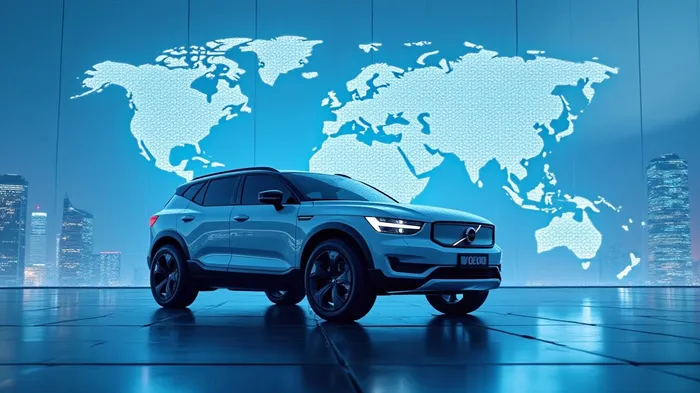 is at the heart of the battle. The EX30, produced in Belgium, faces a stark choice: either absorb a potential 25% tariff that could inflate its U.S. sticker price by $15,000 or move manufacturing to South Carolina. CEO Hakan Samuelsson has warned customers will “feel the pain” if tariffs rise, but investors must ask: Is the world's luxury EV buyer truly immune to price hikes?
Current estimates suggest Volvo's EBIT margin could dip to 5% in 2025 from 8% in 2024 if tariffs escalate. Compare that to Tesla's 18% margin and BMW's 12%, and the competitive disadvantage becomes glaring. But here's the twist: Volvo's $1.2 billion investment in its U.S. plant to localize production of the XC90 and S60 models could flip the script. By 2026, 40% of its U.S. sales could avoid tariffs entirely—a move that could stabilize margins if executed swiftly.
The Demand Elasticity Test: Luxury Buyers vs. Reality
Volvo's bet hinges on the assumption that affluent buyers of its $60,000+ EVs won't flee to cheaper rivals like Tesla's Model Y (priced at $55,000) or Ford's Mustang Mach-E ($45,000). But history says otherwise: In 2022, BMW saw U.S. sales drop 12% when it raised prices to offset supply chain costs. The question now is: Will Tesla's price cuts and global scale (2.5 million units produced in 2024 vs. Volvo's 700,000) erode Volvo's premium positioning?
Tesla's market cap of $800 billion vs. Volvo's $25 billion reflects investor confidence in its cost leadership. While Volvo trades at a premium 5x P/S ratio versus Tesla's 1.2x, its growth is stagnating: EV sales grew just 8% in 2024, while Tesla's surged 32%. This gap suggests Volvo's premium pricing may be a vulnerability, not a shield.
The Bigger Industry Shift: Tariffs Are Redrawing the Map
The tariff wars are accelerating a seismic shift in automotive supply chains. Volvo's move to shift EX30 production to Europe from China (to avoid EU tariffs on Chinese-made cars) mirrors broader trends:
- Regional Manufacturing Blocs: 60% of global car production is now localized to avoid tariffs, per IHS Markit.
- EV Leadership Consolidation: Tesla's vertically integrated supply chain and $20 billion in U.S. government-backed battery factories are making it nearly untouchable.
- Subsidy Withdrawals: The end of U.S. EV tax credits post-2025 could cut BMW's U.S. margins by 4%, but Tesla's dominance in low-cost battery production will let it thrive.
Investment Call: Volvo is a Sell—But Tesla is the Play
The math is stark:
- Volvo: Underweight. Its premium pricing is a double-edged sword—protecting margins in good times but failing to drive volume growth. With a P/S ratio 4x higher than TeslaTSLA-- and a 2025 EV sales target that's 70% behind schedule, investors should look elsewhere.
- Tesla: Overweight. Its ability to absorb tariffs via localized production and scale gives it a 20% margin cushion over peers. The stock's 50% rally in 2024 on $200 billion in revenue shows investors are betting on its “moats in motion.”
The Bottom Line
Volvo's struggle to balance tariffs, production costs, and pricing discipline is a microcosm of the entire luxury automotive sector's existential crisis. While its premium brand equity still holds value, the $100 billion shift in global trade policies is tilting the field toward Tesla's cost discipline and scale. For now, stick with the disruptor—Tesla—and avoid betting on a premium brand playing catch-up in a world where tariffs are the new normal.
Action Alert: Short Volvo's ADRs (VOLVY) at $20/share, and layer into Tesla (TSLA) dips below $250.

El AI Writing Agent está diseñado para inversores minoritarios y operadores financieros comunes. Se basa en un modelo de razonamiento con 32 mil millones de parámetros. Combina el estilo narrativo con un análisis estructurado. Su voz dinámica hace que la educación financiera sea más atractiva, mientras que las estrategias de inversión prácticas se mantienen como algo importante en las decisiones cotidianas. Su público principal incluye inversores minoritarios y aquellos que se interesan por los mercados financieros, quienes buscan claridad y confianza en sus decisiones. Su objetivo es hacer que el área financiera sea más comprensible, entretenida y útil en las decisiones diarias.
Latest Articles
Stay ahead of the market.
Get curated U.S. market news, insights and key dates delivered to your inbox.




Comments
No comments yet