
Volvo's Best-Selling XC60 to be Produced in South Carolina
ByAinvest
Wednesday, Jul 16, 2025 5:10 pm ET2min read
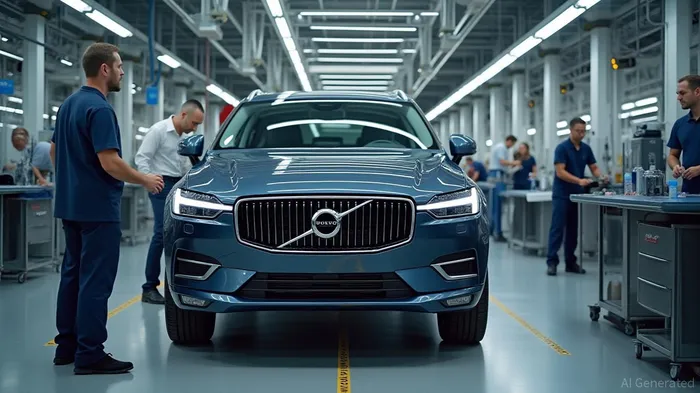
Volvo is set to begin production of its best-selling vehicle, the XC60, at its Ridgeville, South Carolina plant. The XC60 will be assembled alongside the EX90 electric SUV and Polestar 3, with Volvo promising more additions in the future. The XC60 is already the brand's most popular vehicle in the US, representing over 33% of Volvo's sales, and a quarter of buyers opt for the plug-in hybrid variant. Production is set to begin in late 2026, marking another milestone for Volvo's US plant.
Volvo Cars has announced plans to commence production of its best-selling XC60 mid-size SUV at its Ridgeville, South Carolina plant, starting in late 2026. The XC60 will be assembled alongside the EX90 electric SUV and Polestar 3, with Volvo promising more additions in the future. This move is a strategic response to the automaker's exposure to U.S. President Donald Trump's auto tariffs, as it currently imports most of its hybrid and electric models from Europe.The XC60 has seen strong demand in the American market, with sales increasing by almost 23% during the first six months of 2025, making it the most popular model among U.S. customers. The XC60 accounts for over 33% of Volvo's sales in the U.S., and a quarter of buyers opt for the plug-in hybrid variant. The move to produce the XC60 in the U.S. is part of Volvo's broader strategy to increase its regional production and reduce the impact of tariffs on its profitability.
Volvo Cars, owned by China's Geely Holding, has previously stated its intention to add another car to the production line in Berkeley County, which is operating far below capacity. The company's CEO, Hakan Samuelsson, has emphasized the importance of building where the company sells, a principle that has become more critical in the face of escalating tariff costs. The U.S. market represented 16% of Volvo’s total sales last year, with most vehicles for this market currently being imported from Europe.
The decision to produce the XC60 in the U.S. comes at a time when Volvo is facing significant financial challenges. The automaker recently announced a $1.2 billion cash impairment charge due to escalating tariff costs and delays in introducing new EV models. The EX90, for instance, has faced significant launch delays and development costs, which have diminished its expected profitability. The automaker has also cited tariffs on the China-made ES90 battery-powered hatchback sedan, making it unprofitable in the U.S. market.
Volvo has previously announced layoffs and cost-cutting measures to address these financial challenges. In May, the company announced layoffs of 5% of its Ridgeville workforce of 2,500, and more recently, it said it will cut about 3,000 white-collar jobs worldwide as part of a $1.9 billion plan to reduce costs.
The production shifts follow significant financial problems Volvo announced earlier this week. The automaker said it would take a $1.2 billion cash impairment charge due to escalating tariff costs and delays in introducing new EV models. The EX90, for example, has faced significant launch delays and development costs, which have diminished its expected profitability. The automaker has also cited tariffs on the China-made ES90 battery-powered hatchback sedan, making it unprofitable in the U.S. market.
Volvo's decision to produce the XC60 in the U.S. is a strategic move aimed at reducing its exposure to tariffs and strengthening its position in the American market. The company's commitment to regionalization and building where it sells is evident in this decision. As the XC60 is already the brand's most popular vehicle in the U.S., producing it locally will help Volvo meet the growing demand and enhance its competitive edge in the market.
References:
[1] https://finance.yahoo.com/news/volvo-cars-start-mid-size-180032357.html
[2] https://www.investing.com/news/stock-market-news/volvo-cars-to-produce-xc60-suv-in-south-carolina-from-late-2026-93CH-4138324
[3] https://scdailygazette.com/2025/07/16/volvo-to-add-best-selling-xc60-suv-to-sc-production-lineup/
Stay ahead of the market.
Get curated U.S. market news, insights and key dates delivered to your inbox.


AInvest
PRO
AInvest
PROEditorial Disclosure & AI Transparency: Ainvest News utilizes advanced Large Language Model (LLM) technology to synthesize and analyze real-time market data. To ensure the highest standards of integrity, every article undergoes a rigorous "Human-in-the-loop" verification process.
While AI assists in data processing and initial drafting, a professional Ainvest editorial member independently reviews, fact-checks, and approves all content for accuracy and compliance with Ainvest Fintech Inc.’s editorial standards. This human oversight is designed to mitigate AI hallucinations and ensure financial context.
Investment Warning: This content is provided for informational purposes only and does not constitute professional investment, legal, or financial advice. Markets involve inherent risks. Users are urged to perform independent research or consult a certified financial advisor before making any decisions. Ainvest Fintech Inc. disclaims all liability for actions taken based on this information. Found an error?Report an Issue




Comments
No comments yet