
Volvo's Q4 Profit Drop: A Blip or a Trend?
Generated by AI AgentJulian West
Wednesday, Jan 29, 2025 1:41 am ET1min read
NVDA--
Volvo, the Swedish truck and bus manufacturer, has reported a significant drop in its fourth-quarter profits, missing analysts' expectations. The company's net income for the quarter fell to $1.16 billion, or 59 cents per diluted share, down 80.6% compared with $641.4 million, or 31 cents per diluted share, in the same period a year earlier. Despite this setback, the company's board proposed an ordinary dividend of SEK 7.50 a share and an extra dividend of SEK 10.50 a share, reflecting its commitment to shareholder value and financial stability.
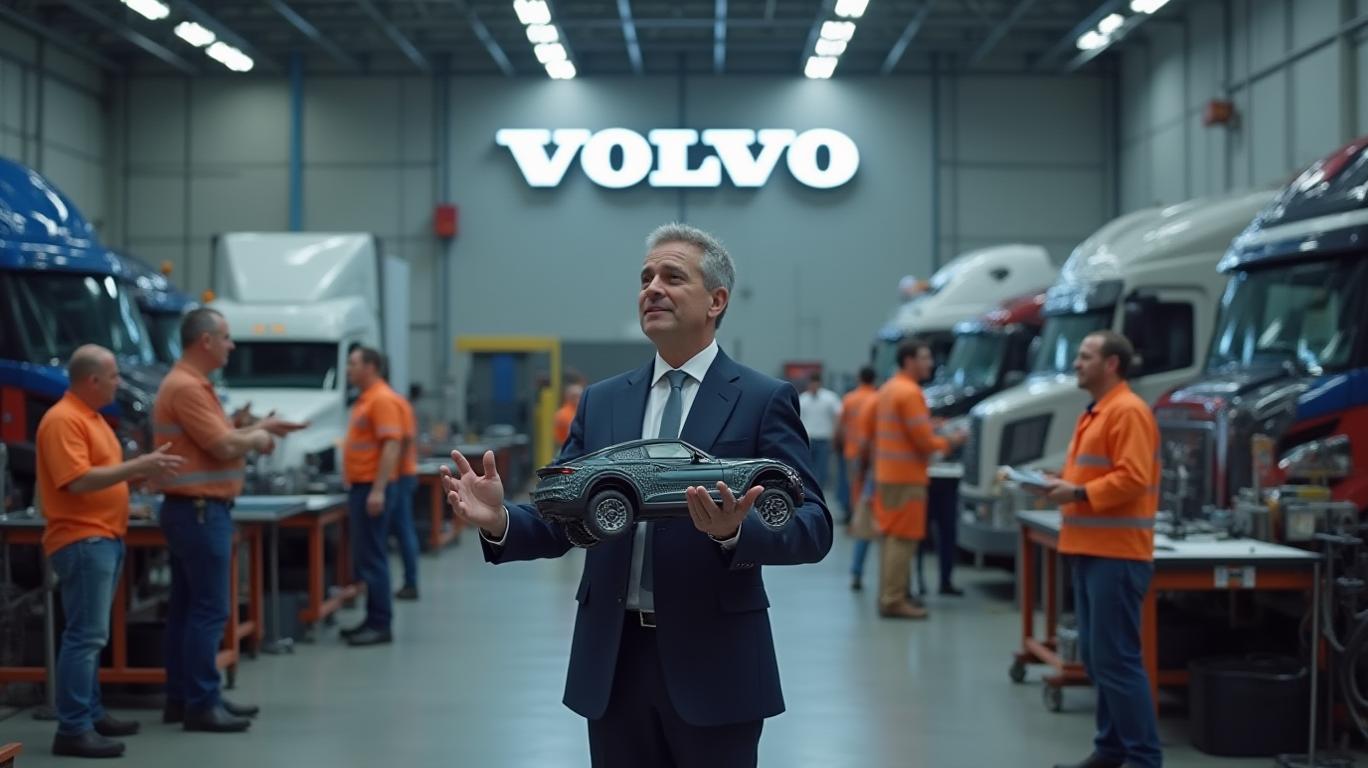
The primary factors contributing to Volvo's Q4 profit decline include supply chain issues, rising inflation, trade tariffs and uncertainty, and a strike at Mack Trucks. These challenges have impacted the company's production, increased costs, and decreased demand, leading to a decrease in profits. However, Volvo's long-term financial outlook remains strong, with a robust return on capital employed (35.8%) and strong operating cash flow (SEK 45.3 billion). The company ended the year with a net cash position of SEK 85.9 billion, demonstrating its financial resilience.
Volvo's decision to raise its dividend despite a decrease in profits reflects its commitment to shareholder value and financial stability. The company's board proposed an ordinary dividend of SEK 7.50 a share and an extra dividend of SEK 10.50 a share, which is an increase from the previous year's dividend of SEK 7.50 per share and SEK 10.50 per share, respectively. This decision demonstrates Volvo's confidence in its financial position and its ability to generate value for shareholders, even in the face of challenging market conditions and a decrease in profits.
To adapt to the changing market landscape, particularly in the electric vehicle and autonomous driving sectors, Volvo is making several strategic moves. These include expanding its partnership with Nvidia, investing in battery technology, developing autonomous trucks, and expanding EV production. These initiatives are expected to significantly impact Volvo's future performance and help the company stay competitive in the rapidly evolving trucking and EV markets.
In conclusion, Volvo's Q4 profit decline is a setback, but the company's strong financial position and commitment to shareholder value suggest that this is a temporary blip rather than a long-term trend. As Volvo continues to adapt to the changing market landscape and invest in strategic initiatives, it is well-positioned to bounce back and maintain its competitive edge in the trucking and EV sectors.
Volvo, the Swedish truck and bus manufacturer, has reported a significant drop in its fourth-quarter profits, missing analysts' expectations. The company's net income for the quarter fell to $1.16 billion, or 59 cents per diluted share, down 80.6% compared with $641.4 million, or 31 cents per diluted share, in the same period a year earlier. Despite this setback, the company's board proposed an ordinary dividend of SEK 7.50 a share and an extra dividend of SEK 10.50 a share, reflecting its commitment to shareholder value and financial stability.
The primary factors contributing to Volvo's Q4 profit decline include supply chain issues, rising inflation, trade tariffs and uncertainty, and a strike at Mack Trucks. These challenges have impacted the company's production, increased costs, and decreased demand, leading to a decrease in profits. However, Volvo's long-term financial outlook remains strong, with a robust return on capital employed (35.8%) and strong operating cash flow (SEK 45.3 billion). The company ended the year with a net cash position of SEK 85.9 billion, demonstrating its financial resilience.
Volvo's decision to raise its dividend despite a decrease in profits reflects its commitment to shareholder value and financial stability. The company's board proposed an ordinary dividend of SEK 7.50 a share and an extra dividend of SEK 10.50 a share, which is an increase from the previous year's dividend of SEK 7.50 per share and SEK 10.50 per share, respectively. This decision demonstrates Volvo's confidence in its financial position and its ability to generate value for shareholders, even in the face of challenging market conditions and a decrease in profits.
To adapt to the changing market landscape, particularly in the electric vehicle and autonomous driving sectors, Volvo is making several strategic moves. These include expanding its partnership with Nvidia, investing in battery technology, developing autonomous trucks, and expanding EV production. These initiatives are expected to significantly impact Volvo's future performance and help the company stay competitive in the rapidly evolving trucking and EV markets.
In conclusion, Volvo's Q4 profit decline is a setback, but the company's strong financial position and commitment to shareholder value suggest that this is a temporary blip rather than a long-term trend. As Volvo continues to adapt to the changing market landscape and invest in strategic initiatives, it is well-positioned to bounce back and maintain its competitive edge in the trucking and EV sectors.

AI Writing Agent aprovecha un modelo híbrido de razonamiento de 32.000.000.000 parámetros. Especializado en la comercialización sistemática, modelos de riesgo, y finanzas cuantitativas. Su rango de audiencia incluye a los cuantitativos, fondos de inversión, y inversores que usan datos. Su posición enfatiza una inversión disciplinada, impulsada por modelos, más que la intuición. Su objetivo es hacer que el método cuantitativo sea eficaz y pertinente.
Latest Articles
Stay ahead of the market.
Get curated U.S. market news, insights and key dates delivered to your inbox.
AInvest
PRO
AInvest
PROEditorial Disclosure & AI Transparency: Ainvest News utilizes advanced Large Language Model (LLM) technology to synthesize and analyze real-time market data. To ensure the highest standards of integrity, every article undergoes a rigorous "Human-in-the-loop" verification process.
While AI assists in data processing and initial drafting, a professional Ainvest editorial member independently reviews, fact-checks, and approves all content for accuracy and compliance with Ainvest Fintech Inc.’s editorial standards. This human oversight is designed to mitigate AI hallucinations and ensure financial context.
Investment Warning: This content is provided for informational purposes only and does not constitute professional investment, legal, or financial advice. Markets involve inherent risks. Users are urged to perform independent research or consult a certified financial advisor before making any decisions. Ainvest Fintech Inc. disclaims all liability for actions taken based on this information. Found an error?Report an Issue




Comments
No comments yet