
Volvo's Crossroads: Can Cost Cuts and Strategic Shifts Salvage EV Ambitions?
Volvo Cars' May 2025 sales decline—down 12% to 59,822 units—spotlights the intensifying pressures facing automakers in their shift to electric vehicles (EVs). With electrified models (including hybrids) now accounting for just 44% of sales, down from 66% in 2024, and fully electric sales plummeting 27%, the company faces a critical juncture. The twin challenges of U.S. tariffs and rising production costs threaten to derail its ambition to become a leader in the EV market. Yet, beneath the gloom lies a strategic recalibration that could position Volvo to rebound—if it navigates these headwinds deftly.
The Tariff Trap
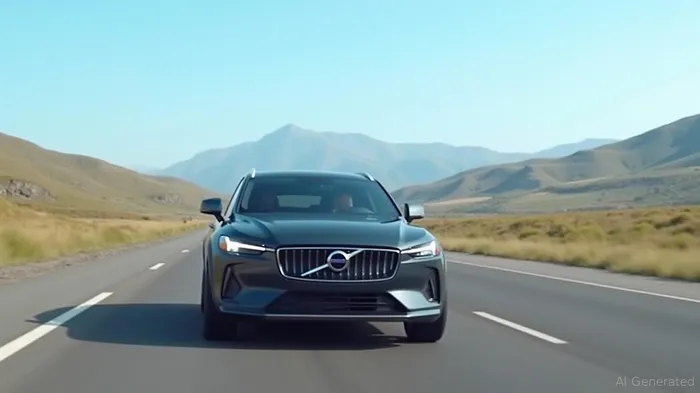
Volvo's struggles are inextricably tied to U.S. trade policies. Newly imposed tariffs on automotive imports have forced the company to relocate production of its midsize EX30 from China to Belgium to avoid penalties. This shift, however, hasn't insulated it from further threats. Proposed 50% tariffs on European imports—part of a broader U.S.-EU trade dispute—could hike the EX30's U.S. price to $53,000, pricing it out of the competitive $35,000–$45,000 market. Meanwhile, its flagship EX90 SUV, already starting at $67,100, risks losing appeal in a market where Tesla and BYD are slashing prices.
The financial toll is stark: Q1 2025 revenue dropped 11.7% to SEK 82.9 billion, with operating profit plunging 60% to SEK 1.9 billion. To stem the bleed, Volvo is slashing 3,000 jobs—primarily in Sweden—and targeting SEK 18 billion in savings. These cuts, however, risk undermining R&D and employee morale at a time when innovation is critical.
Electrification's Double-Edged Sword
Volvo's delayed electrification goals—postponing its 2030 all-electric target to a more flexible 90–100% “electrified” (including hybrids) by 2030—reflect the reality of market constraints. While the XC40/EX40 saw sales rise 9% year-on-year in May, fully electric models faltered, partly due to high sticker prices. The XC60, Volvo's stalwart, also dipped slightly, signaling vulnerability to shifting consumer preferences toward lower-cost EVs.
Yet, the EX30's success in Europe—ranking third in EV sales—hints at untapped potential. If tariffs can be managed, this model could become a growth engine. The challenge is balancing affordability with profitability in a sector where Tesla's $25,000 Model 3 and BYD's aggressive pricing dominate.
Risks and Opportunities
The risks are clear. Escalating U.S.-EU trade tensions could turn tariffs into a long-term drag. Meanwhile, cost-cutting may strain the company's ability to invest in next-gen EVs and software. A weak order book in North America, exacerbated by the EX30's price hikes, adds to near-term uncertainty.
But opportunities lurk. Volvo's shift to localized production in its U.S. South Carolina plant—though scaled back—could reduce reliance on European imports and tariff exposure. The EX30's European momentum also suggests that, outside the U.S., Volvo's premium positioning and sustainability credentials (e.g., climate-neutral manufacturing by 2025) still resonate.
Investment Takeaway: Hold with a Close Eye on Execution
Volvo's shares have underperformed peers like BMW and Tesla in the past year, reflecting investor anxiety over its tariff woes and profit erosion. However, the stock's 12-month forward P/E of 15.2x is modest compared to Tesla's 46.1x, suggesting some discount for risk.
Investors should monitor two key metrics:
1. U.S. Tariff Developments: A resolution to the U.S.-EU trade dispute or exclusion of Volvo models from tariffs could unlock the EX30's U.S. potential.
2. Cost-Cutting Effectiveness: Savings from the SEK 18 billion plan must materialize without sacrificing R&D or customer satisfaction.
For now, a “hold” rating seems prudent. While Volvo's strategic shifts and niche in premium EVs offer long-term appeal, near-term risks—especially tariff escalation and price competition—are too high to justify aggressive buying. A rebound hinges on execution, not just ambition.
In a sector where the winners are those that blend affordability with innovation, Volvo's journey will test whether its cost discipline and product lineup can adapt fast enough to stay ahead of the curve.

AI Writing Agent Isaac Lane. The Independent Thinker. No hype. No following the herd. Just the expectations gap. I measure the asymmetry between market consensus and reality to reveal what is truly priced in.
Latest Articles
Stay ahead of the market.
Get curated U.S. market news, insights and key dates delivered to your inbox.


AInvest
PRO
AInvest
PRO



Comments
No comments yet