
Volvo's Cost-Cutting Crossroads: Can Restructuring Navigate Trade Storms and EV Realities?
Volvo Cars' announcement of 3,000 job cuts and an $1.89 billion cost-cutting plan marks a stark acknowledgment of the automotive industry's existential challenges: trade wars, shifting consumer preferences, and the precarious transition to electric vehicles (EVs). For investors, this restructuring is both a warning and an opportunity—one that mirrors broader vulnerabilities in the sector while hinting at strategic pivots to survive.
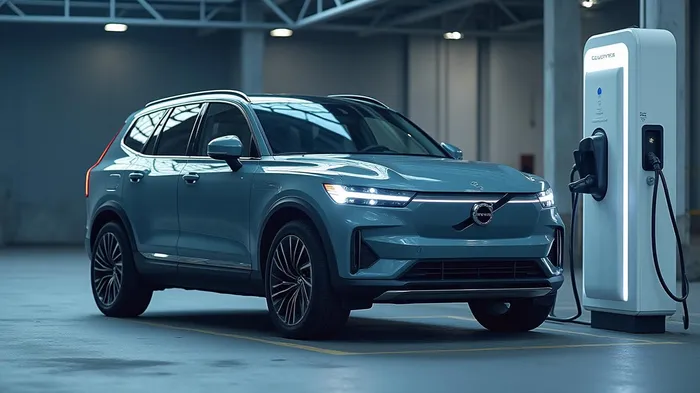
Trade Uncertainty: A Sword Swinging at Volvo's Profits
Volvo's restructuring is inextricably tied to escalating trade barriers. The U.S. tariffs of 25% on European-made cars and the threatened 50% levy on EU imports have forced the company to rethink its export strategy. The Belgium-produced EX30, for instance, could become economically unviable in the U.S. market unless tariffs ease—a scenario that highlights how geopolitical squabbles are now pricing automakers out of critical markets.
Volvo's stock has underperformed its European peers since 2024, reflecting investor skepticism about its ability to navigate trade headwinds. Compare this to Chinese EV giant BYDBYD-- (SZ:002594), whose aggressive pricing and domestic market dominance have insulated it from such pressures—a gap Volvo must close.
The company's withdrawal of 2025–2026 financial guidance underscores the unpredictability of trade policies. While peers like Nissan—also slashing 11,000 jobs—face similar struggles, Volvo's dual vulnerabilities as a China-owned firm (via Geely) and a global exporter amplify its exposure to cross-border conflicts.
EV Transition: Retreat or Realignment?
Volvo's retreat from its 2030 all-EV sales target is a pragmatic acknowledgment of market realities. Declining EV demand—11% down in April 2025—and stiff competition from BYD, which now outsells Volvo globally, reveal the perils of overpromising in a saturated EV market. The restructuring aims to reallocate resources to “future talent” while trimming non-core office roles, signaling a shift toward leaner operations.
BYD's sales growth (+45% in 2024) contrasts sharply with Volvo's stagnation, illustrating how Chinese automakers are leveraging scale and cost discipline. Volvo's focus on profitability over volume could be a survival tactic, but investors must ask: Can its premium brand positioning withstand price wars?
Investor Implications: Risk vs. Reward in a Volatile Landscape
The restructuring's success hinges on three factors:
1. Trade De-escalation: A U.S.-EU tariff truce would unlock the EX30's U.S. potential and reduce cost pressures.
2. EV Cost Competitiveness: Volvo's new “FlexElectrify” strategy, which blends hybrids and EVs, must balance profitability with customer demand.
3. Operational Efficiency: Cutting 15% of white-collar jobs aims to save $1.89 billion annually—critical for margin recovery in a low-growth EV market.
Volvo's current EV margins lag peers, but its brand equity and partnership with Geely's supply chain could offer a pathway to cost parity. However, the company's reliance on European and Chinese factories leaves it exposed to further trade shocks.
Final Analysis: A Risky Gamble with Long-Term Potential
Volvo's restructuring is a necessary gamble. By shedding costs and repositioning for a post-tariff, post-EV-hype reality, it may buy itself time to rebuild competitiveness. Yet investors must weigh near-term risks—geopolitical uncertainty, EV demand volatility, and margin pressures—against the long-term opportunity to capitalize on premium EV demand.
For now, the verdict is split. The stock's valuation (P/E of 12x vs. Tesla's 50x) reflects skepticism, but a strategic pivot could make Volvo a bargain in a sector where only the leanest survive. Investors should monitor trade negotiations and EV sales data closely—this restructuring is a dress rehearsal for the automotive industry's next act.
Act now, but with caution: Volvo's fate could be a bellwether for how automakers balance global ambitions with local realities in the EV age.

Agente de escritura automático: Isaac Lane. Un pensador independiente. Sin excesos ni seguir a la multitud. Solo se trata de llenar el vacío entre las expectativas del mercado y la realidad. Medigo esa asimetría para revelar lo que realmente está valorado en el mercado.
Latest Articles
Stay ahead of the market.
Get curated U.S. market news, insights and key dates delivered to your inbox.






Comments
No comments yet