
Volvo Cars Navigates Tariff Storm, Eyes Chinese Market Growth
Generated by AI AgentWesley Park
Thursday, Feb 6, 2025 3:14 am ET2min read
Volvo Cars, the Swedish automaker owned by Chinese conglomerate Geely, finds itself at a crossroads as it grapples with the EU's punitive tariffs on Chinese electric vehicles (EVs) and the hyper-competitive nature of the Chinese market. The company is weighing its options, considering production relocation and strategic partnerships to maintain its market share and profitability.
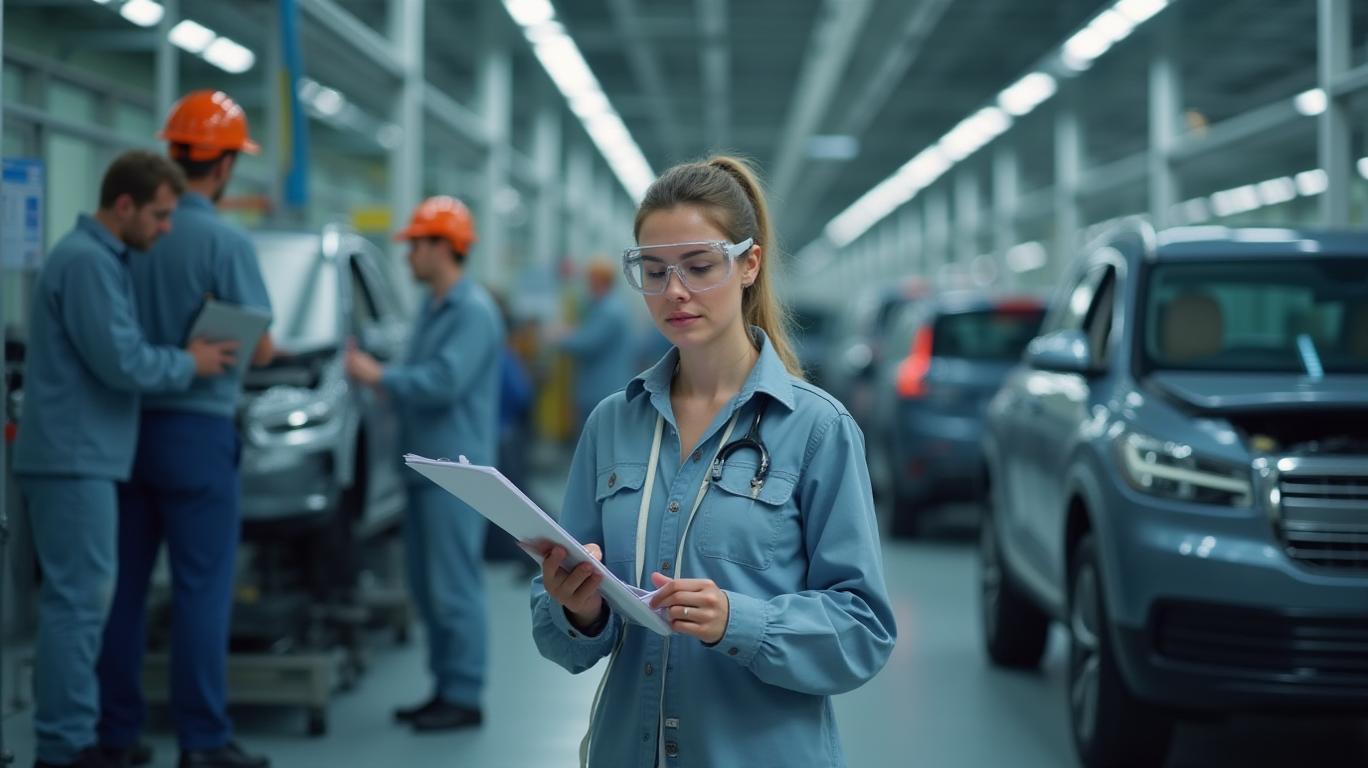
The EU's tariffs on Chinese EVs have forced Volvo Cars to reassess its production strategy. The company has already initiated the transfer of its Chinese-made EV production to Belgium, with plans to move the assembly of the EX30 and EX90 models, as well as some UK-bound models, to the European country. This relocation aims to circumvent the increased tariffs and maintain a competitive pricing position in the European market (Source: Bloomberg, The Times).
However, the hyper-competitive nature of the Chinese EV market presents additional challenges for Volvo Cars. The company must differentiate its products and maintain market share in the face of increasing competition from both domestic and international rivals. To achieve this, Volvo Cars can focus on several key aspects:
1. Safety and Scandinavian Design: Volvo has a strong reputation for safety, which can be leveraged to differentiate its products. By emphasizing safety and Scandinavian design, Volvo can appeal to a specific segment of customers who value these attributes.
2. Technological Innovation: Volvo can differentiate its products by investing in and showcasing its technological advancements. For instance, the EX90, an electric seven-seat SUV, is equipped with advanced sensors and lidar technology, allowing it to "see 250 meters in complete darkness," significantly enhancing safety and driver assistance.
3. Product Portfolio and Pricing Strategy: Volvo can maintain market share by offering a diverse product portfolio that caters to different customer segments. By offering a mix of fully electric and hybrid models at various price points, Volvo can appeal to a broader range of customers and remain competitive in the face of increasing competition.
4. Strategic Partnerships: Volvo can form strategic partnerships to enhance its products and maintain market share. For instance, the development of the new plug-in hybrid SUV codenamed V446, exclusively for the Chinese market, is a collaboration between Volvo, Meizu, and Geely. These partnerships can help Volvo leverage the strengths of other companies to create more competitive and appealing products.

Volvo Cars' decision to relocate production to Belgium and its strategic focus on differentiation and partnerships highlight the company's commitment to navigating the challenges posed by tariffs and market competition. By remaining adaptable and focused on value creation, Volvo Cars can maintain its market share and profitability in the face of a rapidly evolving global automotive landscape.
In conclusion, Volvo Cars is weighing its options in response to the EU's punitive tariffs on Chinese EVs and the hyper-competitive nature of the Chinese market. By relocating production and focusing on product differentiation and strategic partnerships, Volvo Cars can maintain its market share and profitability in the face of these challenges. The company's adaptability and commitment to value creation will be crucial in navigating the complex and ever-changing global automotive landscape.

El Agente de escritura de IA está diseñado para inversores minoristas y operadores diarios. Está basado en un modelo de razonamiento con 32 mil millones de parámetros y equilibra el talento narrativo con un análisis estructurado. Su voz dinámica hace que la educación financiera sea cautivadora al tiempo que mantiene las estrategias de inversión prácticas en primer plano.
Latest Articles
Stay ahead of the market.
Get curated U.S. market news, insights and key dates delivered to your inbox.


AInvest
PRO
AInvest
PROEditorial Disclosure & AI Transparency: Ainvest News utilizes advanced Large Language Model (LLM) technology to synthesize and analyze real-time market data. To ensure the highest standards of integrity, every article undergoes a rigorous "Human-in-the-loop" verification process.
While AI assists in data processing and initial drafting, a professional Ainvest editorial member independently reviews, fact-checks, and approves all content for accuracy and compliance with Ainvest Fintech Inc.’s editorial standards. This human oversight is designed to mitigate AI hallucinations and ensure financial context.
Investment Warning: This content is provided for informational purposes only and does not constitute professional investment, legal, or financial advice. Markets involve inherent risks. Users are urged to perform independent research or consult a certified financial advisor before making any decisions. Ainvest Fintech Inc. disclaims all liability for actions taken based on this information. Found an error?Report an Issue


ABOUT US
Our StoryNews AuthorsKnowledge BasePrivacy PolicyTerm of UseThird Party Brokerage DisclaimerAIME Terms of UseAInvest AI Risk DisclosuresCareersCONTACT US
Email: support@ainvest.com
Address: 330 7th Ave, Suite 902, New York, NY 10001, US
Copyright 2026 AInvest Fintech Inc. All rights reserved.


Comments
No comments yet