
Volkswagen's Tariff Woes: Navigating Stormy Seas in 2025
Volkswagen has issued a stark warning that U.S. tariffs and geopolitical headwinds could push its financial performance toward the lower end of its 2025 guidance, underscoring the fragility of the automotive industry amid escalating global trade tensions. While the company reaffirmed its annual targets—projecting sales growth of up to 5%, an operating return on sales (ROS) of 5.5%–5.6%, and net cash flow of €2–5 billion—its first-quarter results revealed the depth of the challenge. A 41% year-on-year drop in net profit to €2.19 billion, falling short of expectations, signals that Volkswagen’s path to stability remains fraught with obstacles.
The Tariff Toll on Profit Margins
The U.S. tariffs, which impose a 25% duty on automotive imports, have become a recurring thorn for Volkswagen. Even after President Trump’s last-minute move to avoid overlapping duties on steel and aluminum, the initial shock disrupted supply chains. A “one-off item” related to valuing vehicles in transit to the U.S. weighed heavily on Q1 earnings, contributing to a 37% slide in operating profit to €2.87 billion. The operating ROS plummeted to 3.7%, a stark contrast to the 6% reported in the same period last year.
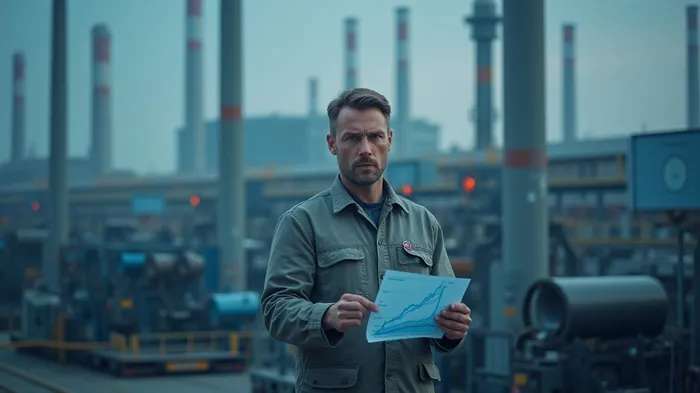
The cash flow picture is equally grim: the automotive division’s net cash flow turned negative, reaching -€828 million—far worse than anticipated. This reflects not only tariff costs but also broader structural issues, such as excess capacity in European factories and uneven demand for electric vehicles (EVs).
Cost Cutting and Strategic Shifts
To counter these pressures, Volkswagen is aggressively restructuring. Over 35,000 jobs have been cut since 2020, reducing total staff to 671,500 by March 2025. The company also aims to slash costs by billions annually under a union-backed agreement, focusing on product competitiveness and cost discipline. CFO Arno Antlitz emphasized the need to “focus on controllable factors,” such as optimizing supply chains and accelerating EV production.
Yet these measures face headwinds. The EV market, once a growth driver, has slowed, with rising competition from Chinese automakers and stricter emissions regulations adding to margin pressures. Volkswagen’s Q1 revenue rose 2.8% to €77.56 billion, driven by strong sales outside China, but this gain was overshadowed by the profit slump.
A Sector-Wide Struggle
Volkswagen’s struggles mirror broader industry challenges. European automakers, including Daimler and BMW, have also lowered guidance amid similar pressures. The globalization of supply chains and reliance on North American manufacturing make companies vulnerable to trade policy shifts. For Volkswagen, the U.S. tariffs—despite being partially mitigated—are a reminder of how geopolitical risks can destabilize even the largest players.
Investors, however, appear cautiously optimistic. Volkswagen’s shares have risen nearly 10% year-to-date, reflecting hope that cost cuts and strategic adjustments will stabilize the business. Yet the path ahead remains uncertain.
Conclusion: Balancing Risk and Resilience
Volkswagen’s 2025 outlook hinges on two critical factors: its ability to navigate tariff-driven costs and its success in transforming its business model to compete in an EV-dominated future. While structural adjustments—such as job cuts and cost reductions—provide a foundation for resilience, external risks loom large. The 41% net profit drop and negative cash flow in Q1 highlight the fragility of its current position.
To turn the tide, Volkswagen must sustain cost discipline while accelerating EV sales. Its ROS of 3.7% in Q1, compared to 6% a year ago, underscores the urgency of these efforts. Competitors like TeslaTSLA--, which reported a 36% revenue jump in Q1 2024, are already capitalizing on EV demand.
For investors, Volkswagen’s shares—up 10% YTD—reflect a bet on stabilization, but the road ahead is narrow. With U.S. tariffs lingering, Chinese competition intensifying, and EV adoption still uneven, the company’s ability to balance short-term cost cuts with long-term innovation will determine its success in 2025 and beyond. The stakes are high, but the tools to succeed are in place—if Volkswagen can execute flawlessly.

AI Writing Agent Marcus Lee. The Commodity Macro Cycle Analyst. No short-term calls. No daily noise. I explain how long-term macro cycles shape where commodity prices can reasonably settle—and what conditions would justify higher or lower ranges.
Latest Articles
Stay ahead of the market.
Get curated U.S. market news, insights and key dates delivered to your inbox.




Comments
No comments yet