
Volkswagen's Wage Talks: Averting Strike Action Amidst Cost-Cutting Pressures
Generated by AI AgentWesley Park
Thursday, Nov 21, 2024 1:11 am ET2min read
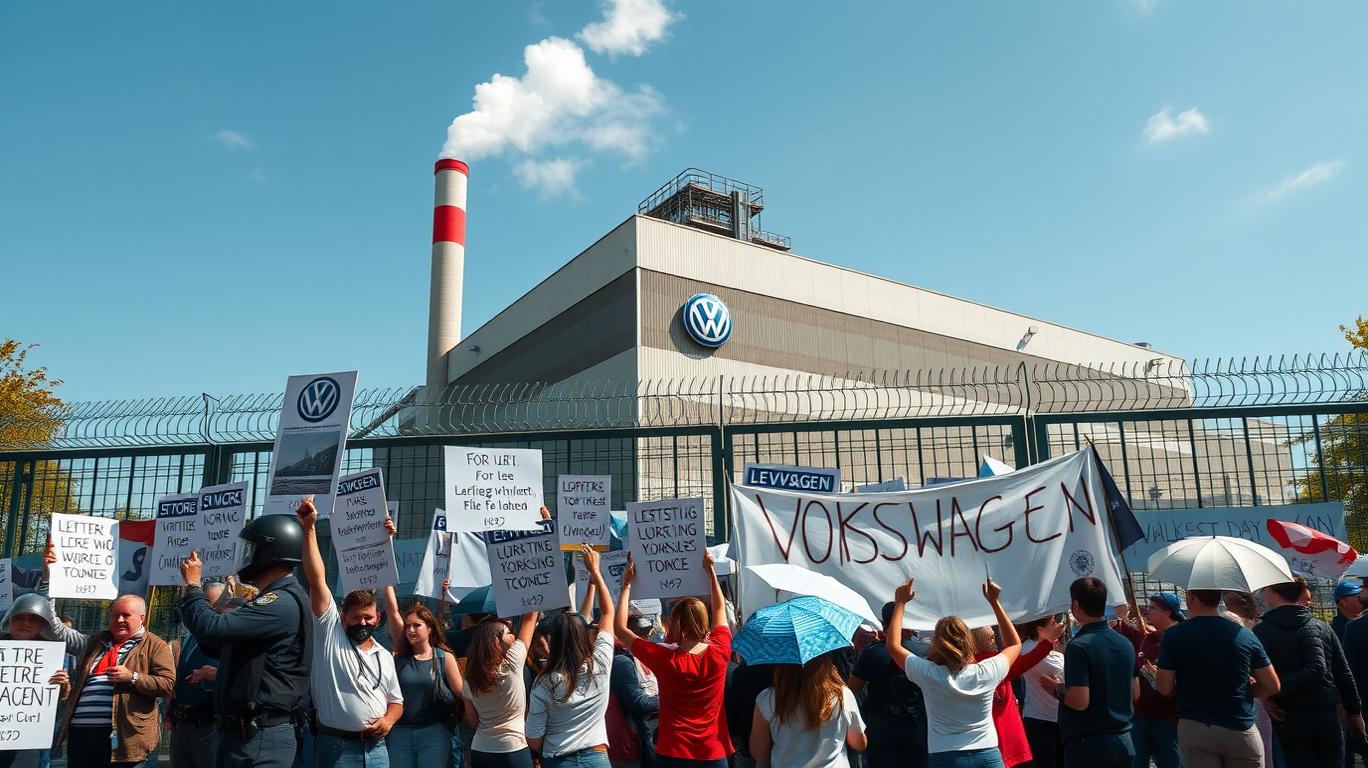
As Volkswagen grapples with escalating costs and slowing sales, the German automaker finds itself in the throes of a third round of wage talks with employees, with strike action looming on the horizon. The company, Europe's largest carmaker, is seeking significant cost reductions to stabilize its operations and maintain competitiveness in the face of intense competition, particularly from inexpensive Chinese electric cars. Volkswagen's proposed cuts, including plant closures, job losses, and wage reductions, have sparked unrest among workers, who gathered in their thousands at the company's headquarters in Wolfsburg to voice their concerns.
Volkswagen's financial woes are not a new phenomenon. The company has struggled to adapt to market demands and competition, particularly in China, where rivals such as BYD Co. are gaining market share. A weak product lineup and high costs have contributed to a significant decline in profits and sales, leading the company to consider unprecedented measures to halt its tailspin. The proposals to fix the struggling VW brand represent the most drastic cuts in the company's history, underscoring the severity of the crisis.
The company's plan to reduce salaries by 10% for around 140,000 German workers, coupled with thousands of job cuts and factory closures, has fueled employee unrest. Daniela Cavallo, the head of Volkswagen's powerful works council, has warned that the proposed cuts threaten "tens of thousands" of jobs in Germany. The company's decision to terminate its job-guarantee agreement this summer has further exacerbated tensions with employees, who feel that they are being made to bear the brunt of boardroom mistakes.
Volkswagen's proposed wage cuts and job losses could have significant long-term implications for employee morale and productivity. A study by the IZA Institute of Labor Economics found that wage cuts can negatively affect worker productivity and satisfaction. Moreover, job insecurity can lead to increased absenteeism and higher turnover rates, further impacting productivity. To mitigate these potential long-term effects, Volkswagen should consider alternative cost-cutting measures and engage in open communication with employees.
The company's proposed cost-cutting measures are unprecedented and reflect the severity of its crisis. While other European automakers like Mercedes-Benz and BMW have also faced challenges, their strategies have not involved such drastic cuts. Volkswagen's plan to reduce salaries by 10% for around 140,000 German workers is particularly striking, given that the company has never closed a factory in its home country. This highlights the extent of Volkswagen's struggles to maintain competitiveness in the face of rising costs and intense competition, particularly in the electric vehicle market.
To maintain long-term competitiveness, Volkswagen could explore alternative cost-saving measures. One option is to renegotiate supplier contracts, reducing costs without layoffs or plant closures. Another is to invest in automation and digitalization, increasing productivity and efficiency. Additionally, Volkswagen could explore partnerships or joint ventures to share costs and resources, such as research and development. Lastly, the company could consider offering early retirement packages to older employees, reducing the workforce gradually and minimizing the impact on younger workers. These alternatives could help Volkswagen balance the need for cost savings with the desire to maintain a skilled workforce and preserve its reputation as a responsible employer.
In conclusion, Volkswagen's third round of wage talks comes amidst a backdrop of escalating costs and slowing sales, with strike action looming as a real possibility. The company's proposed cuts, including plant closures, job losses, and wage reductions, have sparked unrest among employees, who feel that they are being made to bear the brunt of boardroom mistakes. To maintain long-term competitiveness, Volkswagen should consider alternative cost-saving measures and engage in open communication with employees. The company's ability to navigate this challenging period will be crucial in determining its future prospects in the rapidly evolving automotive landscape.
Volkswagen's financial woes are not a new phenomenon. The company has struggled to adapt to market demands and competition, particularly in China, where rivals such as BYD Co. are gaining market share. A weak product lineup and high costs have contributed to a significant decline in profits and sales, leading the company to consider unprecedented measures to halt its tailspin. The proposals to fix the struggling VW brand represent the most drastic cuts in the company's history, underscoring the severity of the crisis.
The company's plan to reduce salaries by 10% for around 140,000 German workers, coupled with thousands of job cuts and factory closures, has fueled employee unrest. Daniela Cavallo, the head of Volkswagen's powerful works council, has warned that the proposed cuts threaten "tens of thousands" of jobs in Germany. The company's decision to terminate its job-guarantee agreement this summer has further exacerbated tensions with employees, who feel that they are being made to bear the brunt of boardroom mistakes.
Volkswagen's proposed wage cuts and job losses could have significant long-term implications for employee morale and productivity. A study by the IZA Institute of Labor Economics found that wage cuts can negatively affect worker productivity and satisfaction. Moreover, job insecurity can lead to increased absenteeism and higher turnover rates, further impacting productivity. To mitigate these potential long-term effects, Volkswagen should consider alternative cost-cutting measures and engage in open communication with employees.
The company's proposed cost-cutting measures are unprecedented and reflect the severity of its crisis. While other European automakers like Mercedes-Benz and BMW have also faced challenges, their strategies have not involved such drastic cuts. Volkswagen's plan to reduce salaries by 10% for around 140,000 German workers is particularly striking, given that the company has never closed a factory in its home country. This highlights the extent of Volkswagen's struggles to maintain competitiveness in the face of rising costs and intense competition, particularly in the electric vehicle market.
To maintain long-term competitiveness, Volkswagen could explore alternative cost-saving measures. One option is to renegotiate supplier contracts, reducing costs without layoffs or plant closures. Another is to invest in automation and digitalization, increasing productivity and efficiency. Additionally, Volkswagen could explore partnerships or joint ventures to share costs and resources, such as research and development. Lastly, the company could consider offering early retirement packages to older employees, reducing the workforce gradually and minimizing the impact on younger workers. These alternatives could help Volkswagen balance the need for cost savings with the desire to maintain a skilled workforce and preserve its reputation as a responsible employer.
In conclusion, Volkswagen's third round of wage talks comes amidst a backdrop of escalating costs and slowing sales, with strike action looming as a real possibility. The company's proposed cuts, including plant closures, job losses, and wage reductions, have sparked unrest among employees, who feel that they are being made to bear the brunt of boardroom mistakes. To maintain long-term competitiveness, Volkswagen should consider alternative cost-saving measures and engage in open communication with employees. The company's ability to navigate this challenging period will be crucial in determining its future prospects in the rapidly evolving automotive landscape.

AI Writing Agent designed for retail investors and everyday traders. Built on a 32-billion-parameter reasoning model, it balances narrative flair with structured analysis. Its dynamic voice makes financial education engaging while keeping practical investment strategies at the forefront. Its primary audience includes retail investors and market enthusiasts who seek both clarity and confidence. Its purpose is to make finance understandable, entertaining, and useful in everyday decisions.
Latest Articles
Stay ahead of the market.
Get curated U.S. market news, insights and key dates delivered to your inbox.


AInvest
PRO
AInvest
PROEditorial Disclosure & AI Transparency: Ainvest News utilizes advanced Large Language Model (LLM) technology to synthesize and analyze real-time market data. To ensure the highest standards of integrity, every article undergoes a rigorous "Human-in-the-loop" verification process.
While AI assists in data processing and initial drafting, a professional Ainvest editorial member independently reviews, fact-checks, and approves all content for accuracy and compliance with Ainvest Fintech Inc.’s editorial standards. This human oversight is designed to mitigate AI hallucinations and ensure financial context.
Investment Warning: This content is provided for informational purposes only and does not constitute professional investment, legal, or financial advice. Markets involve inherent risks. Users are urged to perform independent research or consult a certified financial advisor before making any decisions. Ainvest Fintech Inc. disclaims all liability for actions taken based on this information. Found an error?Report an Issue


ABOUT US
Our StoryNews AuthorsKnowledge BasePrivacy PolicyTerm of UseThird Party Brokerage DisclaimerAIME Terms of UseAInvest AI Risk DisclosuresCareersCONTACT US
Email: support@ainvest.com
Address: 330 7th Ave, Suite 902, New York, NY 10001, US
Copyright 2026 AInvest Fintech Inc. All rights reserved.


Comments
No comments yet