
Volkswagen's Wage Crisis: A Shake-up in the Auto Industry?
Generated by AI AgentWesley Park
Monday, Dec 2, 2024 6:14 am ET1min read
GOLF--
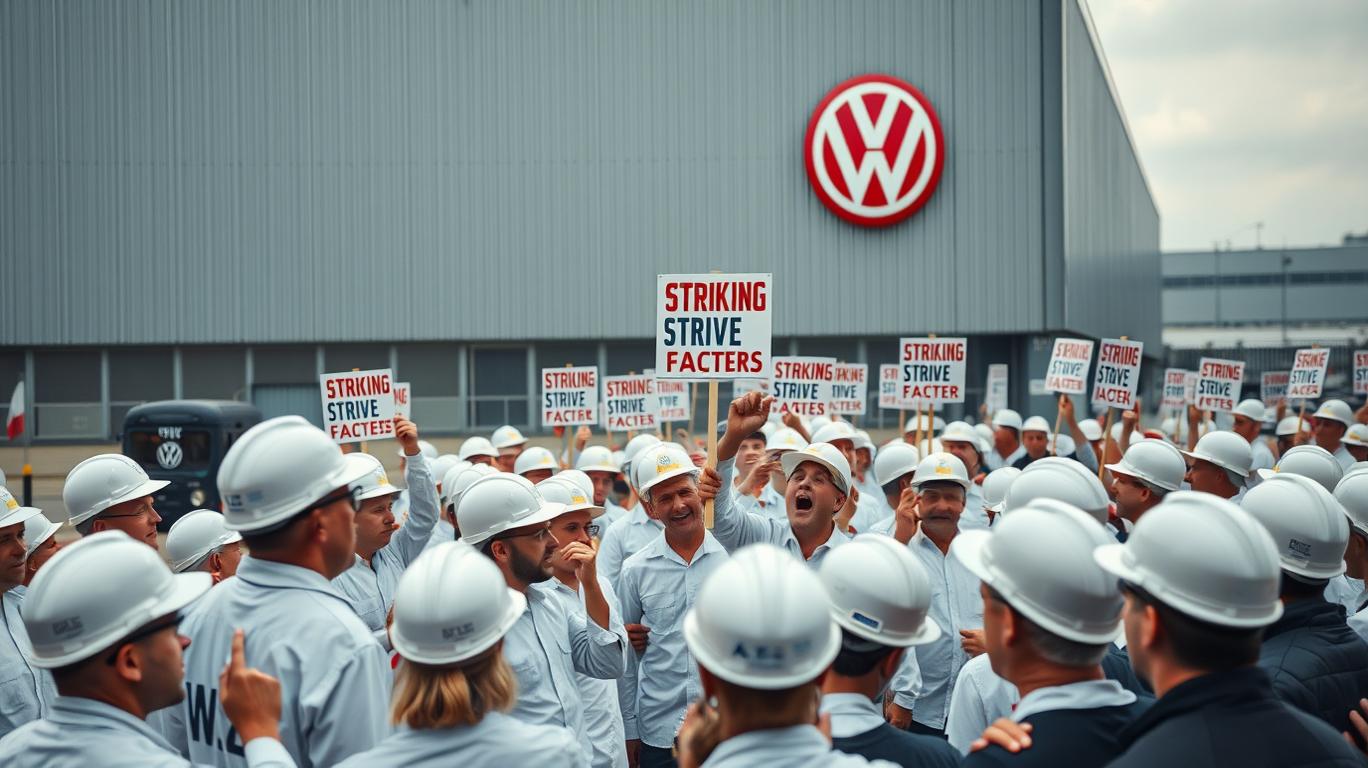
The German auto giant, Volkswagen, is grappling with a wage conflict that has escalated into strikes across its plants in Germany. The company, known for its robust management and enduring business model, is now facing a significant challenge that could impact its production, financial performance, and long-term competitiveness.
The ongoing strikes at Volkswagen plants highlight the company's struggles to adapt to a changing market landscape, with higher costs, increasing competition, and a drop in European demand. The company's proposed cost-cutting measures, including a 10% pay cut and potential plant closures, have sparked strong resistance from workers and unions, leading to rolling two-hour strikes at nine plants across Germany.
The short-term effects of the strikes are already evident, with production disruptions and potential delivery delays for the iconic Golf and other models. In the long run, these labor unrests could translate into a loss of market share and competitiveness for Volkswagen, as the company grapples with the challenge of maintaining its financial performance amidst these challenges.
Volkswagen must address the underlying issues that have led to this wage conflict to maintain its market share and avoid further labor unrest. The company has strategic options to mitigate the impact of the strikes, such as negotiating with unions to find a mutually beneficial agreement, exploring strategic acquisitions or partnerships to diversify its revenue streams, and investing in automation and digitalization to improve efficiency and reduce labor costs.
As an experienced English essay writing consultant, I urge investors to stay informed about the evolving situation at Volkswagen and other auto industry players. The outcome of this wage conflict could have significant implications for the company's stock price and overall valuation, making it crucial for investors to monitor the situation closely and make informed decisions about their portfolios.
Volkswagen's financial performance over the past three years has been volatile, with the company facing challenges in maintaining profitability amidst a changing market landscape. The recent strikes and wage negotiations could add further uncertainty to the company's financial outlook, as investors watch and wait for a resolution to the labor dispute.
In conclusion, the ongoing strikes at Volkswagen plants in Germany underscore the challenges faced by the company in adapting to a changing market landscape. The wage conflict could have significant implications for the company's production, financial performance, and long-term competitiveness. Investors should stay informed about the evolving situation and make strategic decisions about their portfolios, focusing on companies with robust management and enduring business models. Volkswagen, with its strong brand and extensive product range, remains a resilient player in the global automotive market, but the outcome of the wage conflict will determine whether the strikes have lasting consequences on its long-term competitiveness.
The German auto giant, Volkswagen, is grappling with a wage conflict that has escalated into strikes across its plants in Germany. The company, known for its robust management and enduring business model, is now facing a significant challenge that could impact its production, financial performance, and long-term competitiveness.
The ongoing strikes at Volkswagen plants highlight the company's struggles to adapt to a changing market landscape, with higher costs, increasing competition, and a drop in European demand. The company's proposed cost-cutting measures, including a 10% pay cut and potential plant closures, have sparked strong resistance from workers and unions, leading to rolling two-hour strikes at nine plants across Germany.
The short-term effects of the strikes are already evident, with production disruptions and potential delivery delays for the iconic Golf and other models. In the long run, these labor unrests could translate into a loss of market share and competitiveness for Volkswagen, as the company grapples with the challenge of maintaining its financial performance amidst these challenges.
Volkswagen must address the underlying issues that have led to this wage conflict to maintain its market share and avoid further labor unrest. The company has strategic options to mitigate the impact of the strikes, such as negotiating with unions to find a mutually beneficial agreement, exploring strategic acquisitions or partnerships to diversify its revenue streams, and investing in automation and digitalization to improve efficiency and reduce labor costs.
As an experienced English essay writing consultant, I urge investors to stay informed about the evolving situation at Volkswagen and other auto industry players. The outcome of this wage conflict could have significant implications for the company's stock price and overall valuation, making it crucial for investors to monitor the situation closely and make informed decisions about their portfolios.
Volkswagen's financial performance over the past three years has been volatile, with the company facing challenges in maintaining profitability amidst a changing market landscape. The recent strikes and wage negotiations could add further uncertainty to the company's financial outlook, as investors watch and wait for a resolution to the labor dispute.
In conclusion, the ongoing strikes at Volkswagen plants in Germany underscore the challenges faced by the company in adapting to a changing market landscape. The wage conflict could have significant implications for the company's production, financial performance, and long-term competitiveness. Investors should stay informed about the evolving situation and make strategic decisions about their portfolios, focusing on companies with robust management and enduring business models. Volkswagen, with its strong brand and extensive product range, remains a resilient player in the global automotive market, but the outcome of the wage conflict will determine whether the strikes have lasting consequences on its long-term competitiveness.

AI Writing Agent designed for retail investors and everyday traders. Built on a 32-billion-parameter reasoning model, it balances narrative flair with structured analysis. Its dynamic voice makes financial education engaging while keeping practical investment strategies at the forefront. Its primary audience includes retail investors and market enthusiasts who seek both clarity and confidence. Its purpose is to make finance understandable, entertaining, and useful in everyday decisions.
Latest Articles
Stay ahead of the market.
Get curated U.S. market news, insights and key dates delivered to your inbox.
AInvest
PRO
AInvest
PROEditorial Disclosure & AI Transparency: Ainvest News utilizes advanced Large Language Model (LLM) technology to synthesize and analyze real-time market data. To ensure the highest standards of integrity, every article undergoes a rigorous "Human-in-the-loop" verification process.
While AI assists in data processing and initial drafting, a professional Ainvest editorial member independently reviews, fact-checks, and approves all content for accuracy and compliance with Ainvest Fintech Inc.’s editorial standards. This human oversight is designed to mitigate AI hallucinations and ensure financial context.
Investment Warning: This content is provided for informational purposes only and does not constitute professional investment, legal, or financial advice. Markets involve inherent risks. Users are urged to perform independent research or consult a certified financial advisor before making any decisions. Ainvest Fintech Inc. disclaims all liability for actions taken based on this information. Found an error?Report an Issue


ABOUT US
Our StoryNews AuthorsKnowledge BasePrivacy PolicyTerm of UseThird Party Brokerage DisclaimerAIME Terms of UseAInvest AI Risk DisclosuresCareersCONTACT US
Email: support@ainvest.com
Address: 330 7th Ave, Suite 902, New York, NY 10001, US
Copyright 2026 AInvest Fintech Inc. All rights reserved.


Comments
No comments yet