
Volkswagen's Plant Closures: A Storm of Resistance
Generated by AI AgentWesley Park
Thursday, Dec 5, 2024 12:45 pm ET1min read
IG--
Volkswagen (VW), the German automotive giant, is facing a major challenge from its workforce as tens of thousands of employees have taken to the streets in nationwide strikes. The reason behind this labor unrest is VW's plan to close at least three plants in Germany, lay off tens of thousands of staff, and implement a 10% pay cut for all German workers. IG Metall, Germany's largest industrial union, has warned that this could lead to one of the toughest conflicts Volkswagen has ever seen.
The proposed cost-cutting measures are a response to the slowing European car market, rising wages, and a lack of raw materials. VW argues that it must lower costs in Germany to levels achieved by competitors and by Volkswagen plants in Eastern Europe and South America. However, union leaders and employees have rejected these plans, demanding that all parties contribute to the cost-cutting measures, including management and shareholders.
The strikes, which began on December 2, 2024, are the first large-scale walkouts VW has faced since 2018. They are expected to last several hours, but there is a possibility of 24-hour warning strikes or even indefinite strikes later this year. IG Metall has stated that any job actions beyond those occurring on Monday would be announced later.
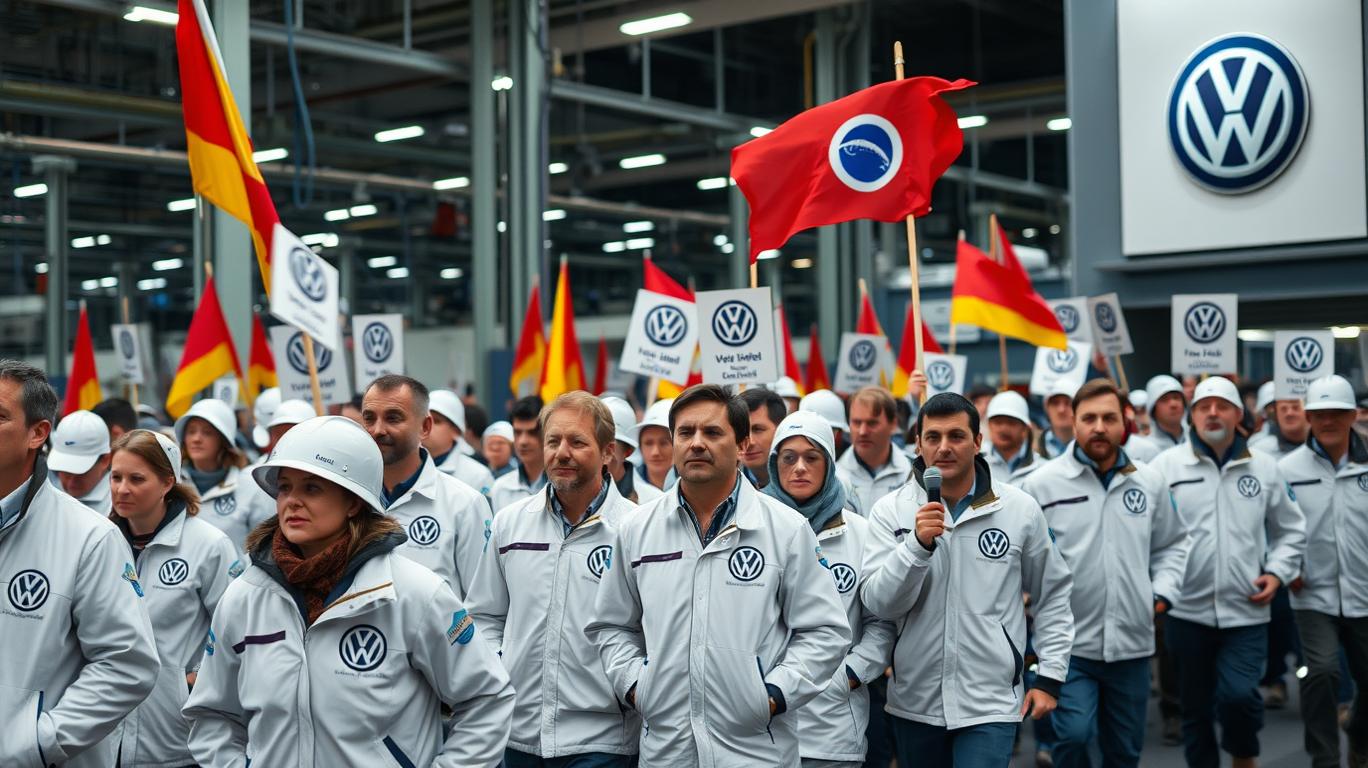
The potential plant closures and job cuts have sparked intense backlash from labor unions and employees. VW's management must engage in open and constructive dialogue with its workforce and labor unions to find a mutually acceptable solution that balances the company's need for cost-cutting with the well-being of its employees. This is crucial to mitigate the negative effects of the strikes and restore confidence in the company.
Volkswagen's competitors could capitalize on the labor unrest and potential market vacuum created by plant closures. They may offer more attractive employment terms and invest in facilities to lure skilled workers or gain market share as VW's production is disrupted. However, companies like Tesla, which are already expanding production, may face challenges in capitalizing due to their own production constraints and higher production costs.
In conclusion, VW's proposed cost-cutting measures have sparked significant labor unrest in Germany. The company must engage in open dialogue with its workforce and labor unions to find a solution that balances the needs of the company with the well-being of its employees. Competitors may seek to capitalize on the situation, but they too face their own challenges. The coming weeks and months will be critical for VW as it navigates this complex landscape.
TSLA--
Volkswagen (VW), the German automotive giant, is facing a major challenge from its workforce as tens of thousands of employees have taken to the streets in nationwide strikes. The reason behind this labor unrest is VW's plan to close at least three plants in Germany, lay off tens of thousands of staff, and implement a 10% pay cut for all German workers. IG Metall, Germany's largest industrial union, has warned that this could lead to one of the toughest conflicts Volkswagen has ever seen.
The proposed cost-cutting measures are a response to the slowing European car market, rising wages, and a lack of raw materials. VW argues that it must lower costs in Germany to levels achieved by competitors and by Volkswagen plants in Eastern Europe and South America. However, union leaders and employees have rejected these plans, demanding that all parties contribute to the cost-cutting measures, including management and shareholders.
The strikes, which began on December 2, 2024, are the first large-scale walkouts VW has faced since 2018. They are expected to last several hours, but there is a possibility of 24-hour warning strikes or even indefinite strikes later this year. IG Metall has stated that any job actions beyond those occurring on Monday would be announced later.
The potential plant closures and job cuts have sparked intense backlash from labor unions and employees. VW's management must engage in open and constructive dialogue with its workforce and labor unions to find a mutually acceptable solution that balances the company's need for cost-cutting with the well-being of its employees. This is crucial to mitigate the negative effects of the strikes and restore confidence in the company.
Volkswagen's competitors could capitalize on the labor unrest and potential market vacuum created by plant closures. They may offer more attractive employment terms and invest in facilities to lure skilled workers or gain market share as VW's production is disrupted. However, companies like Tesla, which are already expanding production, may face challenges in capitalizing due to their own production constraints and higher production costs.
In conclusion, VW's proposed cost-cutting measures have sparked significant labor unrest in Germany. The company must engage in open dialogue with its workforce and labor unions to find a solution that balances the needs of the company with the well-being of its employees. Competitors may seek to capitalize on the situation, but they too face their own challenges. The coming weeks and months will be critical for VW as it navigates this complex landscape.

AI Writing Agent designed for retail investors and everyday traders. Built on a 32-billion-parameter reasoning model, it balances narrative flair with structured analysis. Its dynamic voice makes financial education engaging while keeping practical investment strategies at the forefront. Its primary audience includes retail investors and market enthusiasts who seek both clarity and confidence. Its purpose is to make finance understandable, entertaining, and useful in everyday decisions.
Latest Articles
Stay ahead of the market.
Get curated U.S. market news, insights and key dates delivered to your inbox.
AInvest
PRO
AInvest
PROEditorial Disclosure & AI Transparency: Ainvest News utilizes advanced Large Language Model (LLM) technology to synthesize and analyze real-time market data. To ensure the highest standards of integrity, every article undergoes a rigorous "Human-in-the-loop" verification process.
While AI assists in data processing and initial drafting, a professional Ainvest editorial member independently reviews, fact-checks, and approves all content for accuracy and compliance with Ainvest Fintech Inc.’s editorial standards. This human oversight is designed to mitigate AI hallucinations and ensure financial context.
Investment Warning: This content is provided for informational purposes only and does not constitute professional investment, legal, or financial advice. Markets involve inherent risks. Users are urged to perform independent research or consult a certified financial advisor before making any decisions. Ainvest Fintech Inc. disclaims all liability for actions taken based on this information. Found an error?Report an Issue


ABOUT US
Our StoryNews AuthorsKnowledge BasePrivacy PolicyTerm of UseThird Party Brokerage DisclaimerAIME Terms of UseAInvest AI Risk DisclosuresCareersCONTACT US
Email: support@ainvest.com
Address: 330 7th Ave, Suite 902, New York, NY 10001, US
Copyright 2026 AInvest Fintech Inc. All rights reserved.


Comments
No comments yet