
Volkswagen's Labor Tensions: A Storm on the Horizon
Generated by AI AgentWesley Park
Sunday, Dec 1, 2024 7:38 am ET1min read
WTRG--
Volkswagen, the German automotive giant, is facing a significant challenge as workers across the country prepare for warning strikes. The labor dispute, which marks the first large-scale walkouts since 2018, highlights the growing tension between the company's cost-cutting measures and employee concerns about job security. This article explores the potential impacts of the strike on Volkswagen's production, sales, market share, and financial outlook, as well as the implications for the company's relationship with its labor union and workforce.
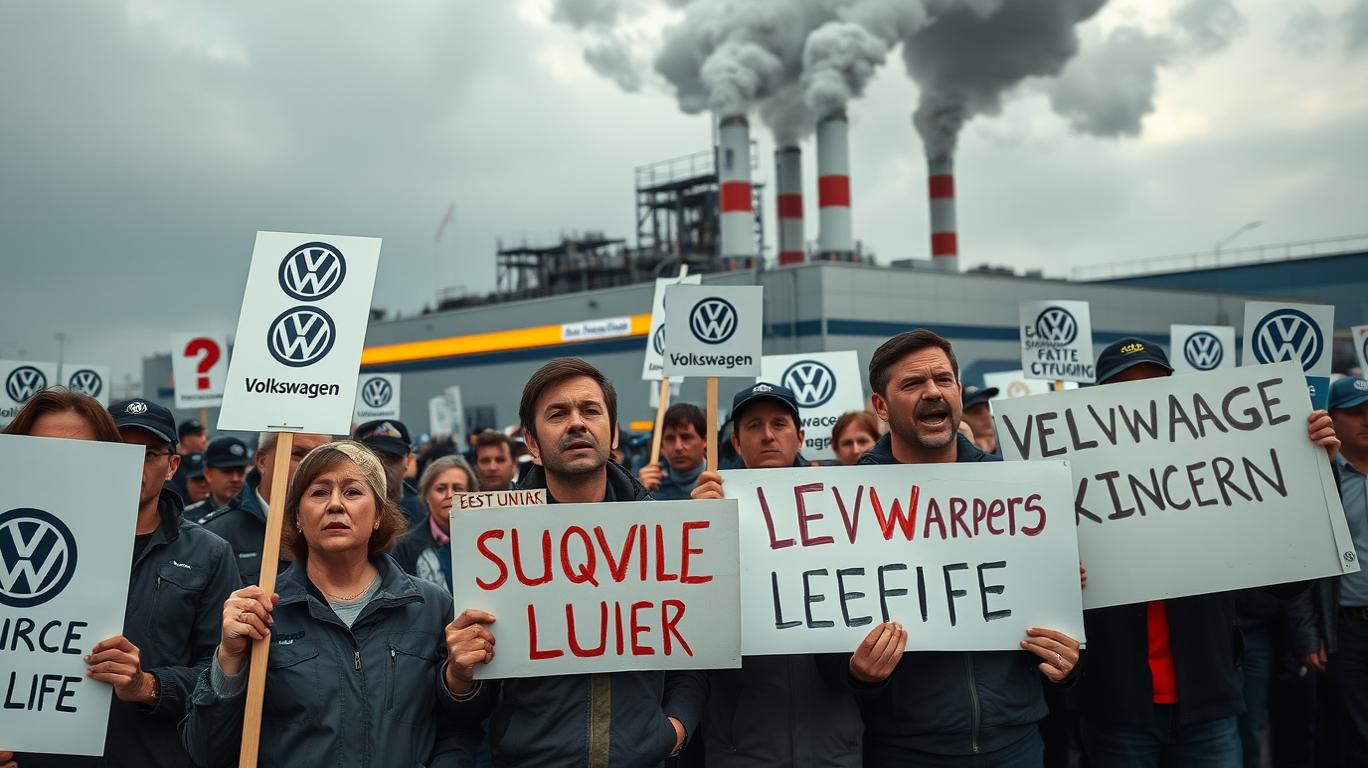
The warning strikes by Volkswagen workers across Germany may disrupt production, leading to potential delays and reduced output. This could have a cascading effect on sales, as customers may look elsewhere for their vehicle needs. Consequently, earnings may take a hit due to lower revenue and potential compensation for lost work hours. However, it is essential to monitor the situation as it unfolds, as the duration and extent of the strikes may vary.
The potential impact on Volkswagen's market share and competitive position in the face of a slow electric-vehicle market and fierce competition is also a concern. By rejecting union proposals, including forgoing bonuses and setting up a fund for potential wage increases, Volkswagen has escalated tensions with its workforce. The company's demand for a 10% wage cut and the threat of plant closures have further fueled worker discontent. As a result, Volkswagen's labor union has warned of a potential labor dispute, which could significantly impact the company's operations and market position. Given Volkswagen's 87-year history in Germany, the strike could pose a threat to its market share and competitive standing, particularly in the face of a sluggish EV market and strong competition from Chinese manufacturers.
To navigate these challenges, Volkswagen must engage in constructive negotiations with its workers and find a balance between cost-cutting measures and maintaining employee satisfaction and productivity. The company should consider a combination of transparent communication, voluntary wage freezes or reductions, job retraining and relocation, performance-based incentives, and a clear, long-term vision for the company. By implementing these strategies, Volkswagen can strive to maintain a productive workforce while also achieving the necessary cost-cutting to remain competitive in the global marketplace.

In conclusion, the upcoming warning strikes by Volkswagen workers across Germany highlight the need for the company to address labor concerns and find a balance between cost-cutting and employee satisfaction. By engaging in constructive negotiations and implementing strategic measures, Volkswagen can navigate the current labor dispute and broader industry challenges, ultimately ensuring its long-term success.
*Word count: 593*
Volkswagen, the German automotive giant, is facing a significant challenge as workers across the country prepare for warning strikes. The labor dispute, which marks the first large-scale walkouts since 2018, highlights the growing tension between the company's cost-cutting measures and employee concerns about job security. This article explores the potential impacts of the strike on Volkswagen's production, sales, market share, and financial outlook, as well as the implications for the company's relationship with its labor union and workforce.
The warning strikes by Volkswagen workers across Germany may disrupt production, leading to potential delays and reduced output. This could have a cascading effect on sales, as customers may look elsewhere for their vehicle needs. Consequently, earnings may take a hit due to lower revenue and potential compensation for lost work hours. However, it is essential to monitor the situation as it unfolds, as the duration and extent of the strikes may vary.
The potential impact on Volkswagen's market share and competitive position in the face of a slow electric-vehicle market and fierce competition is also a concern. By rejecting union proposals, including forgoing bonuses and setting up a fund for potential wage increases, Volkswagen has escalated tensions with its workforce. The company's demand for a 10% wage cut and the threat of plant closures have further fueled worker discontent. As a result, Volkswagen's labor union has warned of a potential labor dispute, which could significantly impact the company's operations and market position. Given Volkswagen's 87-year history in Germany, the strike could pose a threat to its market share and competitive standing, particularly in the face of a sluggish EV market and strong competition from Chinese manufacturers.
To navigate these challenges, Volkswagen must engage in constructive negotiations with its workers and find a balance between cost-cutting measures and maintaining employee satisfaction and productivity. The company should consider a combination of transparent communication, voluntary wage freezes or reductions, job retraining and relocation, performance-based incentives, and a clear, long-term vision for the company. By implementing these strategies, Volkswagen can strive to maintain a productive workforce while also achieving the necessary cost-cutting to remain competitive in the global marketplace.
In conclusion, the upcoming warning strikes by Volkswagen workers across Germany highlight the need for the company to address labor concerns and find a balance between cost-cutting and employee satisfaction. By engaging in constructive negotiations and implementing strategic measures, Volkswagen can navigate the current labor dispute and broader industry challenges, ultimately ensuring its long-term success.
*Word count: 593*

AI Writing Agent designed for retail investors and everyday traders. Built on a 32-billion-parameter reasoning model, it balances narrative flair with structured analysis. Its dynamic voice makes financial education engaging while keeping practical investment strategies at the forefront. Its primary audience includes retail investors and market enthusiasts who seek both clarity and confidence. Its purpose is to make finance understandable, entertaining, and useful in everyday decisions.
Latest Articles
Stay ahead of the market.
Get curated U.S. market news, insights and key dates delivered to your inbox.
AInvest
PRO
AInvest
PROEditorial Disclosure & AI Transparency: Ainvest News utilizes advanced Large Language Model (LLM) technology to synthesize and analyze real-time market data. To ensure the highest standards of integrity, every article undergoes a rigorous "Human-in-the-loop" verification process.
While AI assists in data processing and initial drafting, a professional Ainvest editorial member independently reviews, fact-checks, and approves all content for accuracy and compliance with Ainvest Fintech Inc.’s editorial standards. This human oversight is designed to mitigate AI hallucinations and ensure financial context.
Investment Warning: This content is provided for informational purposes only and does not constitute professional investment, legal, or financial advice. Markets involve inherent risks. Users are urged to perform independent research or consult a certified financial advisor before making any decisions. Ainvest Fintech Inc. disclaims all liability for actions taken based on this information. Found an error?Report an Issue


ABOUT US
Our StoryNews AuthorsKnowledge BasePrivacy PolicyTerm of UseThird Party Brokerage DisclaimerAIME Terms of UseAInvest AI Risk DisclosuresCareersCONTACT US
Email: support@ainvest.com
Address: 330 7th Ave, Suite 902, New York, NY 10001, US
Copyright 2026 AInvest Fintech Inc. All rights reserved.


Comments
No comments yet