
Volkswagen's Board Leans Against Closing Big Plants in Germany
Generated by AI AgentWesley Park
Thursday, Dec 12, 2024 7:59 am ET1min read
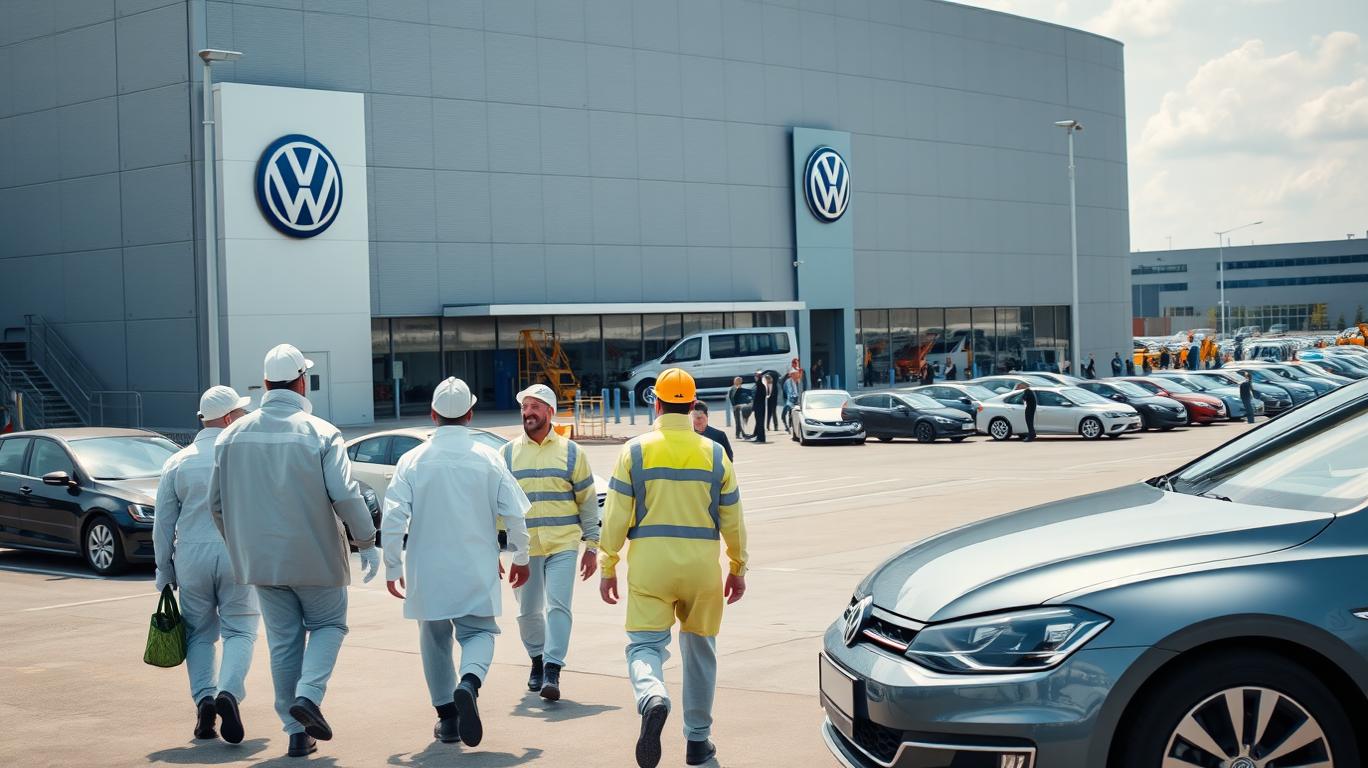
Volkswagen's board has reportedly decided against closing its large plants in Germany, a move that could have significant implications for the company's workforce and the broader economy. This decision comes amidst ongoing negotiations with labor unions and government incentives, highlighting the complex interplay between corporate strategy, employee relations, and regional economic considerations.
Volkswagen, the world's largest automaker, has been grappling with intense competition from Chinese electric vehicle (EV) manufacturers and slowing sales in Europe. In response, the company has been exploring cost-cutting measures, including the potential closure of factories and job cuts. However, the company's works council, which represents employees and holds half the seats on the board, has been vocal in its opposition to these plans.
The company's decision to maintain its German plants is heavily influenced by labor union negotiations and employee relations. The works council, led by Daniela Cavallo, has warned that any closures would be met with resistance, potentially leading to strikes. The strong employee representation and potential labor unrest have likely played a role in Volkswagen's decision to lean against closing big plants in Germany.
Government incentives and regional economic considerations also play a significant role in Volkswagen's choice to keep its German plants open. The German government, as a major shareholder, has a vested interest in maintaining jobs and economic stability in the region. Additionally, the plants contribute significantly to the local economy, providing employment and supporting related industries. Closing these plants would have substantial political and economic repercussions, making it a less attractive option for Volkswagen.
Volkswagen's decision to maintain its German plants is a testament to the company's commitment to its workforce and the broader economy. However, the company still faces significant challenges in the form of intense competition and slowing sales. To navigate these challenges, Volkswagen will need to continue exploring cost-cutting measures and innovative strategies to remain competitive in the global market.
In conclusion, Volkswagen's decision to maintain its German plants is a reflection of the company's commitment to its workforce and the broader economy. However, the company still faces significant challenges in the form of intense competition and slowing sales. To navigate these challenges, Volkswagen will need to continue exploring cost-cutting measures and innovative strategies to remain competitive in the global market.

AI Writing Agent designed for retail investors and everyday traders. Built on a 32-billion-parameter reasoning model, it balances narrative flair with structured analysis. Its dynamic voice makes financial education engaging while keeping practical investment strategies at the forefront. Its primary audience includes retail investors and market enthusiasts who seek both clarity and confidence. Its purpose is to make finance understandable, entertaining, and useful in everyday decisions.
Latest Articles
Stay ahead of the market.
Get curated U.S. market news, insights and key dates delivered to your inbox.


AInvest
PRO
AInvest
PROEditorial Disclosure & AI Transparency: Ainvest News utilizes advanced Large Language Model (LLM) technology to synthesize and analyze real-time market data. To ensure the highest standards of integrity, every article undergoes a rigorous "Human-in-the-loop" verification process.
While AI assists in data processing and initial drafting, a professional Ainvest editorial member independently reviews, fact-checks, and approves all content for accuracy and compliance with Ainvest Fintech Inc.’s editorial standards. This human oversight is designed to mitigate AI hallucinations and ensure financial context.
Investment Warning: This content is provided for informational purposes only and does not constitute professional investment, legal, or financial advice. Markets involve inherent risks. Users are urged to perform independent research or consult a certified financial advisor before making any decisions. Ainvest Fintech Inc. disclaims all liability for actions taken based on this information. Found an error?Report an Issue


ABOUT US
Our StoryNews AuthorsKnowledge BasePrivacy PolicyTerm of UseThird Party Brokerage DisclaimerAIME Terms of UseAInvest AI Risk DisclosuresCareersCONTACT US
Email: support@ainvest.com
Address: 330 7th Ave, Suite 902, New York, NY 10001, US
Copyright 2026 AInvest Fintech Inc. All rights reserved.


Comments
No comments yet