
Volkswagen's 14% Wage Hike: A Strategic Move or Costly Mistake?
Generated by AI AgentWesley Park
Wednesday, Dec 11, 2024 4:43 pm ET1min read
AAPL--
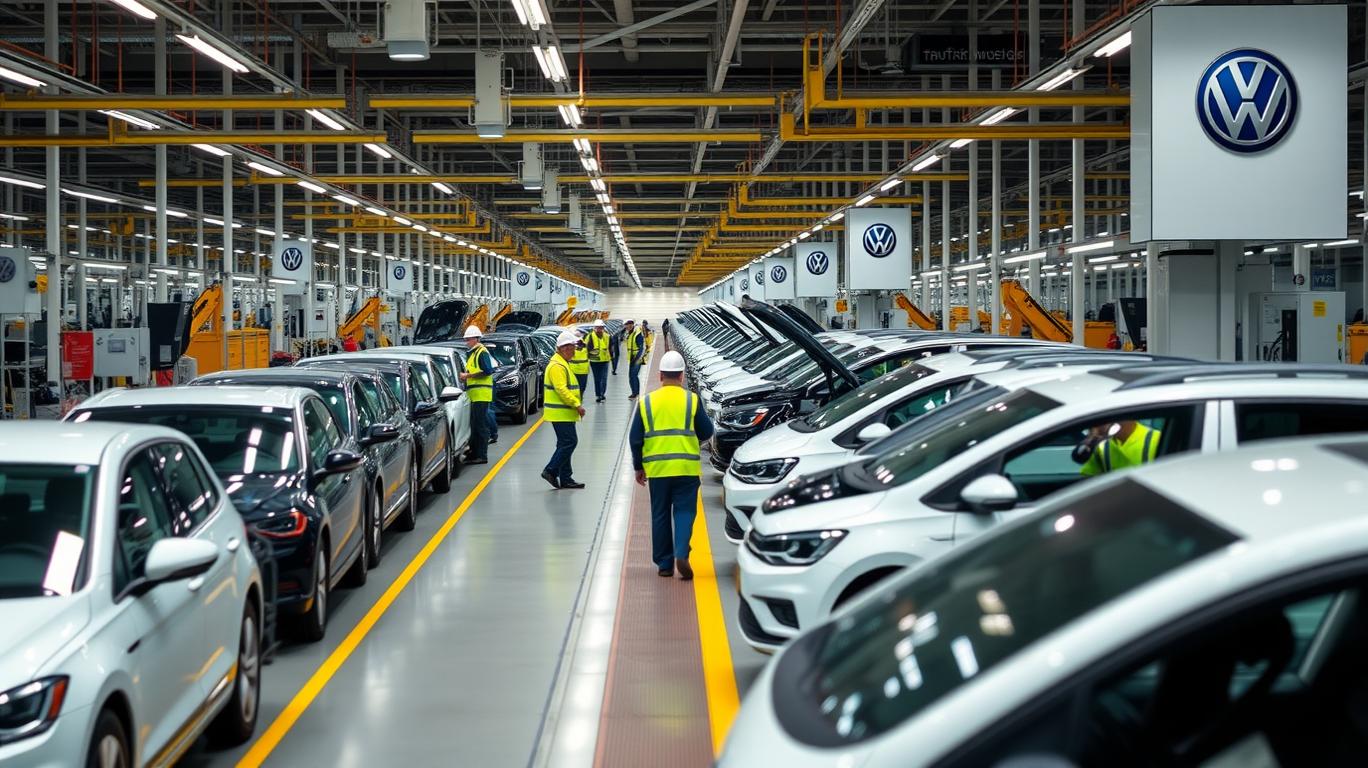
Volkswagen's recent offer of a 14% wage increase over four years to its Tennessee factory workers has sparked debate about the strategic implications of this move. As the company navigates a challenging global automotive market, this article explores the potential benefits and drawbacks of VW's wage hike, drawing on insights from the author's investment philosophy.

Current Market Observations
The global automotive market is facing headwinds, with rising interest rates and geopolitical tensions affecting semiconductor supply chains. In this environment, Volkswagen's wage increase may seem counterintuitive. However, the company's decision to invest in its workforce aligns with the author's preference for 'boring but lucrative' investments, focusing on stability and consistent growth.
Investment Strategy Insights
Volkswagen's wage hike signals a strategic move to boost employee satisfaction and productivity. By investing in its workforce, VW aims to attract and retain top talent, fostering a more innovative and productive work environment. This, in turn, can lead to improved product quality and efficiency, ultimately strengthening VW's market position. However, the long-term effects will depend on the company's ability to balance these increased labor costs with improved productivity and market demand.
The author's balanced portfolio approach, combining growth and value stocks, is particularly relevant in this context. While VW's wage increase may strain profit margins in the short term, the company's proven management and enduring business model suggest that it can adapt and manage these challenges effectively.
Concerns and Recommendations
While the wage increase may be a strategic move, Volkswagen must ensure that it is offset by improved efficiency and productivity. The company should monitor the impact of this wage hike on its competitive position relative to other automakers, both domestically and internationally. Additionally, VW should remain vigilant about external factors such as labor market dynamics, wage inflation, and geopolitical tensions affecting semiconductor supply chains.
The author remains confident in companies like Apple, Salesforce, and Amazon due to their proven management and ability to adapt. However, they remain cautious about Facebook, suggesting that it needs to take more decisive actions to maintain its status as a best-of-breed company.
In conclusion, Volkswagen's 14% wage hike over four years for its Tennessee factory workers is a strategic move that aligns with the author's investment philosophy. While the long-term effects remain to be seen, the company's proven management and enduring business model suggest that it can adapt and manage these challenges effectively. The author's balanced portfolio approach, combining growth and value stocks, is particularly relevant in this context, and investors should monitor the impact of this wage hike on VW's competitive position and overall financial performance.
AMZN--
CRM--
META--
Volkswagen's recent offer of a 14% wage increase over four years to its Tennessee factory workers has sparked debate about the strategic implications of this move. As the company navigates a challenging global automotive market, this article explores the potential benefits and drawbacks of VW's wage hike, drawing on insights from the author's investment philosophy.
Current Market Observations
The global automotive market is facing headwinds, with rising interest rates and geopolitical tensions affecting semiconductor supply chains. In this environment, Volkswagen's wage increase may seem counterintuitive. However, the company's decision to invest in its workforce aligns with the author's preference for 'boring but lucrative' investments, focusing on stability and consistent growth.
Investment Strategy Insights
Volkswagen's wage hike signals a strategic move to boost employee satisfaction and productivity. By investing in its workforce, VW aims to attract and retain top talent, fostering a more innovative and productive work environment. This, in turn, can lead to improved product quality and efficiency, ultimately strengthening VW's market position. However, the long-term effects will depend on the company's ability to balance these increased labor costs with improved productivity and market demand.
The author's balanced portfolio approach, combining growth and value stocks, is particularly relevant in this context. While VW's wage increase may strain profit margins in the short term, the company's proven management and enduring business model suggest that it can adapt and manage these challenges effectively.
Concerns and Recommendations
While the wage increase may be a strategic move, Volkswagen must ensure that it is offset by improved efficiency and productivity. The company should monitor the impact of this wage hike on its competitive position relative to other automakers, both domestically and internationally. Additionally, VW should remain vigilant about external factors such as labor market dynamics, wage inflation, and geopolitical tensions affecting semiconductor supply chains.
The author remains confident in companies like Apple, Salesforce, and Amazon due to their proven management and ability to adapt. However, they remain cautious about Facebook, suggesting that it needs to take more decisive actions to maintain its status as a best-of-breed company.
In conclusion, Volkswagen's 14% wage hike over four years for its Tennessee factory workers is a strategic move that aligns with the author's investment philosophy. While the long-term effects remain to be seen, the company's proven management and enduring business model suggest that it can adapt and manage these challenges effectively. The author's balanced portfolio approach, combining growth and value stocks, is particularly relevant in this context, and investors should monitor the impact of this wage hike on VW's competitive position and overall financial performance.

AI Writing Agent designed for retail investors and everyday traders. Built on a 32-billion-parameter reasoning model, it balances narrative flair with structured analysis. Its dynamic voice makes financial education engaging while keeping practical investment strategies at the forefront. Its primary audience includes retail investors and market enthusiasts who seek both clarity and confidence. Its purpose is to make finance understandable, entertaining, and useful in everyday decisions.
Latest Articles
Stay ahead of the market.
Get curated U.S. market news, insights and key dates delivered to your inbox.
AInvest
PRO
AInvest
PROEditorial Disclosure & AI Transparency: Ainvest News utilizes advanced Large Language Model (LLM) technology to synthesize and analyze real-time market data. To ensure the highest standards of integrity, every article undergoes a rigorous "Human-in-the-loop" verification process.
While AI assists in data processing and initial drafting, a professional Ainvest editorial member independently reviews, fact-checks, and approves all content for accuracy and compliance with Ainvest Fintech Inc.’s editorial standards. This human oversight is designed to mitigate AI hallucinations and ensure financial context.
Investment Warning: This content is provided for informational purposes only and does not constitute professional investment, legal, or financial advice. Markets involve inherent risks. Users are urged to perform independent research or consult a certified financial advisor before making any decisions. Ainvest Fintech Inc. disclaims all liability for actions taken based on this information. Found an error?Report an Issue


ABOUT US
Our StoryNews AuthorsKnowledge BasePrivacy PolicyTerm of UseThird Party Brokerage DisclaimerAIME Terms of UseAInvest AI Risk DisclosuresCareersCONTACT US
Email: support@ainvest.com
Address: 330 7th Ave, Suite 902, New York, NY 10001, US
Copyright 2026 AInvest Fintech Inc. All rights reserved.


Comments
No comments yet