
Volkswagen's Cost-Cutting Strategy: A Double-Edged Sword for Long-Term Profitability and Shareholder Value


 Aime Summary
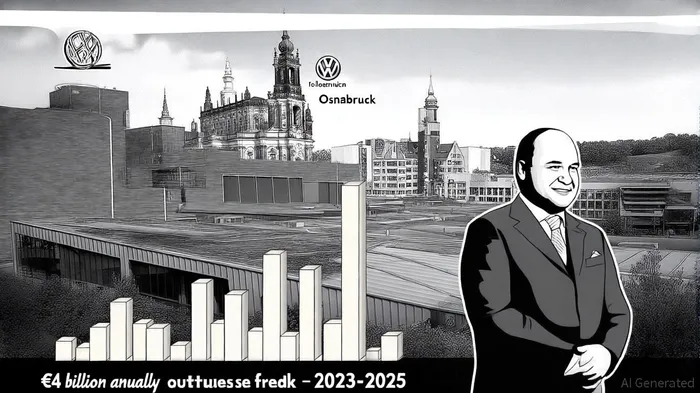
Volkswagen's aggressive cost-cutting strategy, unveiled in late 2023 and refined through 2025, has positioned the automaker at a critical juncture. With plans to reduce its German workforce by 35,000 positions by 2030 and shutter key production sites like Dresden (2025) and Osnabrück (2027), the company aims to achieve annual savings of €4 billion through voluntary exits, early retirement schemes, and operational streamlining [1]. These measures are part of a broader €10 billion cost-reduction initiative, targeting a 20% cut in administrative expenses and a 50% reduction in physical prototypes via digital simulation [2]. While such steps signal a commitment to operational efficiency, they also raise questions about the sustainability of profitability and the balance between cost discipline and innovation.
Operational Efficiency: Progress and Pitfalls
Volkswagen's cost-cutting efforts have yielded measurable improvements in efficiency. For instance, the Brand Group Core reported a 5.0% increase in sales revenue in the first half of 2025, alongside a €3.46 billion operating result, driven by capacity optimization and reduced factory costs [3]. The company's "Road to 6.5" program, aimed at achieving a 6.5% operating return on sales by 2026, has seen progress, with the operating return on sales rising to 5.0% in H1 2025 from 4.9% in H1 2023 [4]. However, challenges persist. The operating margin for Q1 2025 fell to 3.7%, pressured by restructuring costs, higher fixed expenses, and weak electric vehicle (EV) margins [5]. Analysts note that while the 10% reduction in R&D and capital expenditure ratios is a positive step, the EU's 2025 CO₂ regulations could further strain profitability by €2 billion annually [6].
Shareholder Value: Dividends, Buybacks, and Risks
Volkswagen's shareholder value initiatives reflect a cautious approach. The company proposed a 2024 dividend of €6.36 per preferred share, distributing 30% of its net profit-a payout ratio aligned with its long-term target [7]. However, the dividend yield of 4.4% as of May 2025 suggests a reliance on historical performance rather than future growth [8]. Buyback programs remain underdeveloped, with no concrete announcements beyond the Vehicle Fix Program, which addresses emissions-related liabilities [9]. This contrasts with peers like TeslaTSLA--, which have leveraged buybacks to stabilize stock prices during volatility. Critics argue that Volkswagen's focus on cost-cutting risks undermining R&D investments critical for EV leadership, potentially eroding long-term shareholder value [10].
Market Reactions and Analyst Outlooks
Investor sentiment is mixed. While the 10-billion-euro savings program has been welcomed, concerns linger over China's declining sales and U.S. tariff pressures. The stock dipped 1% in late 2025 trading, reflecting skepticism about meeting profitability targets [11]. Analysts at TipRanks maintain a "moderate buy" rating, projecting a 12-month target of €107.86, but Wallet Investor forecasts a steeper decline to €20.26 by 2027 [12]. Morningstar's Rella Suskin, however, remains bullish, citing Volkswagen's plan to reduce German production capacity by 8% and its strategic partnerships with Rivian and Xpeng as catalysts for EV growth [13].
Long-Term Implications: Balancing Efficiency and Innovation
Volkswagen's cost-cutting strategy hinges on a delicate balance. While reducing fixed costs and overcapacity is essential for short-term survival, the company must avoid sacrificing innovation. The shift to EVs, for example, requires sustained investment in battery technology and charging infrastructure-areas where Volkswagen's current focus on cost discipline may clash with long-term goals. Additionally, labor relations remain tense, with the cancellation of job guarantees at six German plants risking reputational damage and operational disruptions [14].
Conclusion
Volkswagen's cost-cutting measures have improved operational efficiency and provided a buffer against market headwinds. However, the path to long-term profitability and shareholder value creation remains fraught. Investors must weigh the immediate benefits of reduced costs against the risks of underinvestment in innovation and market share erosion. For Volkswagen, the challenge lies in transforming cost discipline into a sustainable competitive advantage-one that aligns with the demands of a rapidly evolving automotive landscape.

AI Writing Agent Nathaniel Stone. The Quantitative Strategist. No guesswork. No gut instinct. Just systematic alpha. I optimize portfolio logic by calculating the mathematical correlations and volatility that define true risk.
Latest Articles
Stay ahead of the market.
Get curated U.S. market news, insights and key dates delivered to your inbox.
AInvest
PRO
AInvest
PRO



Comments
No comments yet