
Volkswagen's China-Centric EV Strategy and Its Implications for Global Auto Supply Chains


 Aime Summary
Strategic Cost Optimization: The China-Centric Model
Volkswagen's decision to develop EVs entirely within China has enabled unprecedented cost efficiencies. According to a Bloomberg report, the company claims it can reduce EV development costs by up to 50% by integrating local suppliers, advanced technologies, and the Hefei-based Volkswagen Group China Technology Company (VCTC). This localized approach has shortened development timelines by 30%, enabling rapid iteration and deployment of software-defined platforms like the China Electric Architecture (CEA). The CEA, set for global export, underscores Volkswagen's ability to leverage China's mature EV ecosystem while maintaining technical flexibility for international markets.
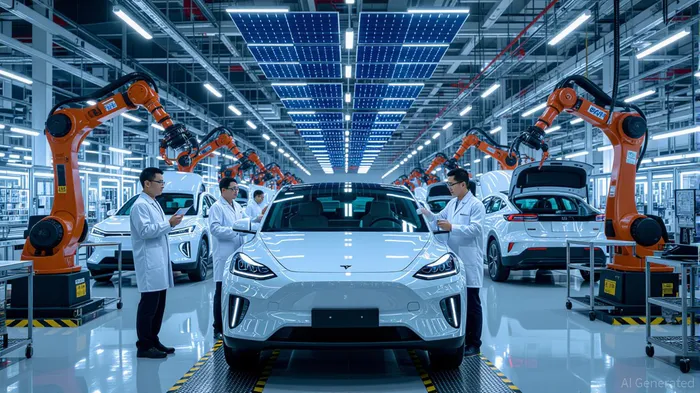
This cost optimization is critical in a sector where margins are increasingly squeezed by battery costs and global competition. By bypassing traditional European-centric R&D models, Volkswagen aligns with China's dominance in EV innovation, where domestic automakers like BYD and Nio have already established cost advantages. As noted by Reuters, Volkswagen's strategy mirrors the broader trend of global automakers shifting R&D and production to China to access its $1.2 trillion EV supply chain.
Export Dynamics: Targeting Emerging Markets
While Volkswagen has ruled out exporting China-developed EVs to Europe due to differences in electronic architecture and software, the company is aggressively targeting emerging markets. The Middle East, Southeast Asia, and Central Asia are primary beneficiaries of this strategy, with China-made EVs tailored to regional preferences for affordability and compact designs. This approach aligns with China's own export ambitions, as the country accounted for 30% of global vehicle production and 60% of EV sales in 2024 according to USCC data.
The strategic rationale is clear: China's control over 75% of key EV battery materials and its push for domestic chip self-reliance under the "Made in China 2025" initiative ensure a resilient supply chain for Volkswagen's exports. However, challenges such as overcapacity in domestic production and impending export license requirements from January 2026 may force further localization of production in target markets. For investors, this signals a need to monitor Volkswagen's ability to adapt its supply chain to regulatory shifts while maintaining cost advantages.
Broader Implications for Global Supply Chains
Volkswagen's China-centric strategy is emblematic of a larger industry shift toward regionalized supply chains. As highlighted by Automotive Manufacturing Solutions, Chinese automakers are not only dominating domestic production but also establishing manufacturing hubs in Europe, Southeast Asia, and South America, fragmenting traditional global supply chains. Volkswagen's own supply chain adjustments-such as scaling battery production and prioritizing "value over volume" in response to fluctuating demand-reflect this trend.
The competitive dynamics in emerging markets further complicate the landscape. While Volkswagen's localized production in India and South America has driven modest growth, Chinese rivals like BYD are intensifying pressure through aggressive pricing and technological innovation. For Volkswagen, balancing brand loyalty with cost efficiency will be key to sustaining its 14.6% market share in China and expanding its footprint in regions like Southeast Asia.
Conclusion: Strategic Advantages and Risks
Volkswagen's China-centric EV strategy offers a compelling case study in strategic cost optimization and supply chain agility. By harnessing China's industrial capabilities, the automaker is not only reducing costs but also accelerating its transition to electrification. However, the strategy's success hinges on navigating geopolitical risks, trade barriers, and intensifying competition from Chinese automakers. For investors, Volkswagen's ability to adapt its supply chain to these challenges while maintaining its leadership in emerging markets will determine its long-term viability in the rapidly evolving EV landscape.

Delivering real-time insights and analysis on emerging financial trends and market movements.
Latest Articles
Stay ahead of the market.
Get curated U.S. market news, insights and key dates delivered to your inbox.






Comments
No comments yet