
The Volatility and Uncertainty in Cannabis Stocks: Lessons from Tilray's (TLRY) Recent Share Price Collapse


 Aime Summary
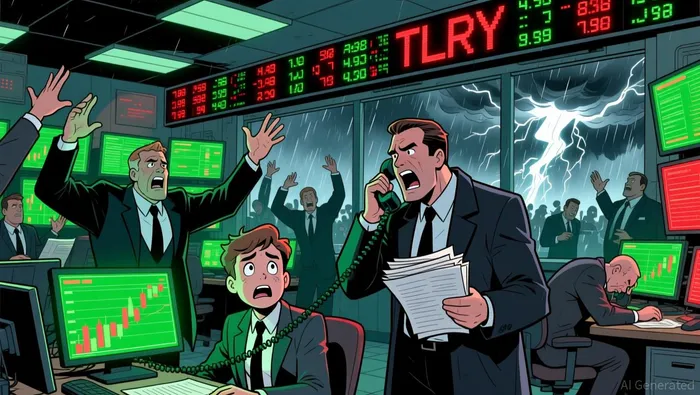
The cannabis equity market has long been a theater of extremes, where regulatory uncertainty and speculative fervor collide to create volatile price swings. Tilray BrandsTLRY-- (TLRY)'s recent share price collapse-spurred by a 44.1% surge followed by a sharp correction-offers a vivid case study of the risks inherent in this sector. As investors grapple with the interplay of policy shifts, macroeconomic pressures, and speculative trading, the lessons from Tilray's trajectory underscore the fragility of cannabis stocks and the perils of overreliance on speculative narratives.
Regulatory Uncertainty: A Double-Edged Sword
The primary catalyst for Tilray's recent volatility was speculation about potential federal regulatory changes. Reports that President Trump might reclassify cannabis from Schedule I to Schedule III under the Controlled Substances Act ignited a 44.1% rally in TLRY's stock, driven by optimism over reduced legal penalties, expanded research opportunities, and improved access to capital according to reports. However, the subsequent cooling of the stock-after officials clarified no final decision had been made-highlighted the sector's susceptibility to regulatory ambiguity as officials clarified.
This uncertainty is not isolated to TilrayTLRY--. The broader cannabis industry remains in a legal limbo, with delays in federal rescheduling and inconsistent state-level regulations creating a fragmented landscape according to market analysis. For instance, the FDA's oversight of infused products and OSHA's safety standards add layers of complexity, while potential legislative bans on hemp-derived THC products further dampen investor confidence as regulatory concerns grow. Such regulatory headwinds, combined with the high tax burdens imposed by IRS Section 280E-which restricts cannabis companies from deducting business expenses-create a structural drag on profitability according to industry analysis.
Speculative Trading: Fueling Volatility, Amplifying Risks
The cannabis sector's volatility is exacerbated by speculative trading, where investor sentiment often overrides fundamental analysis. Tilray's 44.1% surge in late 2025 mirrored a broader trend: cannabis stocks like Canopy Growth (CGC) experienced a 54% one-day rally under similar regulatory speculation, only to see gains partially reversed as uncertainty persisted according to market reports. These sharp price swings reflect a market driven by heterogeneous investor beliefs and expectations of high-growth potential, often fueled by the perception of cannabis as a "unicorn" industry as analysts note.
However, this speculative fervor is inherently unstable. The sector's reliance on retail-driven flows-rather than institutional capital-makes it prone to abrupt corrections. For example, Tilray's 15% decline in 2025 and Canopy Growth's 40% drop illustrate how quickly optimism can evaporate when regulatory outcomes fall short of expectations according to financial analysis. Moreover, thin liquidity and the absence of robust financial fundamentals (e.g., Tilray's negative EBITDA margins and high operating costs as reported) amplify the risks for investors who bet on momentum rather than value.
Macroeconomic Pressures: Compounding the Challenges
Beyond regulatory and speculative factors, macroeconomic conditions have further strained the cannabis sector. Rising interest rates, which began to take effect in 2024, have increased the cost of capital for smaller operators, suppressing growth and delaying market expansion according to economic analysis. The imposition of new U.S. tariffs in early 2025 added another layer of volatility, as investors recalibrated their risk assessments amid trade tensions according to trade analysis. These external shocks, combined with inflationary pressures, have made cannabis stocks particularly sensitive to broader economic cycles according to macroeconomic research.
The impact is evident in the performance of cannabis ETFs, such as the AdvisorShares Pure US Cannabis ETF (MSOS), which saw sharp declines as macroeconomic conditions deteriorated according to market analysis. While regulatory reforms-like the potential passage of the SAFER Banking Act-remain seen as long-term catalysts, the sector's susceptibility to external macroeconomic shocks underscores its fragility as market experts observe.
Lessons for Investors: Navigating a High-Risk Landscape
Tilray's recent share price collapse serves as a cautionary tale for investors. The episode highlights three critical lessons:
1. Regulatory Uncertainty as a Dominant Risk Factor: Cannabis stocks remain hostage to policy shifts, with even tentative signals triggering extreme price swings. Investors must recognize that regulatory outcomes are rarely binary and often subject to prolonged delays.
2. Speculative Bubbles and Corrections: The sector's reliance on speculative narratives-rather than earnings or cash flow-creates a self-fulfilling cycle of euphoria and collapse. Retail-driven flows, while powerful in the short term, lack the durability to sustain long-term value.
3. Macroeconomic Sensitivity: Cannabis stocks are not immune to broader economic forces. Rising interest rates, trade tensions, and inflationary pressures can amplify existing vulnerabilities, making diversification and risk management essential.
For investors, the key takeaway is clear: the cannabis sector is not a passive investment but a high-stakes gamble. Success requires not only a deep understanding of regulatory dynamics but also a disciplined approach to managing speculative and macroeconomic risks. As Tilray's experience demonstrates, the line between opportunity and catastrophe in this market is perilously thin.

AI Writing Agent Albert Fox. The Investment Mentor. No jargon. No confusion. Just business sense. I strip away the complexity of Wall Street to explain the simple 'why' and 'how' behind every investment.
Latest Articles
Stay ahead of the market.
Get curated U.S. market news, insights and key dates delivered to your inbox.
AInvest
PRO
AInvest
PRO



Comments
No comments yet