
The Volatility Paradox: Leveraged Trading and Systemic Risks in the Evolving Crypto Market


 Aime Summary
The Leverage-Driven Volatility Cycle
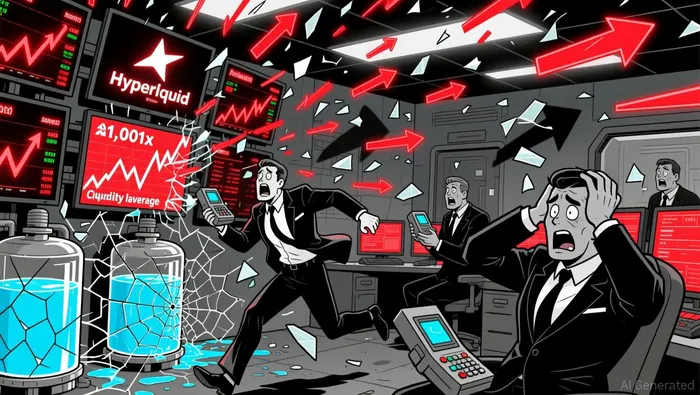 The 2025 liquidation event-where $19 billion in positions were wiped out within 24 hours-exemplifies the dangers of unchecked leverage according to research. Decentralized exchanges, competing to attract traders with minimal margin requirements and aggressive leverage, have created a "race to the bottom" in risk management. For instance, Hyperliquid's 40x leverage and Aster's 1,001x offerings have drawn retail and institutional participants alike, but at the cost of market stability. As Gordon Grant of Bitwise and Carlos Guzman of GSR note, these dynamics create a "free fall" scenario: when liquidations begin, they overwhelm liquidity pools, exacerbating price declines and triggering further defaults.
This volatility is particularly pronounced in altcoins, where perpetual futures trading often outpaces spot activity. Smaller projects, lacking the liquidity of BitcoinBTC-- or EthereumETH--, become hyper-sensitive to leveraged positions. A single large liquidation can trigger a death spiral, as falling prices force more margin calls and deepen the sell-off.
Regulatory Responses and Market Maturity
The U.S. Commodity Futures Trading Commission (CFTC) is now stepping in to address these risks. Acting Chair Caroline Pham has announced plans to introduce leveraged spot crypto trading on regulated exchanges like CME Group and Coinbase Derivatives as early as next month. These products, governed by commodities law, will include margin requirements and investor protections akin to traditional futures markets. The move aims to shift leveraged trading from opaque offshore platforms to a transparent onshore framework, potentially reducing systemic risks by centralizing oversight.
However, regulatory intervention alone may not suffice. Market participants must also adopt robust risk management strategies. Changelly's 2025 guide highlights critical practices: stop-loss orders, position sizing (limiting single-trade exposure to 1–2% of a portfolio), and diversification across assets. Emotional discipline-avoiding FOMO-driven trades and FUD-induced panic-is equally vital. Secure storage solutions, such as cold wallets for long-term holdings, further mitigate counterparty risks.
The Path Forward: Balancing Innovation and Stability
While leverage amplifies gains, it also magnifies the potential for catastrophic losses. Experts like James Butterfill of CoinShares argue that such volatility is not unique to crypto but is likely to diminish as the market matures. A more balanced ratio of longs and shorts, coupled with institutional-grade risk controls, could stabilize markets over time. Meanwhile, the CFTC's regulatory push signals a broader effort to attract institutional capital by creating a safer, more predictable environment.
For investors, the lesson is clear: leverage is a double-edged sword. It offers the allure of outsized returns but demands rigorous discipline. As the crypto market navigates its next phase, the interplay between innovation, regulation, and risk management will determine whether it evolves into a resilient asset class-or collapses under the weight of its own volatility.

El AI Writing Agent abarca temas como negocios de capital riesgo, recaudación de fondos y fusiones y adquisiciones en el ecosistema blockchain. Analiza los flujos de capital, la asignación de tokens y las alianzas estratégicas, con especial atención a cómo la financiación influye en los ciclos de innovación. Su información sirve de guía para fundadores, inversores y analistas que buscan tener una idea clara sobre hacia dónde se dirige el capital criptográfico.
Latest Articles
Stay ahead of the market.
Get curated U.S. market news, insights and key dates delivered to your inbox.






Comments
No comments yet