
The Volatility of Central Bank Independence in a Politicized Era
 Aime Summary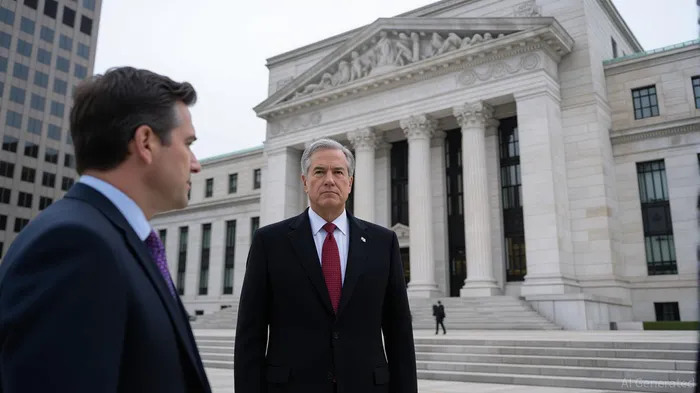
The global economic landscape has long relied on the independence of central banks to stabilize markets, anchor inflation expectations, and foster long-term growth. However, the past decade has witnessed a troubling erosion of this independence, driven by political leaders prioritizing short-term gains over institutional credibility. The U.S. Federal Reserve, once a paragon of monetary prudence, now faces unprecedented scrutiny as political interference risks destabilizing the very systems it was designed to protect.
The Fragile Balance of Independence
Central bank independence is not a natural right but a carefully constructed institutional safeguard. It emerged in the 20th century as a response to the chaos of hyperinflation and financial crises, with countries like Germany (post-Weimar) and the U.S. (post-1913) recognizing that technocratic decision-making was essential to avoid the pitfalls of political short-termism. Yet, this independence is now under siege.
In the U.S., former President Donald Trump's public beratement of Federal Reserve Chair Jerome Powell—labeling him a “knucklehead” and demanding immediate interest rate cuts—exemplifies a dangerous trend. Such rhetoric, while not directly altering policy, undermines the Fed's credibility. Investors and markets begin to question whether monetary decisions are data-driven or politically motivated, eroding trust in the institution's ability to manage inflation and employment. The June 2025 Federal Open Market Committee (FOMC) meeting, where the Fed held rates steady amid Trump's pressure, highlights the tension. While the Fed's caution preserved its autonomy for now, the specter of political interference looms large.
Globally, the pattern is similar. Hungary's appointment of a pro-government central bank governor, Turkey's inflation-driven rate cuts, and the UK's political backlash against the Bank of England's inflation targeting all signal a broader shift. Central banks are increasingly being pulled into the crosshairs of political agendas, whether through direct pressure, strategic appointments, or expanded mandates.
The Economic Consequences of Politicization
The 2023 Drechsel study on U.S. political pressure on the Federal Reserve provides a stark warning. Historical data shows that political shocks—such as Nixon's 1971 demand for monetary easing—can lead to a permanent 8% increase in the price level within six months. This is not merely a theoretical risk: in 2024–2025, the U.S. effective tariff rate rose to levels not seen since the early 20th century, compounding inflationary pressures. Emerging markets (EMs), already vulnerable to trade disruptions and weaker policy credibility, face even greater instability.
The World Economic Outlook (WEO) projects that trade policy uncertainty will reduce global and EM growth by 0.5 percentage points, with inflation diverging sharply between tariff-imposing and tariff-affected economies. For instance, the U.S. risks supply-side inflation from its own trade policies, while EMs reliant on exports may see deflationary demand shocks. This asymmetry creates a volatile environment where central banks must navigate conflicting pressures, often without the tools to stabilize markets effectively.
The Investor's Dilemma: Hedging Against Institutional Uncertainty
For investors, the erosion of central bank independence introduces a new layer of risk. When monetary policy becomes politicized, markets lose a critical anchor. The Fed's dual mandate—price stability and maximum employment—becomes a battleground for partisan agendas, leading to inconsistent policy signals. This uncertainty drives capital flight from assets perceived as vulnerable to inflation or currency devaluation, while safe-haven assets (e.g., U.S. Treasuries, gold) gain appeal.
Consider the case of Turkey, where repeated central bank interventions under political pressure have fueled inflation above 40% in 2025. The Turkish lira has depreciated by over 30% against the U.S. dollar in the same period, eroding investor confidence and triggering capital controls. In contrast, countries with strong central bank independence, such as Switzerland and Sweden, have maintained stable inflation rates and currency values.
Strategic Recommendations for Investors
- Diversify Geographically: Allocate capital to markets with robust central bank independence and sound fiscal policies. Emerging markets with strong institutional frameworks (e.g., South Korea, Singapore) offer growth potential without the volatility of politicized economies.
- Hedge Against Inflation: Inflation-linked bonds (e.g., TIPS in the U.S., U.K. index-linked gilts) and commodities (gold, real estate) can protect portfolios from unexpected inflationary shocks.
- Monitor Policy Sentiment: Track political rhetoric and central bank communications for early signs of politicization. The Fed's minutes and FOMC statements should be analyzed for consistency with economic data, not political narratives.
- Rebalance Toward Defensive Sectors: As uncertainty rises, sectors like utilities, healthcare, and consumer staples may outperform cyclical industries.
The Path Forward: Restoring Institutional Trust
The long-term stability of global markets hinges on preserving central bank independence. While political leaders may benefit from short-term economic boosts, the costs—eroded credibility, higher borrowing costs, and financial instability—far outweigh these gains. Investors, too, have a role to play by demanding transparency and accountability in monetary policy.
As the Fed navigates the 2025–2026 policy cycle, its ability to resist political pressure will be tested. A wait-and-see approach, as adopted in June 2025, may buy time, but it is not a permanent solution. The lessons of history are clear: when central banks lose their autonomy, economies pay the price. For now, investors must remain vigilant, hedging against a future where institutional trust is no longer a given.

Stay ahead of the market.
Get curated U.S. market news, insights and key dates delivered to your inbox.






Comments
No comments yet