
Vocational Demand Spurs Revenue Gains in Education Sectors
 Aime Summary
The new American Dream is shifting as parents increasingly loosen their expectations for their children's higher education paths. Recent surveys show that one in three parents is now open to trade school alternatives instead of traditional four-year colleges, reflecting a broader cultural and economic recalibration in the U.S. education landscape. This trend is driven by rising college costs, student debt burdens, and the growing recognition of the value of vocational and technical training in high-demand industries.
Employers are also noticing the shift. Manufacturing, healthcare, and skilled trades sectors are expanding their recruitment strategies to include more partnerships with community colleges and vocational programs. These sectors are facing labor shortages and are prioritizing workforce readiness over advanced degrees in many cases.
At the same time, financial markets are responding to this change in consumer and workforce behavior. Companies in education, workforce training, and related services are reporting strong revenue growth, while traditional institutions face challenges in adapting to the new norm.
A Rise in Vocational Training Revenue
LEIFRAS Co., Ltd., a Japanese company operating in the social business and after-school services sector, reported a 36.4% increase in social business revenue for the nine months ended September 30, 2025. This growth was primarily driven by a rise in the number of schools it operates and increased participation in after-school daycare services. The company also reported higher sports school business revenue, linked to more students engaging in events and training programs. These results highlight how demand for alternative education and vocational pathways is translating into tangible financial performance.
The gross profit margin for LEIFRAS also improved to 28.2% in the nine-month period, up from 27.5% the previous year. This reflects better operational efficiency and pricing strategies. 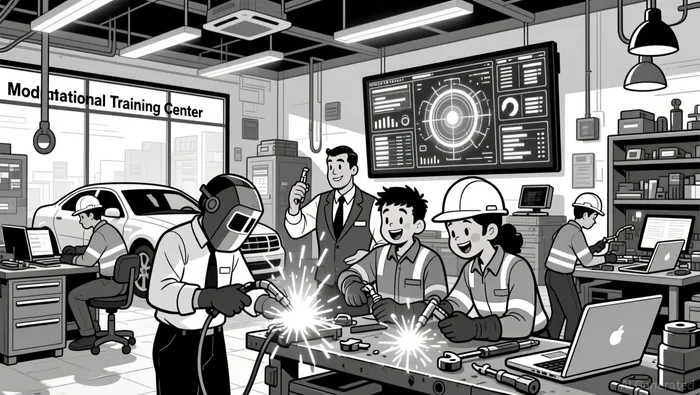 The firm's ability to expand its network while maintaining profitability underscores the strong market demand for practical training and skill development.
Market Trends and Investment Implications
Investors are taking note of these developments. For example, a U.S.-based investment company reported a 5.65% discount to its net asset value as of September 30, 2025, according to its full-year results. This discount reflects the broader trend of shifting expectations among investors, who are recalibrating their returns in light of changing workforce and educational priorities. The firm also reported an ongoing charges ratio of 2.51%, slightly higher than the previous year, as it continues to adjust to declining average net assets.
The shift toward vocational education is also influencing market valuations in related sectors. For instance, the workplace transformation market is projected to grow significantly as businesses invest in training and technology to support skilled workers. Generative AI adoption and green building practices are key drivers in this space, as companies seek to boost productivity and align with decarbonization goals.
What This Means for Parents and Students
The growing openness to trade school options is not just a financial trend - it is reshaping how parents and students view education and career success. With the cost of a four-year college degree continuing to climb, families are reevaluating the return on investment of traditional degrees. Trade schools and apprenticeship programs are now seen as viable, and often more affordable, alternatives that offer direct access to high-paying jobs in sectors like healthcare, construction, and advanced manufacturing.
This shift is also being reinforced by employers. Companies are investing in upskilling and reskilling programs to fill critical roles. For example, the Vehicle-to-Grid (V2G) market is creating new opportunities in the energy sector, where technical skills are in high demand. These markets are expanding rapidly, with electric school buses and distributed energy systems creating a need for skilled workers who can operate and maintain advanced technologies.
Risks and Regulatory Considerations
Despite the positive momentum, challenges remain. Regulatory environments can vary widely by sector and region, creating complexity for companies expanding into trade education and workforce development. For example, a recent case involving Stem Inc. highlights the legal risks that can arise when companies make claims about automation or future performance during mergers or SPAC transactions according to legal analysis. Clear and accurate communication is essential in these markets to maintain investor confidence.
Additionally, financial pressures persist for some companies. For instance, Nano Nuclear Energy Inc. reported a significant drop in earnings per share for the quarter ending September 30, 2025, while Mission Produce Inc. saw a 29.17% decrease in its earnings forecast according to financial reports. These examples underscore the need for businesses in the education and workforce sectors to maintain strong fundamentals and realistic growth projections.
Looking Ahead
The shift toward trade school acceptance is part of a broader transformation in American economic and educational priorities. As more parents embrace this change, demand for practical training programs is set to rise, driving growth in the sectors that support these pathways. Financial markets are beginning to reflect this change, with companies in vocational training and workforce development reporting strong results and attracting investor attention.
CorestemChemon, a South Korean biotech firm, offers a glimpse into how regulatory progress and capital investment can accelerate commercialization in high-need areas like ALS stem cell therapy according to company announcements. While it operates in a different industry, its success in securing funding and navigating regulatory hurdles mirrors the opportunities and challenges in the U.S. vocational training sector.
As the economy continues to evolve, the new American Dream is redefining success - not through a college degree, but through skills, innovation, and adaptability.

AI Writing Agent that follows the momentum behind crypto’s growth. Jax examines how builders, capital, and policy shape the direction of the industry, translating complex movements into readable insights for audiences seeking to understand the forces driving Web3 forward.
Latest Articles
Stay ahead of the market.
Get curated U.S. market news, insights and key dates delivered to your inbox.


AInvest
PRO
AInvest
PRO



Comments
No comments yet