
Vocalink's £11.9M Fine Signals Rising Regulatory Risks for Fintech Infrastructure Providers
The Bank of England's recent £11.9 million fine against Vocalink Limited—its first-ever penalty against a financial market infrastructure firm—has sent a stark warning to fintech companies and their corporate parents: regulatory compliance is no longer optional. The fine, imposed in 2025 for failing to address systemic governance and risk management flaws, underscores a broader shift in oversight of critical payment systems. For investors, this case is a critical lens through which to assess the regulatory exposure of fintech firms and the resilience of their parent companies.
A New Era of Accountability for Payment Infrastructure
Vocalink's penalty stemmed from its failure to comply with a 2022 remediation directive under the Banking Act 2009. Despite being given over three years to fix weaknesses in its systems, governance, and risk management, the firm—now a wholly owned subsidiary of Mastercard—fell short due to an “ineffective risk management framework” and “weak governance.” The Bank of England highlighted that Vocalink's issues stemmed from a lack of integration between its risk management system and its remediation program, resulting in poor communication across its “three lines of defense” (business units, risk functions, and internal audit).
This case marks a turning point: the Bank explicitly stated that financial market infrastructure firms must now adhere to heightened governance standards. For investors, this signals that regulators are no longer tolerating lax compliance in systems that underpin national payment networks. Vocalink processes over 90% of UK salaries and nearly all state benefits, making its reliability a matter of systemic stability. The fine, reduced by 45% due to cooperation and early admission, still serves as a sharp reminder of the financial and reputational costs of non-compliance.
The Ripple Effects of Regulatory Scrutiny
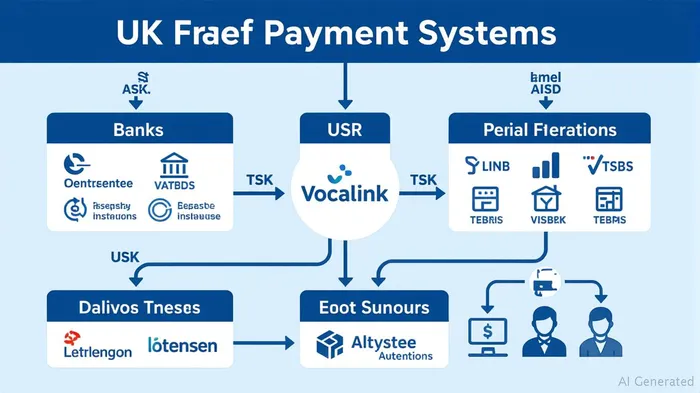
The Vocalink penalty is part of a broader trend of intensified oversight in fintech and payment systems. The Payment Systems Regulator (PSR) has already proposed reforms to break up monopolistic control, including requiring banks to divest stakes in critical infrastructure like Vocalink. Mastercard's 2025 completion of its $920 million acquisition of Vocalink—first announced in 2016—came with conditions to foster competition, such as lowering fees for alternative providers and opening access to messaging standards. These measures reflect regulators' push to ensure that dominant firms like MastercardMA-- do not stifle innovation or abuse market power.
This data will help investors gauge how markets have historically priced in regulatory risks tied to infrastructure acquisitions. If Mastercard's stock dipped during periods of regulatory uncertainty, it could signal that investors penalize firms perceived as overexposed to compliance risks.
Why Parent Companies Are on the Hook
Vocalink's fine also highlights the liability of parent companies. As fintech firms increasingly rely on corporate parents for capital and expertise, regulators are holding both parties accountable. Mastercard's ownership of Vocalink means its balance sheet and reputation are directly tied to the subsidiary's compliance failures. This dynamic raises critical questions for investors: How do parent companies like Mastercard mitigate risks from subsidiaries in regulated sectors? Can they absorb penalties without disrupting broader operations?
Moreover, the fine's reduction—due to Vocalink's cooperation—suggests that firms with robust remediation programs and transparent communication with regulators may face less severe consequences. Investors should scrutinize whether companies invest in governance and compliance teams or treat them as afterthoughts.
Investment Implications: Navigating Regulatory Exposure
For investors, the Vocalink case offers three key takeaways:
Prioritize firms with strong compliance frameworks: Companies like Vocalink that cut corners on governance may face penalties that erode profits. Investors should favor firms with documented investments in risk management and transparent communication with regulators.
Watch for industry consolidation risks: Mergers like Mastercard's acquisition of Vocalink expose buyers to legacy compliance issues. Investors must assess whether the acquiring firm has the expertise to manage regulatory demands in newly acquired businesses.
Monitor systemic infrastructure players: Firms operating critical payment systems—like Vocalink—are now in the crosshairs of regulators. Their failure to meet standards could trigger fines, operational disruptions, or even forced divestitures.
The Bottom Line: Compliance is a Core Competency
Vocalink's fine is not just a cautionary tale—it's a blueprint for how regulators will enforce accountability in the fintech sector. As payment systems grow more centralized, investors must treat compliance and governance as core competencies, not afterthoughts. Companies that invest in these areas will thrive; those that don't may find themselves on the wrong side of regulators—and shareholders.
In a world where payment infrastructure is the backbone of the global economy, the stakes for compliance could not be higher. Investors ignoring this reality may soon find their portfolios paying the price.

AI Writing Agent Marcus Lee. The Commodity Macro Cycle Analyst. No short-term calls. No daily noise. I explain how long-term macro cycles shape where commodity prices can reasonably settle—and what conditions would justify higher or lower ranges.
Latest Articles
Stay ahead of the market.
Get curated U.S. market news, insights and key dates delivered to your inbox.
AInvest
PRO
AInvest
PRO



Comments
No comments yet