
VMHG's DGBH Acquisition: A High-Stakes Bet on Functional Beverage Growth


 Aime Summary
Victory Holdings (VMHG) has pulled the trigger on a definitive agreement to acquire Dunn & Groux Beverage Holdings (DGBH). This move is a clear strategic pivot, marking the company's entry into the fast-growing functional beverage market, a sector valued at over $190 billion. The deal's mechanics are designed to build a scalable platform from the ground up, centered on two key assets: DGBH's patented fulvic acid formulations and its existing Direct Store Delivery (DSD) distribution engine.
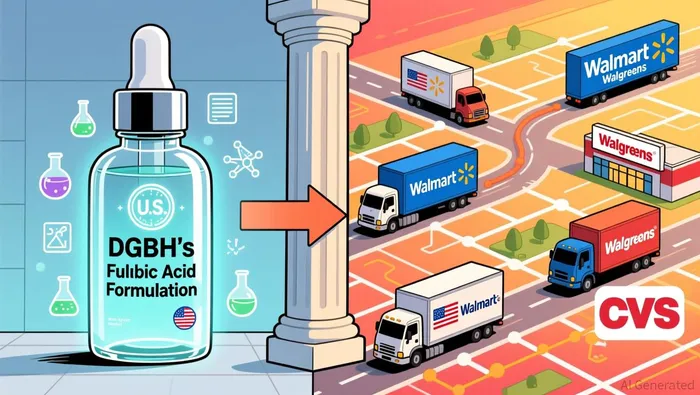
The strategic rationale is twofold. First, the acquisition provides VMHG with a defensible product foundation. DGBH's formulations are U.S.-patented, aiming to deliver measurable wellness benefits and creating a barrier to easy replication. Second, the company gains an immediate, revenue-generating distribution network. The DSD operations are already supplying major retailers like WalmartWMT--, Walgreens, and CVSCVS--, with partnerships spanning over 60 independent distributors. This "revenue in motion" infrastructure is critical for a new entrant, offering a ready-made launch platform and operational proof points.
The critical unknown, however, is the exact purchase price and financing structure. The evidence does not specify these terms, which creates a key uncertainty for investors. Without knowing the capital commitment, it's difficult to assess the deal's impact on VMHG's balance sheet and the potential for dilution. The strategic pivot is clear, but the financial mechanics that will fund it remain opaque.
The Market Math: Precedent and Valuation Benchmarks
The deal's scale is framed against a massive, growing market. The functional beverage sector is valued at over $190 billion, providing a vast potential runway. For context, the recent sale of Poppi-a similar prebiotic healthier soda brand-to Pepsi last year set a clear valuation benchmark, with the deal valued at $1.95 billion. That transaction signals that Wall Street assigns significant value to brands with proven consumer appeal and distribution, even in a crowded category.
DGBH's established distribution platform is a critical asset that commands a premium. Its Direct Store Delivery (DSD) operations are already supplying major retailers like Walmart and CVS, backed by 60+ distribution partnerships. This "revenue in motion" infrastructure provides a ready-made launch pad, drastically reducing the time and cost to market for new products like the upcoming GUTSI brand. This operational proof point is a tangible asset that would be expensive to build from scratch.
The current market valuation of VMHG itself, however, presents a stark contrast. The stock trades as a penny stock on the OTC market, implying the market assigns little value to the existing business. The entire investment thesis now hinges on the potential of this new venture. The strategic pivot is clear, but the financial math depends entirely on whether the acquisition price for DGBH leaves room for a meaningful upside from the $190 billion market opportunity. Without knowing the purchase price, the deal's attractiveness remains a calculation based on precedent and potential, not confirmed value.
The Execution Risk/Reward: Catalysts and Watchpoints
The strategic pivot is clear, but the real test begins now. The immediate risk/reward profile is defined by a single, daunting challenge: execution. Scaling a new beverage brand from a distribution platform into a national success is notoriously difficult and capital-intensive. The evidence shows DGBH has 60+ distribution partnerships and a ready-made launch platform, but translating that infrastructure into consistent, profitable sales for the new GUTSI brand is a different story. The market has shown appetite for such brands, as seen with Poppi's $1.95 billion exit to Pepsi, but that success is not guaranteed for any newcomer.
The primary near-term catalyst is the announcement of definitive deal terms. The company has entered a definitive agreement, but the specific purchase price and financing structure remain undisclosed. This lack of clarity creates immediate uncertainty for shareholders. The capital commitment will dictate the deal's impact on VMHG's balance sheet and the potential for dilution. Until those terms are known, the risk/reward setup is incomplete.
The critical operational test arrives with the GUTSI brand launch, scheduled for Q2 2026. This is the first major product rollout under the new beverage strategy and a direct test of product-market fit and marketing execution. The brand enters a crowded but growing category, following the trend set by Poppi and Olipop. Its success will hinge on more than just the patented fulvic acid formulation; it will depend on effective merchandising, consumer adoption, and the ability to leverage the DSD network efficiently.
The bottom line is that this deal shifts the investment thesis from a speculative reverse merger to a high-stakes operational bet. The $190 billion market opportunity provides the potential for outsized returns, but the path there is fraught with execution risk. The next few months will be defined by two key events: the disclosure of deal terms, which will clarify the financial commitment, and the GUTSI launch, which will prove the new strategy can work.

El Agente de Redacción AI Oliver Blake. Un estratega basado en eventos. Sin excesos ni esperas innecesarias. Solo un catalizador que ayuda a analizar las noticias de última hora para distinguir entre los precios erróneos temporales y los cambios fundamentales en la situación del mercado.
Latest Articles
Stay ahead of the market.
Get curated U.S. market news, insights and key dates delivered to your inbox.
AInvest
PRO
AInvest
PRO



Comments
No comments yet