
VIX Spikes to 19.9: What Drives Market Fear in 2026
 Aime Summary
The VIX volatility index surged to 19.9 in early March 2026, signaling a shift to 'Extreme Fear' among investors Geopolitical tensions, including Middle East conflicts and South China Sea disputes, are driving capital into energy and defense The Federal Reserve faces a policy dilemma between inflation and slowing growth amid oil price spikes and sticky inflation High-growth tech stocks have underperformed as investors seek 'real economy' safe havens like energy and defense contractors The VIX remains elevated at around 20–25, indicating a new normal of higher volatility for 2026
Market anxiety has reached a boiling point in early 2026. The CBOE Volatility Index (VIX), long regarded as Wall Street's fear gauge, crossed the 19.9 threshold—a psychological tipping point that historically signals a shift from complacency to high-alert. For retail and institutional investors alike, the surge in volatility is more than a technical reading—it's a wake-up call that market conditions have fundamentally changed. This article breaks down what's behind the spike, what it means for your portfolio, and where the next big moves might come from.
Market volatility isn't just a numbers game. It reflects the real-world pressures investors are facing, from geopolitical hotspots to policy uncertainty. The VIX is at its highest levels in years, and the underlying drivers are clear: a sudden escalation in the Middle East, a fifth-year intensification of the Russia-Ukraine conflict, and rising uncertainty in the South China Sea. These events are creating a "multiplexed" risk environment—where multiple threats compound instead of canceling out—and investors are responding by reallocating capital toward sectors that offer stability, like energy and defense. This shift is not just about fear—it's about adapting to a new kind of uncertainty that doesn't follow traditional economic cycles.
Is the VIX at 19.9 a warning sign for investors?
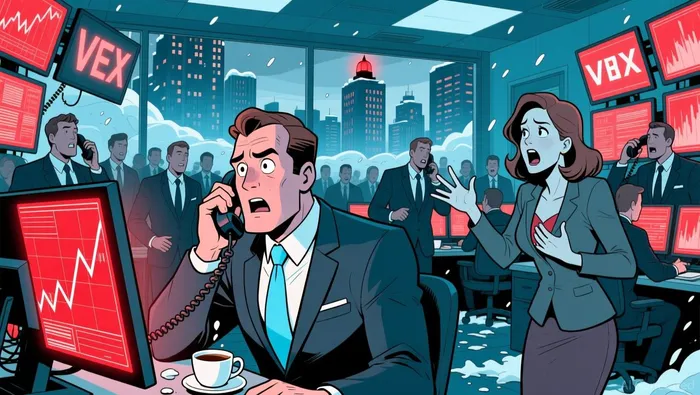
The VIX, often called the "fear index," is a volatility benchmark derived from S&P 500 index options. It measures how much investors expect the market to swing in the next 30 days. A VIX reading above 20 is generally considered high, and a spike to 19.9 represents a psychological turning point. In the past, such levels have often coincided with major market regime shifts, like the 2008 financial crisis or the post-pandemic correction in 2020 according to market analysis.
What makes the 2026 spike unique is the convergence of geopolitical and economic forces. The VIX is not just reacting to market jitters—it's responding to concrete events: a blockade of the Strait of Hormuz, a potential stagflationary scenario, and a Federal Reserve caught between inflation and a softening labor market. This means the current volatility isn't just a short-term blip; it's a structural shift in how investors are pricing risk. That's why the VIX is staying elevated, even as oil prices and military tensions fluctuate day to day as market data shows.
How should investors respond to the VIX spike and geopolitical uncertainty?
In a high-volatility environment, the old rules don't always apply. Diversification, for instance, takes on new meaning when energy prices and defense stocks are rising faster than the broader market. The key is to understand where capital is flowing—and why. For example, energy giants like ExxonMobilXOM-- and ChevronCVX-- have seen significant gains in early 2026, not just from oil prices, but from a shift in investor sentiment toward "real assets" according to recent analysis.
But energy is only part of the story. Defense stocks, like Lockheed MartinLMT-- and Northrop GrummanNOC--, are also benefiting from the global security environment. These companies are seeing increased demand for their services, and investors are taking notice. Meanwhile, high-growth tech stocks—once the darlings of the 2025 rally—are under pressure as companies like Microsoft and Palantir grapple with higher energy costs and shifting market expectations.
For investors, this means a new era of portfolio management. The focus is shifting from growth-at-all-costs to resilience and balance sheet strength. This is where active management comes in—by stress-testing leverage, identifying high-fixed-cost sectors, and avoiding over-levered business models, investors can navigate the volatility without losing sight of long-term goals as market reports indicate.
What to watch next: VIX, oil, and the Fed
The next few months will be defined by how these three factors interact: the VIX, oil prices, and Federal Reserve policy. If the Strait of Hormuz remains blocked, oil prices will likely stay elevated, keeping the VIX in the 18–25 range. If a diplomatic resolution emerges, we could see a temporary relief rally and a pullback in volatility. But if tensions escalate further, the VIX could test levels not seen since the 2008 crisis according to market forecasts.
At the same time, the Federal Reserve is in a tricky position. It can't ignore the inflationary effects of rising energy prices, but it also can't afford to stoke a recession by raising rates further. This policy paralysis is adding to market uncertainty and keeping the VIX elevated. For now, the Fed is maintaining rates in the 3.5%–3.75% range, but that could change if inflation or employment data force a decision.
Investors should also keep an eye on the ASEAN tensions in the South China Sea and the U.S. military's ability to maintain stability in the Pacific. If supply chains face further disruptions, we could see a return of supply-side inflation—something the market hasn't fully priced in yet. This would complicate the Fed's path and likely keep the VIX in a higher range for the foreseeable future as analysts predict.
The VIX spike is more than just a technical reading—it's a signal that the market is recalibrating to a new era of risk. Whether you're a retail investor or a seasoned professional, understanding what's driving the volatility and how to position your portfolio accordingly is crucial. The road ahead is uncertain, but it's also full of opportunity. The key is to stay informed, stay flexible, and stay focused on the fundamentals that matter most in a world of volatility.

Manténgase al tanto de las noticias de Wall Street en tiempo real.
Latest Articles
Stay ahead of the market.
Get curated U.S. market news, insights and key dates delivered to your inbox.
AInvest
PRO
AInvest
PRO



Comments
No comments yet