
VIX Rises Amid Geopolitical Uncertainty: What Investors Should Know
 Aime Summary
The VIX has surged to 31 due to U.S.-Iran tensions and oil price spikes - Historically, VIX levels above 29 have predicted S&P 500 gains in the next 12 months - Elevated VIX indicates fear is priced in, but outcomes often turn out less severe than feared - Intraday VIX futures show volatility four times the average, the highest in six months - Options traders are seeing high implied volatility in specific stocks like Archer-Daniels-Midland
The VIX — Wall Street’s so-called fear gauge — is flashing red for investors as geopolitical tensions and oil price surges push volatility to a six-month high. With the index at 31 as of March 2026, the VIX is signaling uncertainty but also creating potential for sharp market rebounds if outcomes prove less dire than expected. For now, the market is in a holding pattern, waiting for clarity on whether the conflict will escalate or de-escalate. What makes this moment unique is the interplay of regional supply chain disruptions and the fragmentation of global markets, which has made past VIX patterns less reliable. Still, the core principle remains: fear often precedes opportunity for those willing to stay the course.
What's Driving Recent Volatility?
The recent rise in the VIX is being driven by a perfect storm of geopolitical tensions and economic uncertainty. U.S. and Israeli strikes on Iran have disrupted oil production and shipping, pushing prices above $100 per barrel and raising concerns about inflation. These developments have created a high-stress environment for global markets, particularly in Europe, where equity indices have been hit hardest. Oil price spikes are especially concerning because they have a cascading effect on everything from consumer spending to central bank policy. In this context, the VIX isn't just a barometer of fear—it's a signal that investors are bracing for a potential correction, even as they remain cautiously optimistic about long-term recovery.
Investors are also watching closely for signs that the Strait of Hormuz will reopen or that the conflict will de-escalate. Until that happens, market sentiment will remain fragile. Analysts point out that volatility spikes are common during periods of geopolitical uncertainty, but the key is how markets respond once the worst-case scenarios appear less likely.
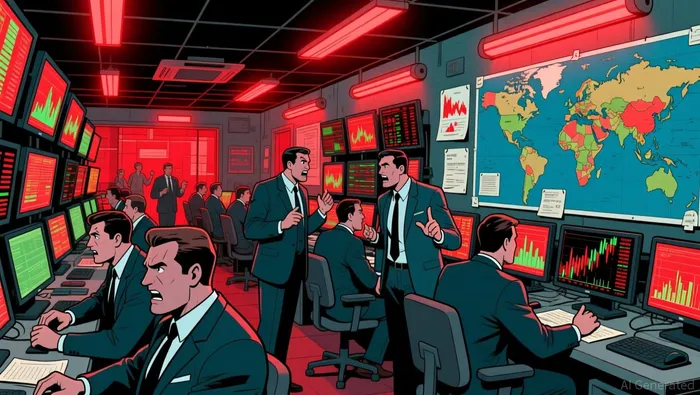
Why Is the VIX Important for Emerging Market Investors?
For emerging market (EM) investors, the VIX serves as an indirect but powerful signal. When the index rises above 40, history shows EM equities have often delivered strong returns in the following 12 months. This is because much of the bad news is already priced in during periods of heightened fear. For example, the MSCI Emerging Markets Index fell 11% in March 2026 amid fears of oil shocks and inflation, but the VIX's current level (31) is near — though not yet at — the threshold that has historically indicated strong returns for EM equities.
The challenge for investors is knowing when to stay the course and when to pivot. While high volatility creates attractive entry points, it also increases the risk of further declines if worst-case scenarios play out. This is why many investors are adopting a cautious approach, avoiding over-leveraging and maintaining hedging strategies to protect against further downturns.
How to Position for VIX-Driven Market Shifts
Investors navigating the current VIX environment need a balanced approach. One popular tactic is to buy VIX options to hedge against potential market corrections. However, this strategy requires careful timing and a strong understanding of implied volatility dynamics. Options traders are already seeing elevated volatility in individual stocks like Archer-Daniels-MidlandADM--, where the April 17, 2026 $62.5 Call option is showing one of the highest levels of implied volatility today.
For long-term investors, the key is to avoid knee-jerk reactions and instead focus on fundamental analysis. While the VIX is a powerful tool for gauging market sentiment, it should not be the sole basis for investment decisions. Market strategists suggest looking for opportunities in sectors that are less sensitive to geopolitical shocks, such as technology, where many analysts still expect strong performance over the next year.
Ultimately, the VIX is a useful indicator, but it’s not foolproof. Investors should use it in conjunction with broader economic and geopolitical analysis to make informed decisions. As the market continues to navigate uncertainty, staying informed and agile will be the key to success.

Stay ahead of the market.
Get curated U.S. market news, insights and key dates delivered to your inbox.


AInvest
PRO
AInvest
PRO



Comments
No comments yet