
The VIX's Recent Decline Amid S&P 500 Volatility: A Barometer of Complacency and Strategic Reassessment


 Aime Summary
The VIX and Market Sentiment: A Tale of Two Narratives
The VIX's subdued levels in Q4 2025 suggest a broad sense of complacency among investors, even as economic headwinds such as trade tensions and recession risks persist. According to a report by J.P. Morgan Research, the decline in the VIX aligns with a stabilization in market sentiment following a volatile first half of 2025, with levels as low as 16.35 in September 2025 indicating relatively stable conditions. This trend is further supported by the S&P 500's performance, which has been buoyed by double-digit corporate earnings growth and a favorable monetary policy environment.
However, the disconnect between low volatility and elevated valuations raises questions. While the S&P 500 trades near multi-year highs, many analysts caution that short-term market movements are less influenced by valuations than by broader macroeconomic and geopolitical factors. This dynamic highlights a key tension: investors are increasingly confident in near-term stability but remain wary of potential triggers such as inflationary pressures or trade policy shifts.
Portfolio Positioning: Hedging in a Low-Volatility Environment
The VIX's decline has prompted a strategic reassessment among portfolio managers. With volatility subdued, traditional hedging strategies-such as purchasing S&P 500 put options-have become less costly, offering temporary downside protection at a lower premium. For instance, as of November 2025, the cost of hedging via put options was significantly lower when the VIX was at 17 compared to periods of heightened volatility. 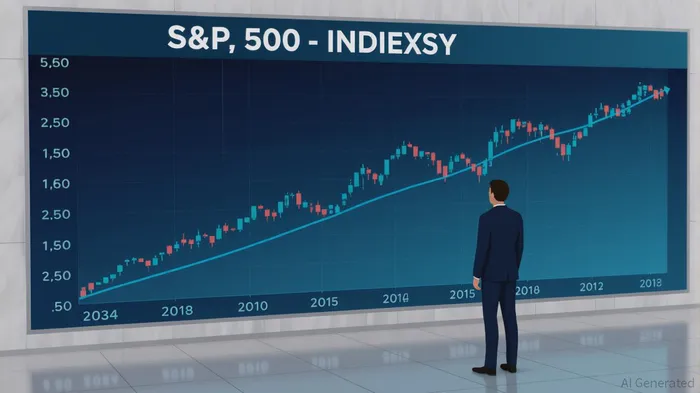
Yet, some investors are adopting unconventional approaches. Hedge funds, for example, have increasingly turned to VIX call options in 2025 to navigate volatility risk, reflecting a shift from traditional put-based strategies. This trend underscores a growing recognition of the VIX's role as a standalone asset class rather than merely a risk-off indicator. As WisdomTree analysts note, a declining VIX can be bullish for equities, as it often precedes strong market performance by signaling reduced fear and increased risk appetite.
Risks and Reassessments: A Call for Caution
Despite the current optimism, experts warn against overreliance on low volatility. The VIX's inverse relationship with the S&P 500 remains a critical consideration, particularly in a market where defensive sectors and later-cycle industries have gained traction amid a rotation away from high-beta tech stocks. According to Schwab's market analysis, the S&P 500's breadth has narrowed, with a smaller percentage of constituents outperforming the index-a sign of fragility in momentum.
Moreover, the VIX's recent volatility-spiking over 20% in early November-serves as a reminder of the market's susceptibility to sudden shocks. As one expert cautions, "While low VIX levels suggest complacency, they also create a false sense of security. Investors must remain vigilant about tail risks, particularly in a landscape where trade tensions and fiscal policy uncertainty remain unresolved" .
Conclusion: Balancing Confidence and Caution
The VIX's decline in late 2025 reflects a market in transition-balancing optimism about corporate earnings and monetary policy with caution about macroeconomic risks. For investors, this environment demands a nuanced approach: leveraging low volatility to enhance returns while maintaining hedging strategies to mitigate potential downturns. As Schwab's research emphasizes, the key lies in aligning portfolio positioning with both the current volatility regime and the broader economic outlook.
In the near term, the VIX will remain a critical barometer of market sentiment. Its trajectory will not only influence equity strategies but also shape how investors navigate the delicate interplay between risk and reward in an increasingly unpredictable world.

Delivering real-time insights and analysis on emerging financial trends and market movements.
Latest Articles
Stay ahead of the market.
Get curated U.S. market news, insights and key dates delivered to your inbox.






Comments
No comments yet