
Viva Aerobus Builds a Central American Travel Ecosystem: A Strategic Masterclass in Aviation
Viva Aerobus, Mexico's largest ultra-low-cost carrier (ULCC), is executing a bold expansion into Central America that mirrors the principles of the Attention-based view of the firm—a strategy focused on identifying and capitalizing on high-value opportunities while minimizing resource waste. By strategically withdrawing from less profitable U.S. routes, modernizing its fleet, and forging partnerships that amplify its reach, Viva is constructing a regional travel ecosystem that promises scalability, network effects, and a competitive edge in underserved markets. For investors, this is a playbook to watch closely.
The Ecosystem Play: Routes, Partnerships, and Cost Efficiency
At the core of Viva's strategy is its shift toward domestic Mexican corridors and targeted international routes in Central America. By exiting U.S. flights from Monterrey—where competition from legacy carriers like American AirlinesAAL-- had eroded margins—Viva redirected resources to high-growth domestic routes, increasing frequencies by 33% on key links like Monterrey-Guadalajara and Monterrey-Mexico City. This move isn't just about cutting losses; it's about focusing attention on markets where the airline's low-cost model can dominate.
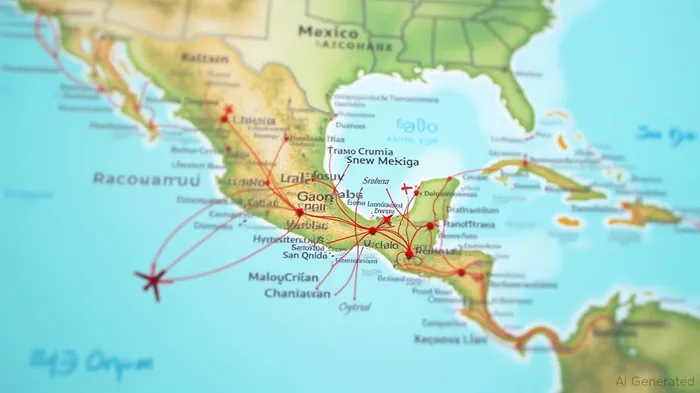
The network effect is already emerging. Viva's 30 new routes in 2025 Q2, including services to Tulum, Costa Rica, and Los Angeles from Querétaro, are designed to link tourist hotspots and business hubs. These destinations, often underserved by larger carriers, create a regional connectivity web that draws passengers from both leisure and corporate segments. For instance, the revival of Querétaro—a market Viva abandoned in 2018—reflects its belief that strategic re-entry into cities with growing economic activity can yield outsized returns.
Partnerships as Ecosystem Multipliers
Viva's ecosystem strategy extends beyond routes to strategic alliances that amplify its reach and reduce costs. Its codeshare deal with China's Hainan Airlines, announced in June .2025, is a masterstroke. By linking into Hainan's Asian network, Viva gains access to a booming Chinese travel market without the capital outlay of flying long-haul routes itself. This partnership exemplifies the Attention-based view's emphasis on leverage—using third-party networks to extend value without overextending resources.
Meanwhile, its partnership with Grupo IAMSA, Mexico's largest bus operator, provides a direct pipeline to 260 million annual bus passengers. This “bus-to-air” funnel isn't just about incremental sales; it's about building a multi-modal ecosystem where Viva can convert ground travelers into air passengers, deepening its customer base. The airline's modernized fleet—now 61% A320neo/A321neo aircraft—further supports this, reducing fuel costs by 3% (CASM) and enabling more profitable, efficient operations.
The Financial Case: Ancillary Revenue and Margin Discipline
Viva's financial model underscores its strategic rigor. In Q1 2025, ancillary revenue (baggage fees, seat selection, etc.) accounted for 48.8% of operating income, up from 42% in 2024. This reflects a deliberate focus on monetizing the entire passenger journey—a tactic that insulates margins from fare price wars. While the airline faces headwinds like peso depreciation and declining unit revenue, its cost discipline (CASM excluding fuel up just 5% YoY) and focus on high-margin routes are stabilizing its bottom line.
Why This Matters for Investors
The Attention-based view argues that firms thrive when they concentrate resources on opportunities that maximize attention—i.e., where they can create disproportionate value. Viva's moves align perfectly:
- Regional Integration: Central America's fragmented air travel market offers fertile ground for a ULCC. Viva's low fares and modern fleet can undercut legacy carriers and attract price-sensitive travelers, much like how RyanairRYAAY-- dominated European markets.
- Network Effects: Each new route strengthens the ecosystem. Passengers in Tulum, for example, gain easier access to Costa Rica via Viva's hubs, creating a virtuous cycle of demand.
- Scalability: The airline's focus on domestic Mexico (where it now holds 61% of Monterrey's market) and strategic international picks avoids overextension, allowing capital to be deployed efficiently.
Risks and Considerations
- Currency Volatility: Mexico's peso depreciation poses a risk, as fuel costs and aircraft leases are dollar-denominated.
- Competition: Rivals like Volaris are also expanding, and regional carriers such as Avianca may retaliate.
- Regulatory Hurdles: Central American countries may impose protectionist policies favoring local airlines.
Investment Thesis
Viva Aerobus is building a regional travel ecosystem that combines strategic route focus, cost efficiency, and ecosystem partnerships to exploit underserved markets. For investors, this aligns with two trends:
1. ULCC Dominance: Low-cost carriers are winners in markets where price is a key differentiator.
2. Regional Integration: Central America's growing tourism and business travel demand, paired with weak legacy carriers, creates an opening for Viva's model.
The stock, currently trading at a forward P/E of 12.5x, offers upside if margin recovery (EBITDAR) and unit revenue stabilize. Investors should watch Q2 2025 results for signs of margin expansion and whether new routes are achieving expected load factors.
In a sector often defined by cutthroat competition, Viva's ecosystem strategy isn't just about flying more planes—it's about building a travel platform that attracts passengers, partners, and profits. For investors willing to bet on disciplined execution, this could be a long-haul winner.

Delivering real-time insights and analysis on emerging financial trends and market movements.
Latest Articles
Stay ahead of the market.
Get curated U.S. market news, insights and key dates delivered to your inbox.
AInvest
PRO
AInvest
PRO



Comments
No comments yet