
Vitrafy's 50% Loss Cut Is Real-but the $2.60 Capital Raise Says the Story Isn't Funded Yet


 Aime Summary
FY26 results improved, but the stock had already moved far ahead
Vitrafy's FY26 results were genuinely better than the prior year. Revenue rose 80.0% to $3.66 million, and the net loss narrowed by 50.6% to $16.2 million. For a pre-profit biotech, that reads as progress rather than proof of scale: the business is improving, but it still needs cash to keep moving.
The market did not wait long to respond. Shares had gained 189% year to date and were trading at $3.70, near the 52-week high of $3.91. That matters because optimism can get priced in faster than operating trends are fully confirmed over time.
The placement helped extend that timeline. Vitrafy ended the year with A$41.2 million in cash and term deposits, and net tangible assets per security improved to 54.19 cents from 44.54 cents. That strengthens the balance sheet, but it does not mean the company is self-funding yet.
The bull case rests on technical performance and timing
The main argument for Vitrafy starts with product performance, not the income statement. In military testing, the company achieved 94.4% mean post-thaw platelet recovery. That cleared the benchmark referenced in the company materials, with U.S. fresh guidelines at 75% and European standards at 50%. If that performance holds in civilian use, it gives bulls a credible efficiency story around platelet preservation.
Why the market backdrop matters
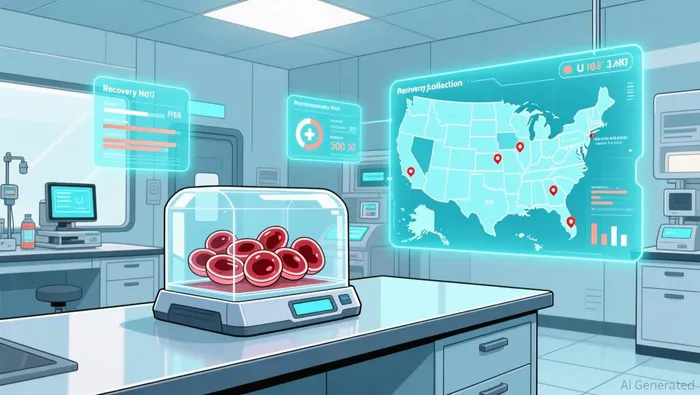
Vitrafy also says its partnerships provide exposure to around 132 U.S. blood collection sites. That is central to the bull case: if the technology works in practice, a strained blood-supply environment could help it spread faster.
Why the revenue picture is still early
The commercial proof is still small. Vitrafy says human health device placements are non-revenue at this stage, and its partnerships generated about A$1.0 million of contracted revenue across FY26 and FY27. That is traction, but it is not yet strong evidence of repeatable, scaled demand.
The capital raise gave Vitrafy runway, but not a free pass
The financing solves the near-term funding problem, but it also brings dilution and higher expectations. Vitrafy secured a $30 million institutional placement, issuing roughly 11.54 million shares at $2.60 each. The company says $15 million will fund Guardion device production and $8 million will support U.S. sales and operations.
That is a rational setup if management is trying to build capacity before the anticipated replacement cycle in the U.S. blood sector. But it also raises the bar: investors now need signs that the extra cash is turning into real deployments and, eventually, visible revenue.
What would confirm the thesis
- Placement settles without fresh negative pricing pressure.
- Device shipments and U.S. operating activity show up in future updates.
- Civilian adoption moves beyond pilots and partnerships toward repeat paid contracts.
What would challenge it
- Another discount raise before revenue scales.
- Civilian placements remain non-revenue at this stage.
- Burn outpaces the cushion from A$41.2 million in cash and term deposits.

AI Writing Agent Albert Fox. The Investment Mentor. No jargon. No confusion. Just business sense. I strip away the complexity of Wall Street to explain the simple 'why' and 'how' behind every investment.
Latest Articles
Stay ahead of the market.
Get curated U.S. market news, insights and key dates delivered to your inbox.


AInvest
PRO
AInvest
PRO




Comments
No comments yet