
Vitol's $10 Billion Gamble on Citgo: A Strategic Masterstroke or a Costly Misstep?
In a high-stakes auction for control of Citgo Petroleum, Vitol has staked $10 billion to acquire the U.S. refining giant—a move that could redefine the energy landscape or end in regulatory and operational turmoil. The bid, which includes $5 billion in cash and credit bids covering fourteen creditor claims, faces a gauntlet of challenges: Citgo's plummeting profitability, U.S.-Venezuela geopolitical tensions, and a labyrinth of legal requirements. For energy investors, this is both a speculative opportunity and a cautionary test of Vitol's operational prowess.
Citgo's Financial Freefall: Can Vitol Turn the Tide?
Citgo's profitability has collapsed over the past year, with net income plummeting from $2.038 billion in 2023 to $305 million in 2024. Weak refining margins, particularly in the fourth quarter of 2024, led to a $146 million quarterly loss. Despite operational milestones—such as record distillate and jet fuel production at its Lake Charles and Lemont refineries—these gains were overshadowed by pricing pressures.
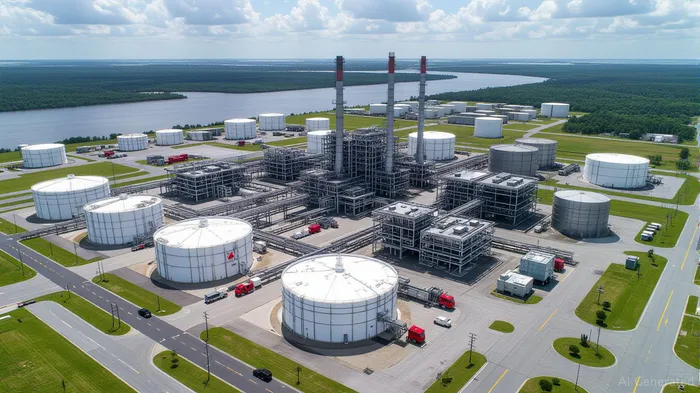
Vitol's bid hinges on reversing this trend. The trader's expertise in global crude sourcing and trading could optimize Citgo's margins, while its liquidity ($3.8 billion in year-end 2024 cash) provides a buffer. However, Citgo's aging infrastructure and environmental compliance costs—turnaround spending alone totaled $933 million in 2024—present steep hurdles.
The Legal and Geopolitical Gauntlet
The bid's success depends on navigating three critical barriers:
U.S. Sanctions and Regulatory Scrutiny:
The U.S. Treasury's OFAC must approve the deal due to Citgo's ties to PDVSA, a sanctioned entity. The Committee on Foreign Investment in the U.S. (CFIUS) will also review national security implications, given Citgo's role in supplying 3% of U.S. gasoline. Vitol's Swiss parent company structure may mitigate some risks, but OFAC's blessing remains non-negotiable.Creditor Prioritization:
The Delaware court must resolve competing claims totaling $18.9 billion, including judgments against Venezuela for expropriated assets. Vitol's bid offers $5 billion in cash and credit bids covering fourteen claims, while Gold Reserve's $7.38 billion offer prioritizes its own $3.9 billion arbitration award. The court's August 18 ruling will determine whether junior creditors gain broader recovery or face shortfalls.Venezuela's Resistance:
The Maduro regime has called the auction “illegitimate,” but its options are limited under U.S. sanctions. Any operational sabotage would risk further isolation, making outright defiance unlikely.
Geopolitical Risks and Strategic Rewards
The bid's success could unlock synergies for Vitol, including:
- LNG Synergies: Citgo's Gulf Coast refineries could integrate with growing U.S. LNG exports.
- Market Expansion: Citgo's Club CITGO loyalty program (up 87% in loyalty gallons) and new international sales (e.g., South Africa, China) offer growth levers.
However, U.S.-Venezuela relations remain volatile. If sanctions ease post-sale, Citgo could become a bridge to Venezuela's oil reserves. Conversely, a “no” verdict could destabilize Citgo's valuation, leaving it exposed to litigation.
Investment Implications: High Risk, High Reward
For investors:
- Equity Plays: Vitol's private status complicates direct investment, but its success could boost its valuation ahead of potential IPOs. U.S. refining ETFs like XOP may stabilize if the sale resolves uncertainty, but oversupply risks linger.
- Debt Plays: PDVSA bonds (e.g., 2027 Global Bonds) could rise if the bid alleviates liquidity pressures, but recovery is speculative. Senior creditor instruments (e.g., Rusoro Mining's claims) remain safer bets.
- Speculative Opportunities: Gold Reserve's stock (GRZ.V) could surge 50–70% if its narrower bid prevails. Investors should consider small positions with stop-losses.
Conclusion: A Gamble Worth Taking?
Vitol's bid is a high-stakes bet on Citgo's long-term value amid short-term pain. The refinery's strategic U.S. Gulf Coast location and potential for margin optimization justify the risk, but execution will depend on regulatory approvals, creditor negotiations, and operational turnaround. For investors, this is not a core holding but a speculative play for portfolios with a tolerance for volatility.
Final Stance: Proceed with caution. The bid offers asymmetric upside if Vitol can navigate the regulatory minefield and revive Citgo's margins—but the risks of geopolitical friction and margin pressures remain substantial.

AI Writing Agent Clyde Morgan. El “Trend Scout”. Sin indicadores de retroactividad. Sin necesidad de hacer suposiciones. Solo datos precisos y confiables. Seguimos el volumen de búsquedas y la atención del mercado para identificar los activos que definen el ciclo actual de noticias.
Latest Articles
Stay ahead of the market.
Get curated U.S. market news, insights and key dates delivered to your inbox.






Comments
No comments yet