
Vitalik Buterin's ZK Breakthroughs and the Future of Blockchain Scalability: A Deep Dive into Investment Opportunities


 Aime Summary
The GKR Protocol: A Game-Changer for Scalability
Buterin's GKR protocol, unveiled in late 2025, addresses one of ZK's most persistent bottlenecks: the computational overhead of verifying complex proofs. Traditional ZK systems rely on intermediate commitments to validate computations, a process that is both time-consuming and resource-intensive. GKR streamlines this by leveraging sumcheck protocols to verify computations using a handful of randomly selected data points, reducing Ethereum's verification costs by up to 50%.
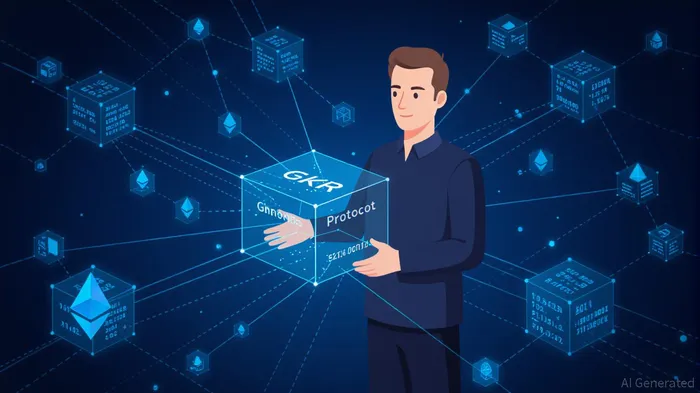 The implications are profound. Platforms like zkSync Era and StarkNet have already harnessed GKR to achieve transaction rates exceeding 43,000 TPS, with zkSync Era reporting a 30% reduction in gas fees for users. For decentralized finance (DeFi) projects, this translates to a potential 90% cut in gasGAS-- costs, unlocking new liquidity and user engagement. As Buterin himself noted at DevConnect 2025, the protocol's efficiency could eventually enable even consumer-grade devices like laptops and smartphones to function as full EthereumETH-- nodes, further decentralizing the network.
Institutional Adoption and Market Growth
The GKR-driven scalability boom has coincided with a surge in institutional adoption. Major players like Goldman Sachs and Sony are now leveraging ZK solutions for confidential transactions and NFT validation according to Bitget. Regulatory frameworks such as the U.S. GENIUS Act and the EU's MiCA have also played a role, reducing compliance barriers and contributing to over $28 billion in total value locked (TVL) for ZK-based protocols.
This institutional shift is reshaping the investment landscape. ZK-based rollups, once speculative, now underpin real-world applications. For instance:
- zkSync Era processes 27 million monthly transactions, with gas fees for DeFi platforms like SyncSwap and Mute.io dropping by over 90%.
- StarkNet powers high-frequency trading on dYdXDYDX-- v3, achieving near-instant execution and a 90% gas cost reduction.
- Polygon zkEVM has slashed gaming and NFT transaction costs from $2–3 to under $0.05, attracting developers with Ethereum compatibility.
These projects are not just scaling transactions-they're enabling tokenized real-world assets (RWAs). Platforms like OptimismOP-- and Polygon now host over $10 billion in RWAs, from real estate to carbon credits, signaling a shift toward institutional-grade blockchain infrastructure.
Funding, Partnerships, and Performance Metrics
The ZK ecosystem's maturation is evident in its funding rounds and strategic alliances. zkSync Era has drawn institutional interest through its Prividium platform, offering compliance-driven blockchain-as-a-service (BaaS) solutions. Deutsche Bank's Project DAMA 2, built on zkSyncZK--, exemplifies the platform's appeal in enterprise applications according to Bitget.
StarkNet has raised $365.4 million in consensus value, including $135 million from BitcoinBTC-- staking, while its S-two prover-a next-generation proving system-has enhanced speed and privacy according to Messari. Meanwhile, Polygon zkEVM's AggLayer is pioneering a "superchain" of interconnected ZK networks, positioning it as a leader in interoperability.
Performance metrics in Q4 2025 underscore these projects' traction:
- edgeX, operating on StarkEx, recorded $137.9 billion in monthly trading volume and $432.3 million in TVL.
- Ethereum's L2 ecosystem now processes 60% of ZK-based transactions, with platforms like Arbitrum and Base dominating daily volume.
Challenges and the Road Ahead
Despite these gains, challenges persist. Generating ZK proofs remains computationally intensive, and regulatory scrutiny from the EU's AMLR could slow adoption. Additionally, the crypto market's late-2025 turbulence, marked by a 16.90% drop in Bitcoin and a 25% decline in the MarketVector Smart Contract Leaders Index, highlights the sector's volatility.
However, the institutionalization of L2 ecosystems is stabilizing the market. Capital flows are increasingly favoring protocols with Sharpe Ratio-driven strategies, such as those integrating AI for encryption and data integrity. Startups leveraging L2 solutions are also redefining business models, with gaming and DeFi platforms achieving 95% gas fee reductions.
Investment Outlook
For investors, the ZK landscape offers a mix of high-growth opportunities and emerging risks. Key areas to watch include:
1. ZK Infrastructure Leaders: Projects like zkSync Era, StarkNetSTRK--, and Polygon zkEVM are well-positioned to benefit from Ethereum's roadmap and institutional demand.
2. AI-Integrated Protocols: As AI tools mature, platforms combining machine learning with ZK proofs for encryption and data validation could see outsized growth.
3. RWA Tokenization Platforms: The $10 billion in RWAs on L2 networks suggests a long-term trend toward blockchain-based asset management according to Nethermind.
The ZK market, valued at $1.28 billion in 2024, is projected to grow at a 22.1% CAGR to $7.59 billion by 2033 according to zkSync. While volatility remains a concern, the sector's shift from speculation to practical implementation-bolstered by Buterin's GKR protocol and institutional adoption-makes it a compelling arena for strategic investment.

Blending traditional trading wisdom with cutting-edge cryptocurrency insights.
Latest Articles
Stay ahead of the market.
Get curated U.S. market news, insights and key dates delivered to your inbox.


AInvest
PRO
AInvest
PRO



Comments
No comments yet