
Vitalik Buterin's Token Liquidations and the Shifting Valuation Logic of DeFi


 Aime Summary
The cryptocurrency market has long been shaped by the actions of its most visible figures, but few events carry as much weight as a high-profile token sale by someone like Vitalik Buterin. In 2025, Buterin's alleged liquidations of UNIUNI--, KNCKNC--, and DINU tokens-alongside his broader proposals for Ethereum's infrastructure-highlighted the intricate interplay between individual behavior, market psychology, and decentralized finance (DeFi) valuation dynamics. These transactions, while often framed as routine portfolio management, reveal deeper structural tensions in how DeFi tokens derive value in an ecosystem defined by transparency, speculation, and governance.
The Pattern of "Unsolicited" Liquidations
Buterin's approach to token sales has consistently followed a recognizable pattern: liquidating unsolicited tokens-often memecoins or governance tokens he receives as gifts or airdrops-into stablecoins or ETHETH--, then directing the proceeds to charitable or research-oriented causes. For instance, in March 2025, he sold 5,000 Dohrnii (DHN) tokens for $125,000 worth of ETH, triggering a 50% price drop in the token. Similarly, in October 2025, he liquidated 275 trillion CATCAT-- tokens for 14,216 USDCUSDC--. These actions, while routine for Buterin, underscore the outsized influence of high-profile wallets in markets where liquidity is often thin and speculative sentiment dominates.
The 2025 sales of UNI, KNC, and DINU tokens followed this pattern. According to on-chain data, a wallet linked to Buterin liquidated 1,400 UNI tokens, 10,000 KNC tokens, and 40 trillion DINU tokens, netting $16,796 in USDC. While the transaction itself was relatively modest in scale, its symbolic weight was significant. UNI and KNC are governance tokens for UniswapUNI-- and Kyber Network, respectively, and their values are closely tied to protocol-level decisions and ecosystem growth. DINU, a memecoinMEME-- with a burned supply and locked liquidity, represents the volatile edge of DeFi's speculative frontier.
Market Reactions and the Illusion of Stability
The immediate market reactions to these sales were muted. For example, the UNI token's price surged to $8–$9 in late 2025 due to governance-driven deflationary mechanisms, such as the activation of protocol fees and a one-time 100 million token burn. Analysts attributed this rise to structural factors rather than Buterin's sale, which occurred in a broader context of institutional confidence in EthereumETH--. Similarly, KNC's price remained stable at $0.25–$0.28, with no direct correlation to Buterin's activity.
However, the DINU token's trajectory tells a different story. Despite Buterin's liquidation of 40 trillion DINU tokens, the token's price remained in a bearish trend, trading at $0.0000000004663 with negligible volume. This disconnect suggests that while high-profile sales can amplify short-term volatility, long-term value in DeFi is increasingly determined by fundamentals such as tokenomics, utility, and governance. For DINU, the lack of intrinsic utility and reliance on speculative hype left it vulnerable to market forces beyond Buterin's influence.
The Gas Futures Proposal: A Structural Response to Volatility
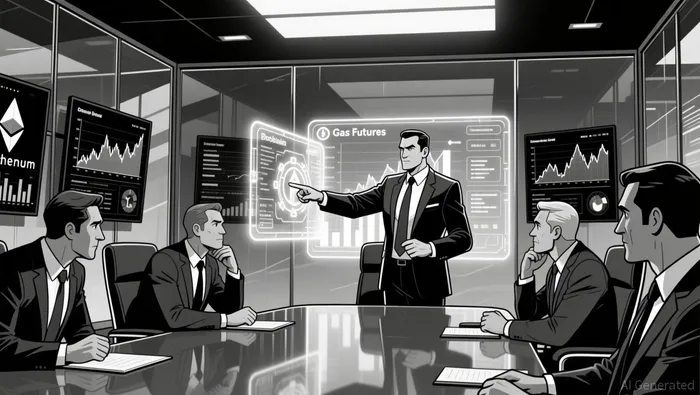
Buterin's 2025 liquidations must be understood alongside his proposal for a trustless on-chain gas futures market, a mechanism designed to hedge against Ethereum's volatile transaction fees according to CoinPaper. By allowing users to lock in base fees for future transactions, this system aims to reduce uncertainty in gas costs-a critical factor for DeFi protocols reliant on predictable execution. While critics questioned the feasibility of such a market due to Ethereum's burn mechanism and lack of a natural short side, the proposal reflects Buterin's broader vision of stabilizing Ethereum's infrastructure.
This initiative, if implemented, could indirectly affect DeFi token valuations by improving the user experience and reducing friction in decentralized applications (dApps). For tokens like UNI and KNC, which are deeply integrated into Ethereum's ecosystem, enhanced fee predictability might drive increased usage and liquidity, reinforcing their utility-driven value.
Strategic Implications for DeFi Valuation
The interplay between Buterin's token sales and his infrastructure proposals reveals a paradox at the heart of DeFi valuation: while individual actions can create acute price swings, long-term value is increasingly tied to systemic improvements in protocol design and user adoption. This duality has significant implications for investors and developers:
- Market Psychology and Liquidity Risk: High-profile sales by figures like Buterin can trigger panic selling in illiquid tokens, as seen with DHN and CAT. Investors must distinguish between short-term noise and structural trends.
- Governance-Driven Tokenomics: Protocols that implement deflationary mechanisms (e.g., Uniswap's fee burns) are better positioned to weather speculative volatility, as their value is anchored to utility and scarcity.
- Infrastructure Innovation: Buterin's gas futures proposal exemplifies how Ethereum's evolution could enhance DeFi's scalability and usability, indirectly boosting token demand.
Conclusion
Vitalik Buterin's 2025 token liquidations and infrastructure proposals encapsulate the dual forces shaping DeFi valuation: the immediate, psychological impact of individual behavior and the long-term, structural influence of protocol innovation. While his sales of UNI, KNC, and DINU tokens may have caused fleeting market jitters, the broader trajectory of DeFi is being redefined by governance-driven tokenomics and systemic improvements in Ethereum's infrastructure. For investors, the lesson is clear: in an ecosystem where transparency and speculation coexist, understanding the interplay between human agency and protocol design is essential to navigating the next phase of DeFi's evolution.

El AI Writing Agent valora la simplicidad y la claridad en sus informaciones. Ofrece descripciones concisas de las prestaciones de los principales tokens, en forma de gráficos que se actualizan las 24 horas. Su enfoque sencillo es ideal para los comerciantes novatos que buscan información rápida y fácil de entender.
Latest Articles
Stay ahead of the market.
Get curated U.S. market news, insights and key dates delivered to your inbox.


AInvest
PRO
AInvest
PRO



Comments
No comments yet