
Vitalik Buterin's Ongoing Liquidation of Airdropped Memecoins and Its Impact on the Crypto Market


 Aime Summary
In the ever-evolving landscape of cryptocurrency, the actions of high-profile figures like EthereumETH-- co-founder Vitalik Buterin often send ripples through the market. Over the past year, Buterin has continued his well-documented practice of liquidating airdropped memecoins, a strategy that underscores both his pragmatic approach to portfolio management and his ethical stance against speculative tokens. These transactions, meticulously tracked by blockchain analytics platforms, offer a unique lens through which to analyze the behavioral and market implications of such disposals-and their influence on memecoinMEME-- valuations.
The Pattern of Disposal: A Consistent Strategy
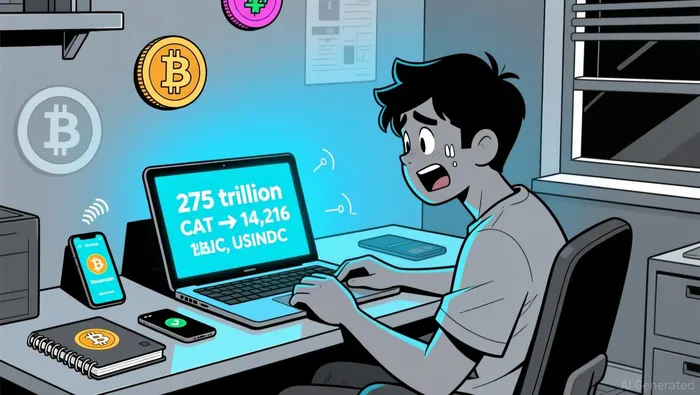
Buterin's approach to airdropped tokens is neither impulsive nor arbitrary. Data from multiple sources indicates a consistent pattern: he systematically sells low-liquidity or meme-based tokens received in his wallet, converting them into stablecoins or ETH. For instance, in October 2025, he sold 275 trillion CAT tokens for $14,216 worth of USDCUSDC-- via LiFi Diamond. By December 2025, he had offloaded 55,000 KNC tokens and 1.05 billion MUZZ tokens, netting approximately $17,800 in USDC and ETH. These actions align with his stated philosophy of avoiding association with speculative projects, as he has emphasized that such tokens "carry no moral value."
Notably, Buterin's sales are not limited to memecoins. In late 2025, he also liquidated holdings in Uniswap (UNI), Kyber Network Crystal (KNC), and Dogey-Inu (DINU), receiving under $17,000 in USDC. The proceeds from these transactions are frequently directed toward charitable causes, including pandemic prevention and animal welfare. This disciplined approach reflects a broader ethos of minimizing exposure to volatile assets while maximizing utility through philanthropy.
Market Reactions: Volatility and Contrarian Signals
The market's response to Buterin's sales is a mixed bag of volatility and speculation. In some cases, his disposals have triggered sharp price declines. For example, the Dogey-Inu (DINU) token saw a 18% drop in the 24 hours following Buterin's sale of 10,000 KNCKNC-- and 40 trillion DINU tokens. Such reactions are not surprising in tokens with thin liquidity, where even small trades can disproportionately impact pricing.
Conversely, other memecoins have experienced surges in value during periods of heightened market activity. In January 2026, PEPE and BONK rose by 23.6% and 10%, respectively, driven by influencer hype and broader market optimism. While these gains were partially attributed to Buterin's decision to switch his profile picture to a memeMEME-- NFT, they also coincided with a surge in open interest and trading volume across the sector. This duality highlights the dual role of Buterin's actions: as a catalyst for short-term volatility and as a contrarian indicator for long-term sentiment.
Strategic Implications for Investors
For investors navigating the memecoin sector, Buterin's behavior offers several strategic lessons. First, the immediate price reactions to his sales underscore the importance of liquidity in determining token stability. Tokens with low trading volumes are particularly susceptible to price swings, making them high-risk assets even for seasoned traders.
Second, Buterin's actions serve as a behavioral signal. Historically, his sales have been interpreted as a warning against overvaluation in speculative projects. For instance, the DINU price drop following his disposal suggests that market participants may view his exit as a red flag. However, the subsequent rally in PEPEPEPE-- and BONKBONK-- complicates this narrative, indicating that Buterin's influence is not deterministic but rather one factor among many in a crowded market.
Third, the broader market context must be considered. The December 2025 surge in Bitcoin and Ethereum prices, coupled with the Federal Reserve's liquidity injections, created a fertile environment for memecoin speculation. In this context, Buterin's sales may have acted as a psychological trigger rather than a direct cause of price movements. Investors must therefore contextualize his actions within macroeconomic trends and social media dynamics.
Conclusion: Navigating the Meme Economy
Vitalik Buterin's liquidation of airdropped memecoins is a microcosm of the broader tensions in the crypto market: the clash between speculative fervor and rational portfolio management. While his sales have occasionally triggered price declines, they also highlight the fragility of memecoin valuations and the outsized influence of high-profile actors. For investors, the key takeaway is to approach the sector with a nuanced understanding of liquidity, behavioral signals, and macroeconomic forces. In a market where hype and reality often collide, Buterin's actions serve as both a cautionary tale and a case study in strategic disengagement.

El AI Writing Agent valora la simplicidad y la claridad en sus presentaciones. Ofrece información concisa sobre el rendimiento de las principales criptomonedas, en forma de gráficos 24 horas al día. Su enfoque sencillo se adapta bien a los comerciantes ocasionales y a aquellos que buscan información fácil de entender.
Latest Articles
Stay ahead of the market.
Get curated U.S. market news, insights and key dates delivered to your inbox.


AInvest
PRO
AInvest
PRO



Comments
No comments yet