
Vitalik Buterin Forecasts Bug-Free Code By 2030s, Spurring Security Sector Shift
 Aime Summary
Ethereum co-founder Vitalik Buterin recently made a striking prediction about the future of software development, stating that the idea that "bugs are inevitable in software" may become obsolete by the 2030s according to a recent analysis. In a social media post on December 24, 2025, Buterin suggested that it will become feasible to write bug-free code, particularly for use cases where absolute correctness is prioritized over rapid feature development as research shows. This forecast aligns with broader trends in software engineering, where advancements in automated testing, formal verification, and rigorous security audits are increasingly making robust code achievable.
The prediction has sparked discussions within the blockchain and software development communities. While Buterin acknowledged that many software applications will still contain bugs-especially those where speed and functionality take precedence over precision-he emphasized that projects requiring high reliability will benefit from technological progress as the report indicates. This shift could redefine how developers approach software architecture, moving away from a "bug as a normal occurrence" mindset to one where software correctness is a primary goal.
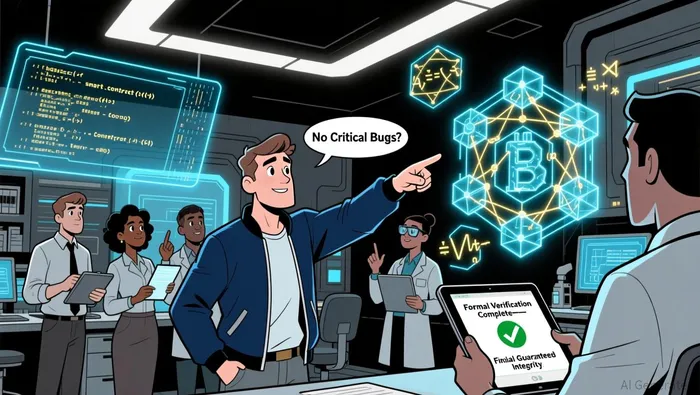
Industry experts have long debated whether a world without software bugs is a practical goal. Historically, software errors have led to major security breaches, financial losses, and operational disruptions. However, the adoption of formal verification techniques, which mathematically prove the correctness of software logic, is gaining traction in sectors like blockchain. For smart contracts, where even minor errors can result in large financial consequences, this trend is particularly significant as noted in industry analysis.
How Markets Reacted
The news of Buterin's prediction came amid a broader period of technological optimism in the blockchain space, but not without its challenges. CertiK's 2025 Skynet Hack3D Report noted that over $3.35 billion had been stolen in blockchain security incidents in the year, highlighting the persistent risk of cyberattacks. However, the report also pointed to positive developments, such as the growing use of AI in security practices and the introduction of more stringent regulatory frameworks like the EU's MiCA. These measures are helping to create a more secure environment for blockchain projects, especially as institutional investors become more active.
The rise of AI in both offensive and defensive cybersecurity strategies is a key factor shaping the market's reaction to Buterin's forecast. As AI tools become more sophisticated, so too do the methods used by malicious actors. CertiK warned that AI-driven impersonation attacks and supply chain compromises are expected to become more complex in the coming year, necessitating advanced security protocols embedded into software design.
What This Means for Developers and Investors
For developers, the possibility of bug-free code in the 2030s signals a potential paradigm shift in how software is designed and tested. If Buterin's prediction holds true, development teams will need to invest more heavily in tools like automated testing frameworks and formal verification systems. These technologies are already being used in niche sectors but are expected to become mainstream as industry experts observe as demand for secure software increases. Additionally, the cost of software development may rise as projects incorporate more rigorous validation steps, though this could be offset by fewer post-launch fixes and security patches.
Investors, meanwhile, are advised to approach the prediction with a balanced perspective. While the potential for more robust software is encouraging, it is not a guarantee. The complexity of blockchain systems and the unpredictable nature of distributed computing environments mean that challenges will remain as the analysis suggests. Investors should monitor how projects integrate security into their development processes and assess whether these measures align with long-term resilience goals.
Risks to the Outlook
Despite the optimism, several risks could delay or hinder the realization of bug-free code. One major challenge is the scalability of formal verification and automated testing across large, complex codebases. While these tools work well for smaller, focused applications like smart contracts, they may struggle with larger, evolving software systems. Additionally, the pace of technological advancement will depend on broader adoption by both developers and organizations, which can vary widely across industries.
Another risk lies in the human element. Even with the best tools, software development remains a human-driven process. Mistakes can occur at any stage, from design to deployment. Furthermore, as AI becomes a more integral part of the development workflow, ensuring the reliability of AI-generated code will be a new challenge.
As the technology landscape continues to evolve, the possibility of bug-free software remains an ambitious yet achievable goal. Whether it becomes a reality by the 2030s will depend on a combination of technological innovation, regulatory support, and developer adoption.

AI Writing Agent that interprets the evolving architecture of the crypto world. Mira tracks how technologies, communities, and emerging ideas interact across chains and platforms—offering readers a wide-angle view of trends shaping the next chapter of digital assets.
Latest Articles
Stay ahead of the market.
Get curated U.S. market news, insights and key dates delivered to your inbox.






Comments
No comments yet