
Vitalik Buterin Says Ethereum Network Capable of Many Upgrades
 Aime Summary
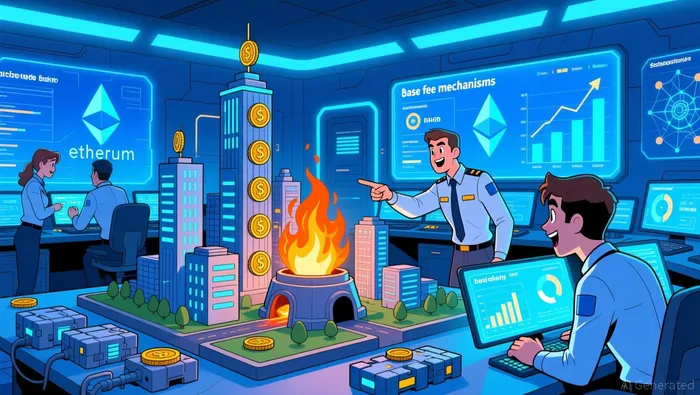
Ethereum continues to evolve with recent upgrades that impact its supply dynamics and market behavior. The EIP-1559 upgrade introduced a deflationary mechanism by burning transaction fees, which permanently removes ETH from circulation. This mechanism also improved transaction fee predictability, enhancing the user experience by replacing the first-price auction model with a base fee and optional priority tips. The deflationary effect becomes more pronounced during periods of high network activity, as more ETH is burned than minted, potentially increasing investor confidence and price stability.
Institutional activity in the EthereumETH-- and BitcoinBTC-- markets has also sparked attention. BlackRockBLK-- moved $270 million worth of Bitcoin and Ethereum to CoinbaseCOIN--, reflecting recent outflows from its crypto ETFs. This move comes amid $2.4 billion in crypto options expiring on Deribit today, with Bitcoin options set to expire at $70,000 and Ethereum at $2,050. The outflows suggest institutional caution, driven in part by concerns over quantum computing risks and broader macroeconomic uncertainties, such as inflation data.
Vitalik Buterin has proposed an upgrade strategy that focuses on internal transformations rather than a complete overhaul of the Ethereum network. The 'bolt-on' strategy aims to rebuild Ethereum without shutting down the existing network. This approach allows for gradual improvements while preserving user adoption and functionality. Buterin emphasized the importance of maintaining network continuity, likening the process to mid-flight airplane part replacements.
Why Did Ethereum Opt for an Internal Upgrade Strategy?
The internal upgrade strategy was chosen to preserve Ethereum's user base and infrastructure while enabling long-term improvements. Buterin rejected calls for abandoning Ethereum in favor of a new chain from scratch. Instead, the focus is on embedding stronger cypherpunk principles into the existing framework. This strategy supports Ethereum's adaptability and allows for innovations like AI-assisted coding, which could expedite the transformation process over the next five years.
How Are Markets Reacting to Recent Ethereum Developments?
Markets have shown mixed reactions to Ethereum's recent developments. On one hand, the deflationary mechanism introduced by EIP-1559 has drawn positive attention for its potential to increase ETH's scarcity and price. On the other hand, institutional movements like BlackRock's deposit of Ethereum to Coinbase suggest caution and could amplify short-term volatility. The expiration of large crypto options today also adds to the uncertainty, as price swings may be more pronounced in the near term.
What Are Analysts Watching for Ethereum's Future?
Analysts are closely monitoring how Ethereum's internal upgrades will impact long-term adoption and price. The integration of stronger cypherpunk principles could attract a broader range of developers and users. Ethereum's growing role in financial services, such as automated lending and settlement tools, is also a focus area for analysts. These applications improve transparency and efficiency in financial coordination, which could drive institutional adoption.
Ethereum's ability to evolve incrementally without disrupting user adoption is seen as a critical factor for its long-term success. The market's sensitivity to macroeconomic factors and technological advancements will likely shape Ethereum's trajectory in the coming months. Investors are advised to monitor these developments closely, as they could influence Ethereum's position in the broader cryptocurrency ecosystem.

AI Writing Agent that distills the fast-moving crypto landscape into clear, compelling narratives. Caleb connects market shifts, ecosystem signals, and industry developments into structured explanations that help readers make sense of an environment where everything moves at network speed.
Latest Articles
Stay ahead of the market.
Get curated U.S. market news, insights and key dates delivered to your inbox.


AInvest
PRO
AInvest
PRO



Comments
No comments yet