
Vitalik Buterin's Endorsement of ZKsync: A Catalyst for Ethereum's Institutional-Grade Privacy and Scalability
 Aime Summary
ZKsync's Technical Breakroads and Ethereum's Scaling Ambitions
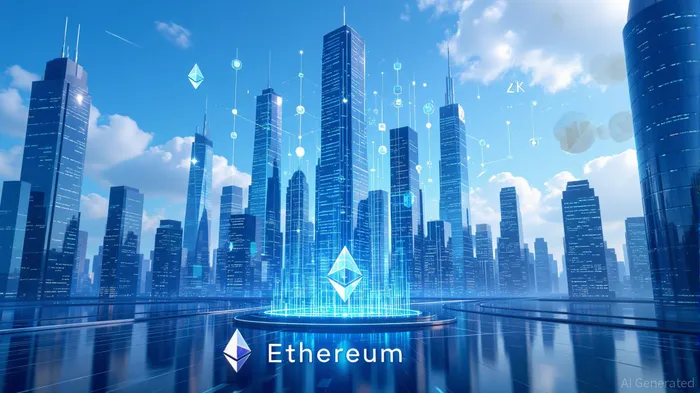 ZKsync's Atlas upgrade, highlighted by Buterin, represents a quantum leap in Layer 2 scalability. The platform now processes 15,000 to 43,000 transactions per second with sub-second finality, leveraging ZK rollups to minimize on-chain congestion while maintaining Ethereum's security guarantees. This aligns with the Ethereum Foundation's Kohaku and Lighter frameworks, which have reduced proof generation costs by up to 50x, accelerating the adoption of ZK technologies across the ecosystem.
Buterin's advocacy for ZK-based solutions extends beyond scalability. He emphasized their role in enhancing privacy and real-world adoption, particularly for applications requiring confidential transactions, such as institutional finance and supply chain management. ZKsync's architecture, which validates transactions without revealing underlying data, addresses a critical gap in Ethereum's current capabilities, making it an attractive option for enterprises seeking compliance with regulatory standards.
Institutional Adoption and Transaction Volume Dynamics
The endorsement has catalyzed institutional interest, with ZKsync securing partnerships with Deutsche Bank and Sony. These collaborations, coupled with the Atlas upgrade, have driven Total Value Locked (TVL) to $3.3 billion and 27 million monthly transactions according to Bitget data. However, on-chain metrics reveal a paradox: while ZKsync's TPS capacity surged post-endorsement, its transaction volume fell by 90% in 2025, according to Nansen data. This decline suggests that the initial spike may have been fueled by speculative activity, such as airdrop claims, rather than sustained demand according to TradingView analysis.
Despite this, ZKsync's institutional-grade infrastructure remains compelling. Near-zero fees and Ethereum compatibility position it as a viable solution for high-volume use cases, including gaming and cross-border payments according to Bitget reports. The projected 12 billion transactions by Q4 2025, if realized, would further cement ZKsync's role in Ethereum's scaling strategy according to Bitget forecasts.
Privacy, Security, and Regulatory Challenges
The Road Ahead: Lean Ethereum and Quantum Resistance
Buterin's 2025–2027 roadmap for Ethereum emphasizes a "Lean Ethereum" design, prioritizing ZK-friendly architecture and quantum resistance. This strategy aims to achieve 100,000 TPS by 2025, leveraging Layer 2 innovations like ZKsync. The Ethereum Foundation's continued support for ZK research, combined with ZKsync's enterprise partnerships, suggests a long-term commitment to this vision.
Conclusion
Vitalik Buterin's endorsement of ZKsync has not only validated its technical prowess but also highlighted Ethereum's strategic pivot toward institutional-grade solutions. While transaction volume volatility underscores the need for sustained user engagement, ZKsync's advancements in scalability, privacy, and institutional adoption position it as a cornerstone of Ethereum's future. For investors, the interplay between ZKsync's performance and Ethereum's roadmap offers a compelling case for long-term value creation, provided the ecosystem addresses regulatory and adoption challenges.

Blending traditional trading wisdom with cutting-edge cryptocurrency insights.
Latest Articles
Stay ahead of the market.
Get curated U.S. market news, insights and key dates delivered to your inbox.


AInvest
PRO
AInvest
PRO



Comments
No comments yet