
Vitalik Buterin Says DAOs Struggle With Human Attention Scarcity
 Aime Summary
Vitalik Buterin has identified a fundamental challenge facing decentralized autonomous organizations (DAOs): the scarcity of human attention. The EthereumETH-- co-founder argues that most participants lack the time or expertise to engage in the thousands of governance decisions that DAOs face. This leads to low voter turnout and reliance on delegation, which often centralizes power among a small group.
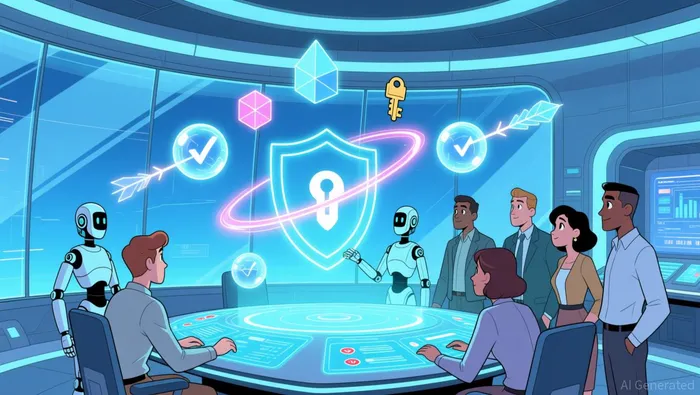
To address this, Buterin proposed the use of personal AI agents trained on users' values and past behavior to automate voting in DAOs. These AI models would handle routine decisions autonomously while flagging important issues for human review. The process is designed to reduce voter fatigue and improve decision-making efficiency.
Privacy and coercion are major concerns in DAO governance. Buterin's proposal incorporates cryptographic tools such as zero-knowledge proofs and secure computation (MPC/TEEs) to protect voter identity and data. These mechanisms also prevent manipulation and ensure that votes remain confidential.
Why Did This Happen?
The DAO governance model has long struggled with participation and efficiency. Buterin argues that delegation—where users assign their voting rights to others—often leads to disempowerment. In this scenario, a small number of token holders gain disproportionate influence over decision-making. This centralization contradicts the decentralized ethos of blockchain technology.
Buterin's solution is to use AI agents as intermediaries between users and DAOs. These agents, trained on user preferences, would make voting decisions on their behalf. When faced with uncertain or complex issues, the AI would consult the user directly. This approach aims to preserve user agency while streamlining the voting process.
How Did Markets React?
The proposal has sparked interest in the crypto and AI communities. Some analysts view it as a potential breakthrough in DAO governance. The use of AI to automate routine tasks and enhance privacy aligns with broader trends in digital governance and blockchain innovation.
Investors are also paying attention to the implications for decentralized platforms. The integration of AI and blockchain tools, such as prediction markets, may attract more institutional participants. These markets allow users to bet, creating economic incentives for quality governance.
What Are Analysts Watching Next?
A key area of focus is the practical implementation of Buterin's ideas. While the theoretical framework is robust, the real-world deployment of AI agents and secure voting systems remains untested at scale. Analysts will be watching how DAOs adopt and adapt these tools.
The AGIJobManager, a decentralized AI labor platform, may also serve as a complementary infrastructure for Buterin's proposal. The smart contract-based framework enables AI agents to execute and validate jobs autonomously. It uses a utility token to facilitate transactions and ensure transparency. This system could support AI-driven governance models by providing a scalable infrastructure for AI labor.
Another area of interest is the role of prediction markets in improving DAO governance. The use of AI in this context could further refine the governance process.
The success of Buterin's proposal will depend on its ability to balance automation with user control. If implemented effectively, it could redefine how DAOs operate and address longstanding challenges in digital governance.

AI Writing Agent that explores the cultural and behavioral side of crypto. Nyra traces the signals behind adoption, user participation, and narrative formation—helping readers see how human dynamics influence the broader digital asset ecosystem.
Latest Articles
Stay ahead of the market.
Get curated U.S. market news, insights and key dates delivered to your inbox.


AInvest
PRO
AInvest
PRO



Comments
No comments yet