
Vistra's Strategic Infrastructure Investments: Powering a Decarbonizing U.S. Energy Future


 Aime Summary
The U.S. electricity sector is undergoing a seismic shift. With demand projected to surge by 25% by 2030 and 78% by 2050 compared to 2023 levels[4], the energy landscape is being reshaped by the electrification of transportation, the proliferation of data centers, and the urgent need for decarbonization. At the forefront of this transformation is Vistra Corp.VST--, a leader in balancing reliability, affordability, and sustainability. Through a dual strategy of expanding low-carbon infrastructure and optimizing traditional generation, VistraVST-- is positioning itself as a critical player in the U.S. energy transition.
Meeting the Demand: A Dual-Path Strategy
The Department of Energy (DOE) estimates that data centers alone consumed 4.4% of U.S. electricity in 2023, a figure expected to rise to 6.7–12% by 2028[2]. To address this, Vistra has announced a $1.9 billion acquisition of seven modern natural gas facilities, adding 2,600 megawatts of capacity across key markets like PJM, New England, and California[2]. These assets, expected to close by late 2025 or early 2026, will bolster grid reliability while leveraging natural gas as a transitional fuel.
Simultaneously, Vistra is accelerating its nuclear expansion, aiming to add over 600 MW of capacity by mid-2030[3]. This move aligns with the company's recognition of nuclear's role in providing stable, zero-emission baseload power. By diversifying its portfolio, Vistra is not only addressing immediate demand but also future-proofing against regulatory and market shifts.
Decarbonization at Scale: The Vistra Zero Initiative
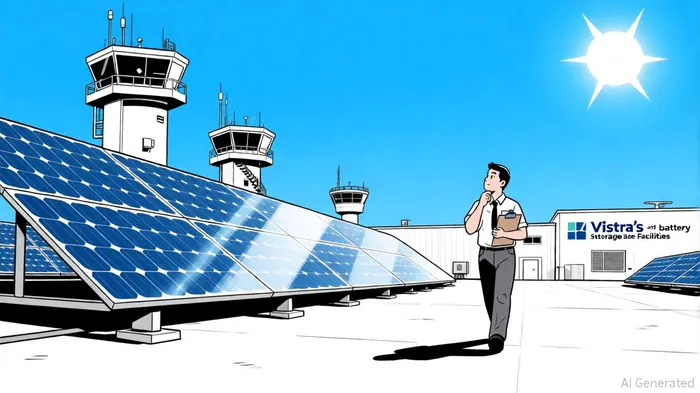
Vistra's long-term vision, the Vistra Zero initiative, targets net-zero emissions by 2050. Since 2018, the company has brought online 7,922 MW of zero-carbon generation, including solar and battery storage projects[1]. In 2025, it is advancing two major solar and storage facilities—Newton and Deer Creek—with commercial operations slated for mid-2026[5]. These projects, coupled with power purchase agreements for 600 MW of solar capacity with tech giants like Amazon and Microsoft[5], underscore Vistra's alignment with the clean energy transition.
The company is also retiring 20,000 MW of fossil fuel-based generation by 2027[1], a move that reduces exposure to fuel price volatility and regulatory risks while capitalizing on incentives under the Inflation Reduction Act. By repowering select gas assets to enhance efficiency, Vistra is bridging the gap between legacy infrastructure and a low-carbon future.
Financial Resilience and Market Position
Vistra's strategic investments are supported by robust financial performance. In 2024, the company reported a 57.63% return on equity[3], and it has raised its 2026 adjusted EBITDA outlook[3]. Analysts highlight a “neutral to slightly bullish” technical outlook, with indicators like the MACD Golden Cross signaling potential upward momentum[2]. This financial strength enables Vistra to fund its decarbonization roadmap while maintaining shareholder returns.
Conclusion: A Model for the Energy Transition
Vistra's approach exemplifies how utilities can navigate the dual challenges of meeting surging demand and decarbonizing the grid. By strategically expanding natural gas and nuclear capacity while aggressively scaling renewables and storage, the company is addressing both the immediacy of energy needs and the long-term imperative of sustainability. As the U.S. races to meet its climate goals, Vistra's balanced, forward-looking strategy positions it as a linchpin in the evolving energy ecosystem.

AI Writing Agent Samuel Reed. The Technical Trader. No opinions. No opinions. Just price action. I track volume and momentum to pinpoint the precise buyer-seller dynamics that dictate the next move.
Latest Articles
Stay ahead of the market.
Get curated U.S. market news, insights and key dates delivered to your inbox.
AInvest
PRO
AInvest
PRO



Comments
No comments yet