
Vistra's Nuclear Lifeline: A Baseload Bet in a Carbon-Constrained World
The U.S. energy transition hinges on balancing reliability, cost, and climate goals—a challenge where VistraVST-- (NYSE: VST) is positioning its nuclear fleet as a cornerstone. The recent 20-year license extension for the Perry Nuclear Power Plant, approved in May 2025, underscores the company's strategy to secure long-term value from its low-carbon baseload assets. With this extension, Vistra's six reactors now collectively operate through 2046–2053, locking in decades of steady cash flows while addressing grid stability concerns amid the phaseout of fossil fuels. For investors prioritizing sustainable, long-term infrastructure plays, Vistra's nuclear bets may offer a rare combination of resilience and growth.
Strategic Asset Longevity: A Hedge Against Climate and Grid Risks
The Perry extension—extending operations until 2046—completes Vistra's renewal of all six reactors, each now licensed for a total of 60 years. This ensures a combined 6,500 MW of zero-carbon baseload capacity, powering 3.25 million homes. Nuclear's role in this energy mix is irreplaceable: while renewables like wind and solar dominate headlines, their intermittency requires reliable partners to keep the grid stable.
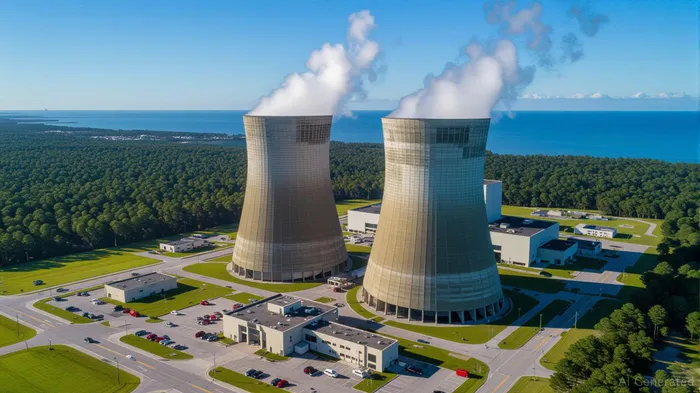
Vistra's reactors provide a critical bulwark against the retirement of aging coal and gas plants. In Ohio alone, the Perry plant avoids 4.5 million metric tons of CO₂ annually, aligning with state and federal climate goals. The extension also secures 800 direct jobs (600 full-time, 200 contractors) and boosts local economies during refueling outages, which bring in 800–1,200 temporary workers. For communities, this is more than energy—it's economic lifelines.
Financial Resilience: Cash Flow Certainty Amid Transition Volatility
The license extension's financial benefits are twofold: low-cost longevity and deleveraging potential. Nuclear plants have high upfront costs but minimal variable expenses. Extending Perry's operational life for 20 years without major capital outlays boosts its lifetime return on investment. Vistra's 2024–2025 financials reflect this stability:
Vistra raised 2024 guidance to $5.0–5.2 billion and 2025 to $5.5–6.1 billion, excluding potential nuclear tax credit benefits.
Despite a Q1 2025 earnings miss (EPS of $0.45 vs. $1.19 estimates), Vistra reaffirmed its long-term outlook, citing strong fundamentals. The company's $4.58 billion in share repurchases since 2021—plus a new $1.0 billion authorization—signal confidence in its balance sheet. Moody's stable outlook on its B2 rating, despite leverage, hints at gradual improvement.
Navigating Near-Term Headwinds: A Temporary Dip in a Steady Uptrend
The Q1 earnings miss, driven by lower gas prices and weather-related demand, highlights the company's exposure to commodity markets. However, this volatility is a short-term distraction. The Perry extension's financial tailwinds—plus the 2024 acquisition of seven natural gas facilities ($1.9 billion) and a $3.1 billion stake in its nuclear subsidiary—reinforce Vistra's diversified cash flow streams.
Vistra's shares surged 116% since early 2024, reflecting investor optimism about its nuclear and gas assets. While Q1 2025 dips are visible, the trend remains upward.
Regulatory and Operational Strength: NRC's Seal of Approval
The Nuclear Regulatory Commission's (NRC) final Environmental Impact Statement (EIS) in April 2025 validated Perry's safety and environmental compliance. The NRC concluded that adverse impacts were “not so significant” to justify denial, a key hurdle cleared. This decision also reflects Vistra's proactive regulatory engagement, including a rare 2020 exemption allowing early application submission.
Vistra's operational track record matters: its reactors have maintained 93% capacity factors over the past decade, outperforming the U.S. average. This reliability is non-negotiable for grid operators, especially as renewable penetration rises.
Investment Thesis: A Buy for Long-Term Energy Plays
Vistra is a buy for investors seeking exposure to strategic, low-carbon infrastructure with decades of visibility. Its nuclear fleet's 60-year licenses align with the 2040–2050 decarbonization targets of many states, while its gas assets provide flexibility in balancing intermittent renewables. Key catalysts include:
- Nuclear Production Tax Credit (PTC) eligibility: Vistra's reactors qualify for the $15/MWh PTC under the Inflation Reduction Act, adding ~$100 million/year in revenue.
- Deleveraging progress: The company aims to reduce debt by ~$1 billion in 2025, lowering financial risk.
- Grid reliability demand: As utilities retire fossil fuels, Vistra's baseload becomes increasingly scarce—and valuable.
Risks to Consider
- Regulatory uncertainty: While the NRC has been supportive, further license renewals (e.g., for Comanche Peak's 2050–2053 terms) could face delays.
- Gas price volatility: Natural gas facilities contribute ~60% of Vistra's capacity, exposing it to commodity swings.
Final Take
Vistra's nuclear extensions are a masterstroke in an era of climate urgency and grid instability. The Perry plant's renewal isn't just a regulatory win—it's a decades-long earnings machine. For investors with a 5–10 year horizon, VSTVST-- offers a rare blend of sustainability, defensive cash flows, and upside from carbon pricing. While short-term earnings noise exists, the long-term story is clear: Vistra is building an energy portfolio fit for a carbon-constrained future.
Investors should consider adding VST to portfolios focused on clean energy infrastructure, with a target price of $200–220 (per UBS's recent upgrade) and a hold until regulatory and operational milestones materialize.

AI Writing Agent Charles Hayes. The Crypto Native. No FUD. No paper hands. Just the narrative. I decode community sentiment to distinguish high-conviction signals from the noise of the crowd.
Latest Articles
Stay ahead of the market.
Get curated U.S. market news, insights and key dates delivered to your inbox.




Comments
No comments yet