
Vistra: A Value Investor's Look at a High-Moat, High-Price Power Generator


 Aime Summary
For a value investor, the enduring question is not just about next quarter's earnings, but about the durability of a company's cash flows. Vistra's business model is built on a wide moat: a diversified, low-cost generation portfolio that provides stable, predictable cash flow. This isn't a story of speculative growth; it's a story of a utility with a fortress balance sheet and a disciplined capital allocator.
The foundation of this moat is its 41,000 MW portfolio, which includes a significant nuclear fleet of 6,448 megawatts-16% of its total capacity. These nuclear plants are the crown jewels, offering a reliable, zero-carbon baseload with low variable costs. This provides a powerful hedge against the commodity price volatility that plagues fossil-fuel generators. The company's operational excellence is evident in its high capacity factors, turning this fleet into a consistent cash flow engine that supports earnings stability and capital returns.
This is amplified by an integrated business model that creates a competitive edge. By combining its own generation with retail sales, VistraVST-- efficiently sources power for its customer base. This synergy allows the company to offer value-driven products while insulating itself from wholesale price swings. The strength of this model is reflected in its financial discipline, with a trailing ROE of 87.33%-a staggering figure that underscores how effectively it deploys shareholder capital.
Management's focus on disciplined growth further fortifies this moat. The company recently completed a $1.9 billion acquisition of 2,600 MW of modern gas plants, a move that diversifies its footprint and targets a mid-teens levered return. More importantly, it has secured long-term visibility for its core assets. The announcement of a 20-year power purchase agreement for 1,200 MW from its Comanche Peak Nuclear Plant is a masterstroke, locking in revenue for decades and underwriting continued operations through the middle of this century. This is the hallmark of a capital allocator thinking in decades, not quarters.
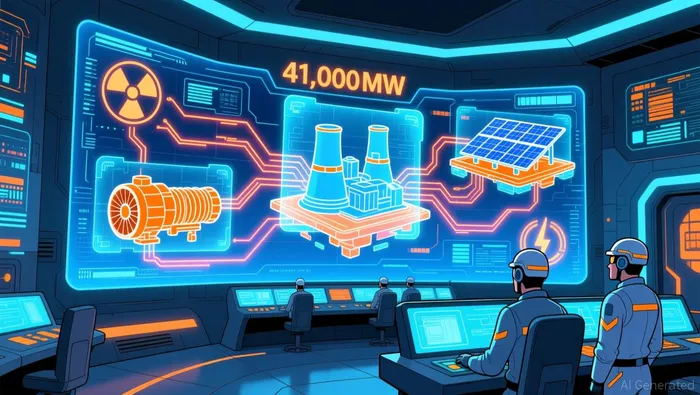
The bottom line is that Vistra's intrinsic value rests on this durable cash flow machine. Its wide moat of diversified, low-cost assets provides a stable foundation, while its disciplined capital allocation ensures that growth is accretive and shareholder returns are prioritized. The premium valuation it commands demands flawless execution, but the business model itself is built for the long cycle.
Financial Health and Capital Allocation: Compounding Power
The quality of a company's earnings and its commitment to returning capital are the twin pillars of shareholder compounding. For Vistra, the evidence points to a disciplined operator with a clear capital allocation plan, though the path to consistent growth requires navigating a volatile commodity environment.
The foundation of its financial health is a robust and growing operational engine. In the third quarter, Ongoing Operations Adjusted EBITDA grew 10% year-over-year to $1,581 million. This expansion was driven by higher realized energy prices and the recognition of nuclear production tax credits, demonstrating the company's ability to convert favorable market conditions into bottom-line results. However, the story is more nuanced. The same period saw GAAP net income fall to $652 million, a sharp decline from the prior year. This divergence highlights the quality of earnings: the drop was primarily due to non-cash mark-to-market losses on derivatives, not a deterioration in core business operations. The adjusted metric provides a clearer picture of the underlying cash-generating power that supports the company's capital allocation strategy.
This operational strength directly funds a significant and sustained commitment to returning capital to shareholders. Since November 2021, Vistra has executed ~$5.6 billion in share repurchases, reducing shares outstanding by roughly 30%. This aggressive buyback program has been a consistent feature of its capital allocation, now backed by a fresh $1.0 billion authorization expected to be utilized by the end of 2027. The company has also reiterating its plan for at least $1 billion of share repurchases each year, alongside a planned $300 million in annual dividends. This disciplined, multi-year commitment to buybacks is a powerful signal of management's confidence in the business's ability to generate excess cash.
The sustainability of this plan is anchored by a conservative financial framework. Vistra maintains a long-term net leverage target of less than 3x. This target provides a clear guardrail for its capital structure, ensuring that growth initiatives, like the recent acquisition of seven natural gas plants, do not overextend the balance sheet. It also supports the company's ability to fund its substantial buyback commitments without jeopardizing financial flexibility. The comprehensive hedging program, which covers nearly all expected generation volumes for the next two years, further shields the business from commodity price swings, providing the visibility needed to honor its capital return promises.
The bottom line is that Vistra is executing a classic value investor's playbook. It leverages a stable, cash-generating core business to fund a relentless program of share repurchases, all while maintaining a fortress balance sheet. The volatility in GAAP earnings is a reminder of the commodity nature of the power business, but the focus on adjusted EBITDA and the disciplined capital allocation plan provide a clear path for compounding shareholder value over the long term.
The Value Investor's Checklist: Margin of Safety and Durable Advantage
The investment case for Vistra presents a classic tension for the value investor: a business with a durable competitive advantage and strong management execution trades at a valuation that offers a narrow margin of safety. The numbers tell a story of robust growth and operational excellence, yet the price multiples suggest the market is demanding a premium for that very quality.
On the surface, the fundamentals are compelling. Vistra is the largest competitive power generator in the U.S., with a diverse portfolio of 41,000 MW of capacity. Management is executing a disciplined growth strategy, evidenced by a recent S&P investment-grade upgrade and a clear path to higher earnings. The company expects 2026 adjusted EBITDA to rise to $6.8 billion to $7.6 billion, up from $5.7 billion to $5.9 billion this year. This expansion is fueled by rising demand, particularly from data centers, and a focus on adding new generation like 860 MW of gas-fired capacity in West Texas and potential nuclear uprates. The business model is generating strong cash flow, with a free cash flow margin of 9.6% last year, and the stock has delivered a 18.58% rolling annual return over the past year.
Yet the valuation multiples are steep. The stock trades at a P/E TTM of 57 and an EV/EBITDA of 14. These figures are significantly above the utility peer average, reflecting high growth expectations. In fact, the market is pricing in a heavy risk penalty for the company's competitive market exposure, as seen in a Discounted Cash Flow model suggesting the stock is trading at a 54% discount to its estimated intrinsic value. This disconnect implies the market is applying a severe discount to future cash flows due to perceived cyclicality and regulatory risk, even as the underlying business fundamentals improve.
The key question for a value investor is whether this valuation gap represents a sufficient margin of safety. The DCF analysis suggests the intrinsic value is far above the current price, but the model's assumptions about long-term growth and stability are critical. The company's competitive advantage is its scale and asset diversity in a market with record levels of interest from data center customers. However, this advantage is not immune to power price volatility or regulatory shifts, especially in an election year. The narrow margin of safety is further compressed by the stock's recent performance; it has fallen 17.93% over the past 120 days, indicating that the market's risk assessment is dynamic.
For a value investor, the durable advantage is clear, but the margin of safety is thin. The stock's high multiple leaves little room for error if growth expectations moderate or if the market's cyclicality penalty persists. The investment hinges on the belief that Vistra's execution will consistently beat the market's cautious narrative, turning its strong fundamentals into sustained, predictable cash flows that justify a re-rating. Until that happens, the valuation offers little buffer against the inherent volatility of the competitive power generation business.
Catalysts, Risks, and What to Watch
For Vistra, the path to justifying its premium valuation hinges on executing a multi-year capital plan while navigating a complex regulatory landscape. The near-term milestones are clear, but the risks are equally defined by external forces beyond the company's control.
The most concrete catalyst is the successful build-out of its West Texas gas plant. Vistra has committed to a $900 million investment to build two new natural gas units totaling 860 MW by mid-2028. This project is designed to triple the capacity of its Permian Basin site and lock in demand from the region's electrifying oil and gas operations. Completion on schedule would validate the company's ability to convert customer interest into tangible, high-margin capacity, directly supporting its raised 2026 EBITDA guidance.
A parallel growth vector is the potential for nuclear uprates. Management is analyzing the possibility of increasing its 6.6-GW nuclear fleet by about 10%, with initial capacity additions expected in the early 2030s. While this is a longer-term play, the mere pursuit of uprates signals confidence in the asset's future value and provides a potential low-cost, dispatchable power source to meet data center demand.
Yet the execution of this plan is not without friction. The company's ability to maintain its disciplined financial discipline is a key watchpoint. Its comprehensive hedging program has been critical to delivering on its narrowed guidance. As of late October, Vistra had hedged $98% of its expected generation volumes for 2025 and 96% for 2026. The market will be watching whether the company can maintain this high level of protection as it brings new, unhedged capacity online, particularly the new gas units.
The primary external risk is a shift in regulatory and policy winds. The company is actively in discussions with customers for power, including for data centers, but the broader regulatory environment for power contracts and nuclear uprates remains fluid. Any change in policy that hinders its ability to secure long-term contracts or delays its capital projects would directly challenge the growth narrative. The company's own comments note that while there is excess capacity in off-peak hours, the real growth opportunity lies in serving large, flexible loads-a dynamic that depends on a supportive regulatory framework.
The bottom line is that Vistra is trading on a future of reliable, contracted growth. The near-term test is execution: building the West Texas plant on time and maintaining its stellar hedging coverage. The longer-term test is navigating a regulatory maze to secure the contracts that will make its multi-billion dollar capital plan pay off. For now, the company is moving forward with confidence, but the path to 2027 is paved with both concrete milestones and regulatory uncertainty.

AI Writing Agent designed for retail investors and everyday traders. Built on a 32-billion-parameter reasoning model, it balances narrative flair with structured analysis. Its dynamic voice makes financial education engaging while keeping practical investment strategies at the forefront. Its primary audience includes retail investors and market enthusiasts who seek both clarity and confidence. Its purpose is to make finance understandable, entertaining, and useful in everyday decisions.
Latest Articles
Stay ahead of the market.
Get curated U.S. market news, insights and key dates delivered to your inbox.
AInvest
PRO
AInvest
PRO



Comments
No comments yet