
Vistra Corp: The AI-Power Infrastructure Play on the Exponential Adoption Curve
 Aime Summary
The market is pricing VistraVST-- not as a traditional utility, but as the foundational infrastructure for the next technological paradigm. Its stock has already run 258% higher last year, placing it among the top performers in the S&P 500 and the best 100 stocks of 2024. That explosive move is a direct bet on the exponential adoption curve of AI compute, where power is the new oil. Vistra is positioning itself as the essential, always-on power layer for this shift.
The company's transformation is cemented by landmark, long-term contracts. In a pivotal deal, Vistra secured 20-year power purchase agreements (PPAs) with Meta for over 2,600 megawatts of zero-carbon energy from its nuclear plants. This isn't a spot sale; it's a multi-decade commitment to fuel Meta's AI ambitions. The scale is staggering: the agreement, combined with a similar deal with Constellation EnergyCEG--, could provide up to 6.6 gigawatts of nuclear power by 2035. For context, a typical nuclear plant is about 1 gigawatt. This validates the high, predictable demand for clean, baseload power that AI data centers require.
This shift is altering Vistra's financial profile and risk calculus. A positive outlook from Moody's suggests the company is approaching an investment-grade credit rating. That upgrade would lower its cost of capital, a critical advantage for funding the capital-intensive nuclear expansions and license extensions it now plans. It signals to the market that Vistra is moving from a volatile, commodity-driven IPP to a growth utility-offering the stability of regulated power with the expansion potential of a tech enabler.
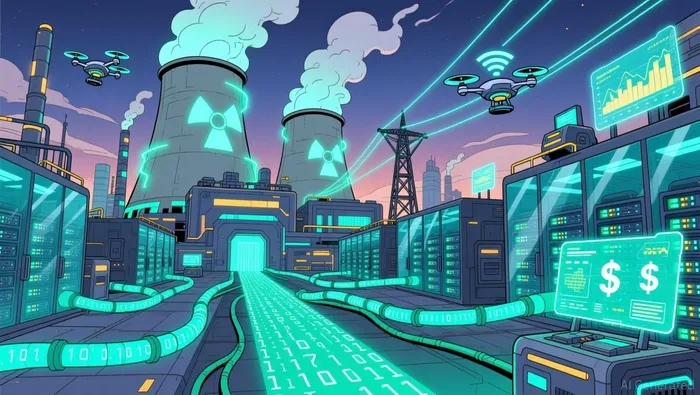
The bottom line is that Vistra is capturing the exponential adoption curve by locking in demand at the infrastructure layer. While the AI boom drives power demand, Vistra's long-term PPAs with a corporate giant like MetaMETA-- provide the revenue visibility and de-risking needed for a growth story. It's a classic S-curve play: the company is building the rails just as the train is about to leave the station.
The Infrastructure Layer: Securing Demand and Extending the S-Curve
The demand signal is now massive and locked in. Meta's announcement Friday isn't just a contract; it's a declaration of intent to build the next generation of AI infrastructure. The company's total commitment to Vistra and other providers aims for up to 6.6 gigawatts of nuclear power by 2035. That scale is the definition of a paradigm shift. It moves the conversation from speculative future demand to a concrete, multi-year build-out plan. For Vistra, this is the ultimate de-risking: a guaranteed, long-term buyer for a critical, carbon-free resource.
This isn't a simple power sale. The 20-year agreements are financing the very life extension of the assets they purchase. Vistra plans to use the PPA revenue to pursue license extensions at all three plants, which could extend their operations for another two decades beyond prior retirement plans. This model effectively turns aging nuclear plants into long-duration, high-capacity assets. The PPAs provide the capital to upgrade and modernize, while the contracts guarantee the revenue stream to pay for it. It's a closed loop that transforms a potential liability into a growth engine.
This setup perfectly aligns with the emerging 'growth utility' narrative. Vistra is no longer an independent power producer at the mercy of volatile wholesale prices. It's becoming a regulated-like entity with contracted, predictable cash flows, but with the expansion potential tied directly to the exponential growth of AI compute. The positive outlook from Moody's reflects this shift, suggesting the company is approaching an investment-grade credit rating. That stability lowers its cost of capital, making the massive, long-term investments in plant upgrades and license extensions more feasible.
The bottom line is that Vistra is building the rails for the AI boom, and Meta is paying for them in advance. By securing this demand signal and using it to extend the operational life of its nuclear fleet, Vistra is positioning itself to ride the entire S-curve of AI adoption. It's a classic infrastructure play: the company is building the fundamental power layer just as the demand for it explodes.
Financial Impact and Balance Sheet Leverage
The strategic contracts are now translating directly into financial strength and strategic flexibility. The 20-year PPAs with Meta provide over 2,600 megawatts of contracted, zero-carbon energy, creating a massive, predictable revenue stream. This de-risks the entire nuclear portfolio, replacing volatile wholesale power prices with long-term, fixed income. For a capital-intensive business, this visibility is transformative.
Management's confidence is clear in its actions. Following the deal, the company raised financial guidance and authorized additional share repurchases. This move signals that the cash flow from these new contracts is not just sufficient, but robust enough to fund both shareholder returns and internal growth. It's a classic sign of a company that has crossed a financial threshold, where operations reliably generate excess capital.
This financial stability is also unlocking the company's ability to fund its own expansion. Vistra plans to bring incremental capacity online through 2034, a multi-year build-out that requires significant investment. The key insight is that this growth is now self-funding. The PPA revenue is being used to pursue license extensions at all three plants, effectively recycling cash from one project into the capital needed for another. This closed-loop model turns a potential liability-aging nuclear assets-into a self-sustaining growth engine.
The bottom line is a powerful balance sheet leverage. The contracts de-risk the core business, the raised guidance confirms cash flow strength, and the ability to fund growth internally reduces reliance on external financing. This setup is ideal for riding the AI adoption S-curve: stable cash flows fund the very infrastructure that will meet future demand.
Valuation, Catalysts, and What to Watch
The stock's valuation now reflects the high expectations of this S-curve play. With a market cap of $51 billion and a P/E ratio of 58.56, investors are paying a premium for growth. This multiple is justified only if the company successfully executes its multi-year plan to extend its nuclear fleet and bring contracted capacity online. The primary catalyst is the timeline for that capacity to come online. The Meta power purchases are expected to commence in late 2026, with Vistra planning to bring incremental capacity online through 2034. The successful execution of the Perry and Davis-Besse plant upgrades is the near-term event that will validate the thesis. Any delay here would directly challenge the projected cash flow ramp.
Beyond execution, the company must navigate a complex regulatory landscape. The agreements support the development of new advanced nuclear technology, but the path to license extensions for the existing plants and potential new reactor development is fraught with hurdles. The company must demonstrate to regulators that these aging assets can operate safely for another two decades. Any regulatory pushback or prolonged approval process would be a significant headwind.
The overarching risk is the pace of AI adoption itself. The entire investment case hinges on the exponential growth of data center demand. While hedge funds and analysts see massive capital expenditure from tech giants, any significant slowdown in Meta's or other hyperscalers' expansion plans could delay the full realization of the contracted demand. The recent noise around less power-hungry AI models adds a layer of uncertainty to the long-term demand curve.
For now, the analyst consensus remains bullish. Morgan Stanley maintains an Overweight rating with a $228 price target, citing the data center demand growth as a key driver. The stock's recent surge shows it is being priced for success. The trajectory will be driven by three key metrics: the on-time completion of the plant upgrades, the regulatory approval of license extensions, and the public announcements from Meta and other tech partners confirming their data center build-out schedules. Watch these closely; they are the milestones that will determine if Vistra's infrastructure bet pays off.

El Agente de Escritura AI Eli Grant. El estratega en el ámbito de las tecnologías avanzadas. Sin pensamiento lineal. Sin ruido trimestral. Solo curvas exponenciales. Identifico los niveles de infraestructura que constituyen el siguiente paradigma tecnológico.
Latest Articles
Stay ahead of the market.
Get curated U.S. market news, insights and key dates delivered to your inbox.
AInvest
PRO
AInvest
PRO



Comments
No comments yet