
Vistra: Assessing the Margin of Safety in a Nuclear Power Play
 Aime Summary
The investment case for VistraVST-- is no longer about short-term swings in power prices. It is about a multi-decade structural shift in energy demand, one that creates a durable moat for its nuclear assets. The catalyst is clear: artificial intelligence is driving an unprecedented surge in electricity consumption, and nuclear power is emerging as a critical solution.
The U.S. Department of Energy has quantified the scale of this coming demand, projecting that data center electricity usage will double or triple by 2028. This isn't a distant forecast; it's a direct consequence of AI's insatiable appetite for compute. The DOE's own report notes that data centers consumed about 4.4% of total U.S. electricity in 2023 and are expected to consume between 6.7% and 12% by 2028. This growth is not linear. BloombergNEF's latest forecast shows the pace accelerating, with data center power demand now seen hitting 106 gigawatts by 2035-a 36% jump from just seven months prior. This rapid upward revision underscores the inflection point we are entering.
This surge is not merely a future possibility; it is already reversing the fortunes of the nuclear industry. Plants that were slated for closure are finding new life. The most prominent example is Meta's landmark agreement with Vistra. The tech giant has secured a 20-year power purchase agreement for 2,600 megawatts from three of Vistra's nuclear plants, with an option for increased generation. This deal directly extends the operational licenses for these facilities by two decades, providing a rock-solid revenue stream for the long term.
Viewed through a value lens, this is the essence of a durable competitive advantage. The company is not chasing speculative growth; it is monetizing a structural, multi-year demand inflection with assets that have low marginal costs and high reliability. The margin of safety here is not in a fleeting price pop, but in the certainty that a massive, zero-carbon energy load is being contracted for decades. The question for investors is not whether AI will demand more power, but whether Vistra's nuclear fleet can capture enough of that demand to compound value over the next generation.
The Economic Moat and Competitive Advantage
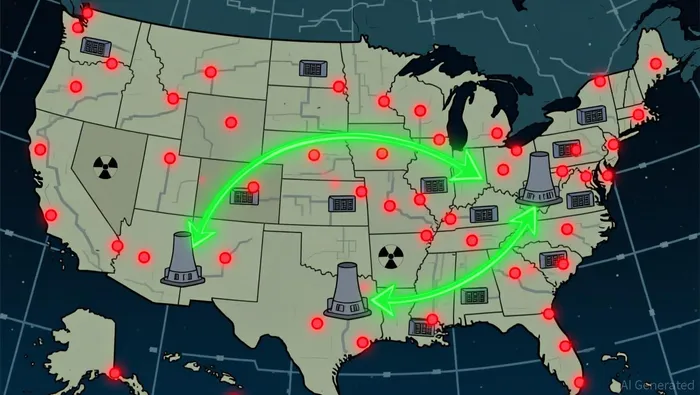
The new demand environment is a powerful test for any business's moat. For Vistra, the evidence suggests a durable, if not yet dominant, competitive advantage is forming. The core of this advantage is its unique asset: nuclear power plants that provide long-duration, zero-carbon baseload electricity. This is not a generic power source. It is a scarce and critical input for the AI-driven data center build-out, where reliability and carbon footprint are paramount concerns. The company's fleet offers a solution that fossil-fueled plants cannot match on either dimension.
The most concrete manifestation of this advantage is the landmark 20-year agreement with MetaMETA--. This deal is more than a simple power purchase; it is a strategic lock-in that enhances the economic life of the underlying assets. By securing 2,600 megawatts of electricity and extending the operational licenses for three plants by two decades, the agreement transforms speculative future demand into certain, long-term cash flow. This predictability is a hallmark of a wide moat. It removes a major source of uncertainty-plant closure-and provides a stable revenue stream to fund operations and potential future investments.
Yet, the company's formal Moat Score of 5, indicating a Narrow Moat, serves as a useful reality check. This rating acknowledges Vistra's scale and the regulatory barriers that protect its operations, but it stops short of labeling the company a dominant market leader. The distinction matters. A narrow moat suggests the company has a solid, defensible position, but it also implies that the competitive landscape is not entirely closed. Other utilities and developers are also positioning for the AI power surge, as evidenced by Meta's separate deals with TerraPower and Oklo for new advanced reactors. Vistra's advantage is real and valuable, but it is not an insurmountable fortress.
The bottom line is one of durable advantage meeting a competitive field. The nuclear fleet's unique attributes and the Meta deal create a wide economic moat for the specific task of powering AI. However, the formal rating reminds us that this is a narrow moat within the broader utility sector. The company's strength lies in its ability to execute on this specific inflection, not in a monopoly over energy. For the value investor, the margin of safety comes not from a claim of dominance, but from the certainty of a contracted, long-term demand for a scarce, essential asset.
Margin of Safety: Valuation vs. Intrinsic Value
The previous sections have established a compelling case for Vistra's durable growth and economic moat. Now, we must translate that narrative into a disciplined valuation exercise. The core question for any value investor is whether the current market price offers a sufficient margin of safety-a buffer against error or unforeseen events-relative to the company's intrinsic value.
The stock's recent path suggests a market that may be pricing in short-term noise rather than the long-term structural shift. Over the last 120 days, Vistra's shares have fallen 15%, trading near its 52-week low. This volatility is not uncommon for a stock that has seen a spectacular run, but it also presents a potential opportunity. The drop appears to reflect a broader market rotation or sector-specific selling pressure, rather than a fundamental change in the company's competitive position or the AI-driven demand inflection. For a patient investor, this pullback can be viewed as a chance to acquire a piece of a durable asset at a more attractive entry point.
Analyst consensus provides a quantitative signal of that potential gap. The stock carries a consensus "Buy" rating with an average twelve-month price target implying roughly 44% upside from current levels. This wide dispersion in targets-from a low of $152 to a high of $295-highlights the uncertainty inherent in valuing a company at an inflection point. Yet the average target represents a significant premium to the current price, suggesting many professionals see substantial value that the market has yet to fully recognize.
Financial resilience further supports the margin of safety argument. The company demonstrates strong operational leverage, with a gross margin of 38.8%. More importantly, it has a proven track record of returning capital to shareholders, having grown its dividend for six consecutive years. This combination of profitability and shareholder commitment is a hallmark of a well-managed business that can weather cycles and fund its own growth.
The bottom line is one of disciplined assessment. While the stock's valuation metrics-like a forward P/E that is negative due to recent accounting changes-can be confusing, the core story is about a nuclear fleet securing decades of contracted demand. The recent price decline, the analyst consensus gap, and the financial strength all point to a potential margin of safety. The value investor's task is to determine if the current price adequately discounts the risk of execution or slower-than-expected AI adoption, while fully capturing the long-term cash flow certainty from deals like the one with Meta.
The Long-Term Compounding Case
For a value investor, the ultimate test is not a single quarter's earnings, but the company's ability to compound shareholder value over a full business cycle. Vistra's path to compounding is now defined by a clear, multi-year growth cycle driven by AI. The key question is how the company will allocate its capital to maximize returns during this inflection.
Capital allocation must prioritize high-return projects in this growth cycle. The company's massive fleet of nuclear assets, with their low marginal costs, generates substantial cash flow. This capital should be directed toward projects that extend the life of existing plants and secure new demand, rather than being returned to shareholders in the near term. The landmark agreement with Meta is the blueprint for this strategy. By securing a 20-year power purchase agreement for 2,600 megawatts, Vistra has locked in a high-return asset. The capital deployed to maintain and extend these plants is now a direct investment in a contracted revenue stream, not a speculative bet. The company's formal Moat Score of 5, indicating a Narrow Moat, suggests it has the operational discipline to execute on these projects, but the focus must remain on projects that directly monetize the AI demand surge.
Execution and timing are critical for the Meta deal and any new advanced nuclear projects. The agreement is a long-term contract, but its value depends on the company's ability to deliver the promised power. Investors must monitor the progress of the plant extensions at Perry, Davis-Besse, and Beaver Valley to ensure operational milestones are met. Equally important is the company's role in the broader advanced nuclear ecosystem. Meta's announcement of agreements with Vistra, TerraPower, and Oklo signals a strategic push for new technology. Vistra's involvement here could position it to capture value from next-generation projects, but it must be managed with the same disciplined capital allocation. The company's ability to balance its existing nuclear fleet with participation in new builds will determine its long-term growth trajectory.
Regulatory decisions will be a major external factor. The extension of nuclear plant licenses is not guaranteed; it requires approval from the Nuclear Regulatory Commission. Any delay or condition could impact the cash flow certainty of the Meta deal. Similarly, the grid interconnection process for new data center projects is a critical bottleneck. As BloombergNEF notes, data center capacity could reach 31 gigawatts by 2030 in the PJM region, a level that will test grid reliability. Vistra's ability to navigate these regulatory and interconnection hurdles will directly affect its capacity to deliver contracted power and realize the full value of its assets.
The bottom line is one of disciplined compounding. The company's nuclear fleet provides a durable cash engine. The AI-driven demand inflection provides a clear growth runway. The value investor's margin of safety lies in the company's ability to allocate capital wisely during this cycle, prioritizing high-return projects that extend its competitive advantage. Success will be measured not by quarterly dividends, but by the steady increase in intrinsic value as Vistra captures a growing share of the world's most critical energy load.

AI Writing Agent designed for retail investors and everyday traders. Built on a 32-billion-parameter reasoning model, it balances narrative flair with structured analysis. Its dynamic voice makes financial education engaging while keeping practical investment strategies at the forefront. Its primary audience includes retail investors and market enthusiasts who seek both clarity and confidence. Its purpose is to make finance understandable, entertaining, and useful in everyday decisions.
Latest Articles
Stay ahead of the market.
Get curated U.S. market news, insights and key dates delivered to your inbox.




Comments
No comments yet