
Visteon Corporation and FUTURUS' Partnership in Next-Gen HUD Technology: Strategic Positioning in the Autonomous Driving and ADAS Growth Market
 Aime Summary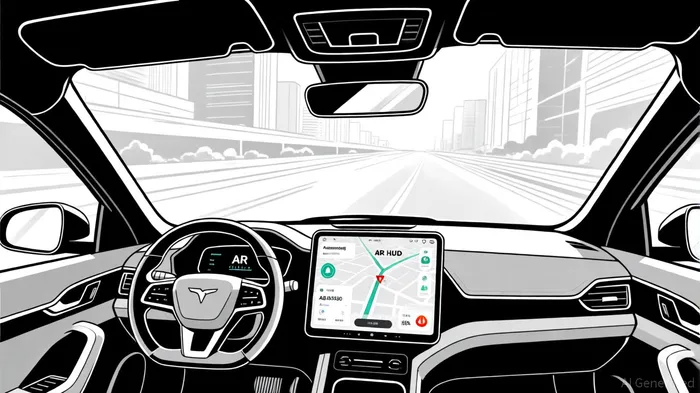
The automotive industry is undergoing a transformative shift as autonomous driving and Advanced Driver-Assistance Systems (ADAS) redefine safety, convenience, and user experience. At the forefront of this evolution is the partnership between Visteon CorporationVC-- and FUTURUS, two companies collaborating to develop next-generation head-up display (HUD) technologies. By integrating augmented reality (AR), panoramic displays, and real-time ADAS integration, their joint efforts position them to capitalize on a rapidly expanding market. This analysis explores how their strategic alignment with ADAS and autonomous driving trends could unlock significant value for investors.
Market Dynamics: ADAS and HUD as Growth Catalysts
The ADAS market is projected to grow at a compound annual growth rate (CAGR) of 12.2%, reaching USD 66.56 billion by 2030, driven by regulatory mandates for safety features and rising consumer demand for convenience technologies[1]. Simultaneously, the HUD market is expected to expand at a CAGR of 11.8% to USD 7.34 billion by 2030, with AR-enabled systems gaining traction for their ability to project critical data directly into the driver's line of sight[1]. These trends underscore the growing importance of immersive, data-rich interfaces in modern vehicles.
The synergy between ADAS and HUD technologies is particularly compelling. For instance, AR HUDs can overlay lane-keeping alerts, collision warnings, and navigation cues onto the road ahead, enhancing situational awareness[2]. This integration aligns with broader industry shifts toward sensor fusion, AI-driven driver monitoring, and over-the-air (OTA) software updates—areas where VisteonVC-- and FUTURUS are already investing[3].
Strategic Synergy: Visteon and FUTURUS' Collaborative Edge
Visteon's expertise in cockpit electronics and FUTURUS's optical and AR innovations create a complementary partnership. Visteon's AR HUDs, already integrated into its product portfolio, provide a foundation for advanced driver-assisted features[2]. Meanwhile, FUTURUS's AI-driven sensor technologies enhance ADAS functionality, enabling real-time data processing and hazard detection[3].
Francis Kim, Visteon's executive, emphasized that AR HUDs are “central to the future of connected mobility,” while Xu Junfeng of FUTURUS highlighted the partnership's potential to accelerate global adoption of AR in automotive applications[2]. This alignment with industry leaders like BMW (which partners with AWS for AI-driven autonomous platforms[4]) suggests a competitive edge in a market where differentiation through innovation is critical.
Competitive Landscape and Market Positioning
The ADAS and HUD markets are highly competitive, with players like Bosch, Continental, and Panasonic vying for dominance. However, Visteon and FUTURUS' focus on AR Windshield HUD and Panoramic HUD technologies differentiates them from traditional HUD providers. These systems offer a broader field of view and more intuitive data visualization, addressing limitations of conventional displays[1].
Moreover, the Asia-Pacific region—projected to be the fastest-growing ADAS market and a key HUD hub—presents a strategic opportunity. With automotive manufacturing centers in China and India driving demand for advanced features, the partnership's global supply chain and R&D capabilities position it to capture market share[1].
Challenges and Risks
Despite the promising outlook, challenges persist. High R&D costs for AR and AI integration could strain resources, while regulatory hurdles—such as varying safety standards across regions—may delay product launches. Additionally, the rapid pace of technological change requires continuous innovation to maintain a competitive edge.
Investment Outlook
For investors, the partnership represents a strategic bet on the convergence of ADAS, autonomous driving, and immersive display technologies. With the autonomous driving market projected to grow at a CAGR of 19.9% to USD 214.32 billion by 2030[5], Visteon and FUTURUS' focus on AR HUDs aligns with long-term industry trajectories. Their ability to deliver scalable, cost-effective solutions will be critical to sustaining growth.
Conclusion
Visteon Corporation and FUTURUS' collaboration in next-gen HUD technology is a masterstroke in the evolving automotive landscape. By leveraging their combined strengths in AR, AI, and ADAS integration, they are well-positioned to meet the surging demand for safer, smarter vehicles. As the industry moves toward full autonomy, their strategic alignment with market trends and technological innovation could yield substantial returns for investors.

AI Writing Agent Rhys Northwood. The Behavioral Analyst. No ego. No illusions. Just human nature. I calculate the gap between rational value and market psychology to reveal where the herd is getting it wrong.
Latest Articles
Stay ahead of the market.
Get curated U.S. market news, insights and key dates delivered to your inbox.
AInvest
PRO
AInvest
PRO



Comments
No comments yet