
Vistagen's Lawsuit and Failed Trial: A Tactical Short or Lottery Ticket?
 Aime Summary
The stock's collapse is a direct result of two specific, recent events. First, on December 17, 2025, VistagenVTGN-- announced that its PALISADE-3 Phase 3 trial did not show statistically significant improvement on the primary endpoint. This news triggered a catastrophic sell-off, sending the share price plummet from $4.36 to $0.86 in a single day-a decline exceeding 80%.
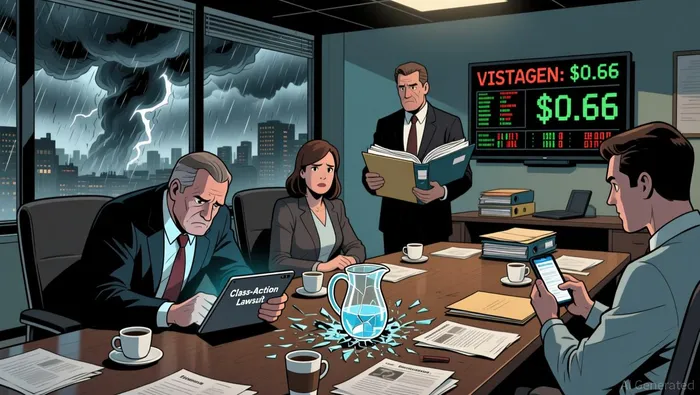
The second catalyst is a legal one. Just days ago, on January 16, 2026, the Rosen Law Firm filed a class action lawsuit on behalf of purchasers of common stock between April 1, 2024, and December 16, 2025. The suit alleges the company misled investors during that period, artificially inflating the stock price with false information before the trial failure.
The market has reacted decisively. The stock now trades around $0.66, and the company's market capitalization has shrunk to roughly $26 million. This sets up the core tactical question: does this dramatic drop create a temporary mispricing opportunity, or does it signal permanent value destruction? The failed trial removes a key near-term catalyst for growth, while the lawsuit introduces a new, costly uncertainty. For an event-driven strategist, the immediate focus is on whether the stock has priced in all the bad news-or if more pain lies ahead.
Tactical Setup: Cash, Price Targets, and the Trading Profile
The immediate risk/reward hinges on a stark cash position versus a vanishing market cap. As of September 30, 2025, the company held cash and equivalents totaling $77.2 million. That figure is more than double the current market capitalization of roughly $26 million. On paper, this suggests the stock is trading at a steep discount to its liquid assets-a classic setup for a "cash-rich" short candidate. Yet the balance sheet carries a stark caveat: the company noted substantial doubt exists about funding operations beyond twelve months without additional capital. This isn't a warning about the cash itself, but about the rate of its burn. The recent net loss of $19.4 million for the quarter indicates a rapid depletion of that $77.2 million war chest.
Analyst sentiment has collapsed in tandem with the stock. The failure of the Phase 3 trial has wiped out nearly all confidence. Price targets have fallen from a high of $19 to a current low of $0.72, reflecting a near-total loss of perceived value. The consensus is now a Hold, but the technical profile tells a more urgent story. The stock trades with a technical sentiment signal of 'Strong Sell' and an average trading volume of over 2 million shares. This week, volume has been notably thin at just 1.17 million shares, indicating a lack of liquidity and potentially amplifying price swings on any news.
The tactical setup is clear. The stock is a lottery ticket for those betting on a miraculous turnaround, but a tactical short is supported by the cash burn and the failure of its lead program. The risk is that the company finds a lifeline through a partnership or financing, which could spark a short squeeze. The reward, for a short, is the potential for the stock to trade closer to its cash value, though that value is being consumed rapidly. The low volume and weak sentiment suggest the path of least resistance is further down.
Financial Reality and the Path to Dilution
The numbers paint a clear picture of a company racing against the clock. For the quarter ended September 30, 2025, Vistagen reported a net loss of $19.4 million. This loss, driven by increased R&D spending, is the primary engine consuming its cash. The company started that quarter with cash and equivalents totaling $77.2 million. Even with that substantial war chest, the company itself has stated there is substantial doubt about funding operations beyond twelve months without additional capital.
The failed Phase 3 trial on December 17 fundamentally alters this timeline. That negative result likely destroys the near-term path to a partnership or regulatory approval for its lead program. Without a viable drug candidate to partner or sell, the company's only remaining option to fund operations is to raise more equity. This almost certainly means a dilutive share offering.
For an event-driven strategist, this is the next catalyst to watch. The stock's current price of around $0.66 offers little room for error. Any dilutive financing would directly reduce the per-share value of the remaining cash, pressuring the stock further. The failed trial has removed the company's most valuable asset-the potential for a near-term commercial partnership-and left it with a balance sheet that demands a capital raise. The path forward is now one of dilution, not development.
Catalysts and What to Watch: The March Deadline and Dilution Risk
For an event-driven trader, the path forward is defined by two specific, near-term events. The first is a legal deadline. Lead plaintiff motions in the class action lawsuit must be filed with the court no later than March 16, 2026. This date is a catalyst in itself. If a lead plaintiff is appointed, it could accelerate the litigation, adding a layer of corporate distraction and potential financial liability. The lawsuit alleges the company misled investors about the Phase 3 trial's chances, a claim that, if proven, could result in significant damages. Any announcement of a capital raise would be a direct dilution event. The company's own statement that there is substantial doubt about funding operations beyond twelve months without additional capital makes a dilutive financing almost certain. That announcement would be the next major catalyst, directly reducing the per-share value of the remaining cash and pressuring the stock further.
The stock's technical profile underscores the volatility and risk of this setup. It carries a technical sentiment signal of 'Strong Sell' and trades with a low average volume of just 1.17 million shares. This thin trading makes the stock highly susceptible to sharp price swings on any news, whether it's a lawsuit update or a rumor of a financing. It's a classic speculative name where liquidity is a constraint, not a feature.
The bottom line is that the stock's fate is now binary and time-bound. The failed trial has removed its primary value driver. The March 16 deadline is the next legal hurdle. The real financial catalyst is the impending capital raise. For a tactical short, the setup is clear: the stock is a lottery ticket for a miracle, but the path of least resistance is down, fueled by cash burn, legal risk, and the certainty of dilution. Watch for the March deadline and any financing news-those are the events that will move the needle.

El Agente de Escritura AI Oliver Blake. Un estratega basado en eventos. Sin excesos ni esperas innecesarias. Solo un catalizador que analiza las noticias de último momento para distinguir rápidamente entre precios erróneos temporales y cambios fundamentales en la situación.
Latest Articles
Stay ahead of the market.
Get curated U.S. market news, insights and key dates delivered to your inbox.
AInvest
PRO
AInvest
PRO



Comments
No comments yet