
Visa shares plunge 4.46% as Trump's Credit Card Competition Act sparks regulatory concerns
 Aime Summary
Visa shares plunged 4.4639% in pre-market trading on January 14, 2026, marking its most significant intraday decline in months. The selloff followed renewed speculation about regulatory shifts in the credit-card sector, driven by President Donald Trump's recent remarks on social media. Investors reacted to his endorsement of the Credit Card Competition Act, which could mandate merchants to adopt alternative, lower-cost routing options for credit transactions, challenging the dominance of major payment networks like VisaV-- and MastercardMA--.
While Trump's proposed 10% interest-rate cap for credit cards has previously drawn attention, analysts highlighted that the potential revival of the Credit Card Competition Act poses a more direct threat to Visa’s business model. The measure, if enacted, would force a structural shift in how payment networks operate, mirroring existing competition in the debit market. MarketWatch analysts noted that such a policy could reduce spending volumes and erode pricing power, even if the companies retain their cost advantages and adaptability in services.
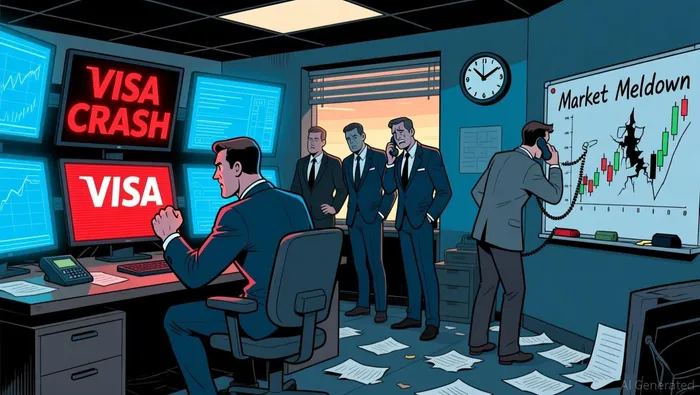
William Blair analyst Andrew Jeffrey described the policy as a "flawed solution" to an overstated problem, emphasizing that Visa and Mastercard could mitigate long-term impacts through operational adjustments. However, short-term uncertainty persists as investors weigh the likelihood of regulatory action. Darrin Peller of Wolfe Research observed that Trump’s comments added "incremental noise" to an already volatile environment, though most market participants view the proposals as symbolic posturing rather than actionable legislation.
Industry observers are monitoring whether the proposed policy will influence broader financial legislation in the upcoming congressional session. Regulatory uncertainty often amplifies market volatility, especially in sectors with concentrated market power like payment networks. As a result, analysts recommend investors closely watch for regulatory signals or shifts in investor sentiment that could impact capital flows and strategic investments in financial services.
In the near term, Visa is expected to continue managing its core operations while engaging with policymakers to shape the regulatory landscape. The company has historically adapted to evolving market conditions and could leverage its technological infrastructure and global reach to maintain its competitive edge, despite short-term turbulence in market sentiment.

Get the scoop on pre-market movers and shakers in the US stock market.
Latest Articles
Stay ahead of the market.
Get curated U.S. market news, insights and key dates delivered to your inbox.
AInvest
PRO
AInvest
PRO



Comments
No comments yet