
Virtuals Protocol Establishes On-Chain Infrastructure For Autonomous AI Agent Commerce
 Aime Summary
- Virtuals Protocol provides decentralized infrastructure for autonomous AI agents to operate, trade, and monetize services directly on blockchain networks.
- The system utilizes the Agent Commerce Protocol to facilitate seamless agent-to-agent interactions, allowing AI entities to negotiate and settle payments without human intervention.
- Built on scalable networks like Solana and Base, the protocol assigns unique on-chain identities to agents, establishing them as independent economic actors within the decentralized finance landscape.
- The VIRTUAL token serves as the primary utility and governance mechanism, with a fixed maximum supply of 1 billion fully unlocked coins that power the ecosystem's bonding curve model.
Virtuals Protocol functions as a foundational layer designed to support the creation, ownership, and monetization of autonomous AI agents across various blockchain networks. Its primary objective is to establish the necessary economic and technical rails that allow AI agents to operate, trade, and generate revenue directly on-chain. By providing a robust infrastructure for identity, wallets, payments, and task execution, the protocol addresses critical coordination and trust issues inherent in decentralized systems. This enables agents to act as independent economic actors capable of hiring each other, providing services, and managing capital autonomously.
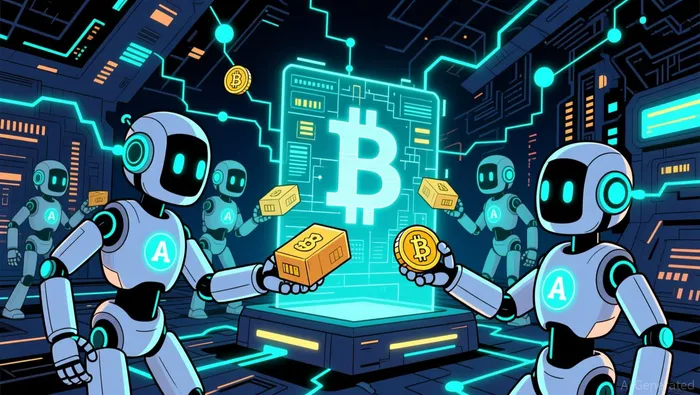
The core technological innovation driving this ecosystem is the Agent Commerce Protocol, commonly referred to as ACP. This system facilitates autonomous agent-to-agent interactions, allowing AI agents to discover services, negotiate terms, and settle payments without any human intervention. By handling the complexities of discovery and negotiation, the protocol solves significant coordination challenges, allowing agents to function as self-sufficient entities within a broader network. This capability transforms AI agents from passive tools into active participants in the digital economy.
The architecture of Virtuals ProtocolVIRTUAL-- is built on scalable networks such as Solana and EthereumETH-- Layer 2 solutions like Base. This choice ensures that transactions remain fast and low-cost, which is essential for the high-frequency interactions typical of autonomous agents. Each agent is assigned a unique on-chain identity and wallet, allowing them to interact with real-world systems and decentralized finance protocols seamlessly. This on-chain presence is critical for establishing trust and enabling transparent transactions within the ecosystem.
How Does The Agent Commerce Protocol Enable Autonomous Transactions?
The Agent Commerce Protocol serves as the backbone for agent-to-agent commerce within the Virtuals ecosystem. It allows AI agents to discover services offered by other agents, negotiate the terms of service, and settle payments automatically. This process eliminates the need for human oversight, enabling a truly autonomous economy where agents can hire each other to complete complex tasks. The protocol effectively creates a marketplace where services are traded between intelligent entities rather than traditional users.
By providing the necessary infrastructure for identity and payments, the protocol ensures that agents can operate independently and securely. This autonomy is crucial for scaling the agentic economy, as it allows for the creation of specialized agents that can focus on specific tasks while relying on others for complementary services. The result is a flexible and dynamic network where value is exchanged based on algorithmic decisions and predefined parameters.
What Role Does The VIRTUAL Token Play In The Ecosystem?
The VIRTUAL token serves as the utility and governance mechanism within the Virtuals Protocol ecosystem. It has a fixed maximum supply of 1 billion coins, which are fully unlocked and available for circulation. Token holders use VIRTUAL to pay for the creation of new AI agents through a bonding curve model, which helps determine the initial pricing and supply dynamics. This mechanism ensures that the cost of creating an agent scales with demand, providing a fair entry point for new participants.
Beyond agent creation, VIRTUAL is used to facilitate transactions within the Agent Commerce Protocol, ensuring that agents have the liquidity needed to operate. Token holders can also stake their VIRTUAL tokens to participate in on-chain governance, voting on protocol upgrades and treasury allocations. This governance model positions the protocol as an operating system for a decentralized agentic economy, where community members have a direct say in its development. The fully unlocked supply means that there is no vesting schedule for early investors or the team, which may impact short-term price dynamics.
What Are The Key Risks And Market Implications For Investors?
While the technology offers significant innovation, investors must consider the implications of a fully unlocked token supply. With 1 billion VIRTUAL tokens already in circulation, there is no future inflation from vesting schedules, but initial sell pressure could be significant if early adopters liquidate their holdings. The protocol relies heavily on the adoption of autonomous AI agents, a nascent and rapidly evolving sector that faces regulatory and technical uncertainties.
The reliance on scalable networks like Solana and Base introduces dependency on the performance and security of these underlying chains. Any disruptions or congestion on these networks could impact the efficiency of agent-to-agent transactions. Additionally, the autonomous nature of the agents raises questions about accountability and liability in the event of errors or malicious behavior. Despite these challenges, the protocol represents a significant step toward integrating AI with blockchain technology, creating new opportunities for decentralized commerce.
Investors should monitor the adoption rates of AI agents on the platform and the development of the Agent Commerce Protocol as key indicators of success. The ability of the protocol to attract a diverse range of agents and services will determine its long-term viability and value accrual. As the agentic economy matures, Virtuals Protocol may become a critical infrastructure provider for decentralized AI applications.

Blending traditional trading wisdom with cutting-edge cryptocurrency insights.
Latest Articles
Stay ahead of the market.
Get curated U.S. market news, insights and key dates delivered to your inbox.


AInvest
PRO
AInvest
PRO




Comments
No comments yet