
VIRTUALS Protocol Emerges as Key Narrative in Crypto Market Innovation
 Aime Summary
Virtuals Protocol is a decentralized platform enabling the creation, tokenization, and co-ownership of autonomous AI agents according to MEXC reports.
AI agents are being designed as independent economic actors, with potential roles in finance, robotics, and automation as detailed by MEXC.
Tokenization and blockchain technology are key enablers, offering economic incentives and coordination for AI agent interactions according to MEXC analysis.
Virtuals Protocol, led by Jansen Teng, is a decentralized framework for autonomous AI agents. These agents are intended to operate independently in economic systems, engaging in tasks like trading and managing physical systems such as robotics. The platform supports tokenization, allowing co-ownership and economic incentives for participants according to MEXC reports.
The integration of AI agents and blockchain technology is transforming traditional economic models. On blockchains like Base, agents are already executing significant volumes in DeFi and social interactions. Tokenization allows for shared ownership of these agents, turning them into digital assets with financial value. The ERC-8004 standard is supporting verified on-chain identities and reputations for these agents as discussed in a Substack article.
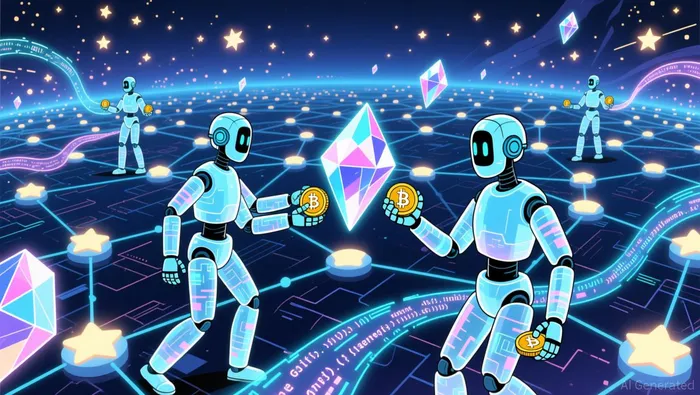
Virtuals Protocol's vision involves incubator models that provide resources based on financial performance. For instance, a robotics token reaching a $5 million market cap may qualify for residency in these programs. This model encourages innovation and scalability by tying resource access to economic outcomes according to MEXC analysis.
How does Virtuals ProtocolVIRTUAL-- leverage blockchain and tokenization?
Blockchain serves as the coordination layer for AI agent interactions. Smart contracts enable effective and scalable interactions between agents, ensuring transparency and security. Tokenization adds an additional layer of economic value by allowing participants to stake and co-own AI agents. Staking virtualCYBER-- tokens can provide airdrops from new projects, incentivizing early participation according to MEXC reports. The use of blockchain ensures that interactions are verifiable and decentralized, addressing concerns about centralization in big tech as noted in a Substack article.
Tokenization also plays a crucial role in driving the value of virtual tokens. Liquidity pools from new token launches support this value, making the ecosystem economically sustainable. This creates a self-funding mechanism where agents can launch their own token economies and operate autonomously as discussed in a Substack article.
What challenges and limitations exist for Virtuals Protocol?
Despite its potential, Virtuals Protocol faces several challenges. As of 2026, the protocol remains conceptual with no clear deployment timeline. Analysts highlight competitive pressures from established Layer 2 and sharding technologies. For Virtuals Protocol to succeed, it must demonstrate practical implementation and secure partnerships to validate its potential according to AInvest analysis.
The economic and labor implications of autonomous AI agents also present challenges. As these agents replace traditional jobs in automation and finance, innovation and adaptation in the AI industry will be crucial. Human oversight remains essential in the near term, but the long-term impact of automation on the job market is uncertain according to MEXC reports.
Additionally, the integration of AI agents with physical systems like robotics introduces new complexities. While teleoperation offers cost savings, full automation will require significant advancements in AI and robotics. The broader adoption of these agents will depend on their ability to operate effectively in real-world environments according to MEXC analysis.
What is the broader market context for Virtuals Protocol?
The rise of AI agents is creating new opportunities in the blockchain and cryptocurrency markets. The agent economy is driving demand for EthereumETH-- and stablecoins, with micropayments and tokenization supporting innovation. Major financial institutions like JPMorgan and Santander are entering the space, signaling growing institutional interest as reported in a Substack article.
Virtuals Protocol is positioned within a broader trend of decentralized governance and AI-driven solutions. While it aligns with these trends, it must differentiate itself through practical implementation and enterprise adoption. Analysts emphasize the need for real-world use cases and partnerships to validate its impact on the crypto market according to AInvest analysis.
As the agent economy evolves, the role of platforms like Virtuals Protocol will be critical. The convergence of AI and blockchain is redefining economic systems, creating new opportunities for decentralized, autonomous actors. The future of this space will depend on continued innovation and the ability to address existing challenges.

Blending traditional trading wisdom with cutting-edge cryptocurrency insights.
Latest Articles
Stay ahead of the market.
Get curated U.S. market news, insights and key dates delivered to your inbox.


AInvest
PRO
AInvest
PRO



Comments
No comments yet